CH. 7 What Media Classes Really Want to Discuss

Reading Summary

In chapter seven of What Media Classes Really Want to Discuss, the author discusses what mediums are in media, technology, and the internet. A medium can change an existing form of media and how audiences view realism. The essence emphasized is what makes different forms of media have unique factors and traits. For example, the best technology is not always developed through specialized innovation and it ultimately transforms the way the public views and interprets media. A convergence is when new media transforms into old media by making old media seem newer to audiences. It is important to note that no medium ever starts from scratch; it must have content from previous mediums. Overall, mediums do have some type of uniqueness but technological advances make it hard for mediums to have complete essence.

Outside Example

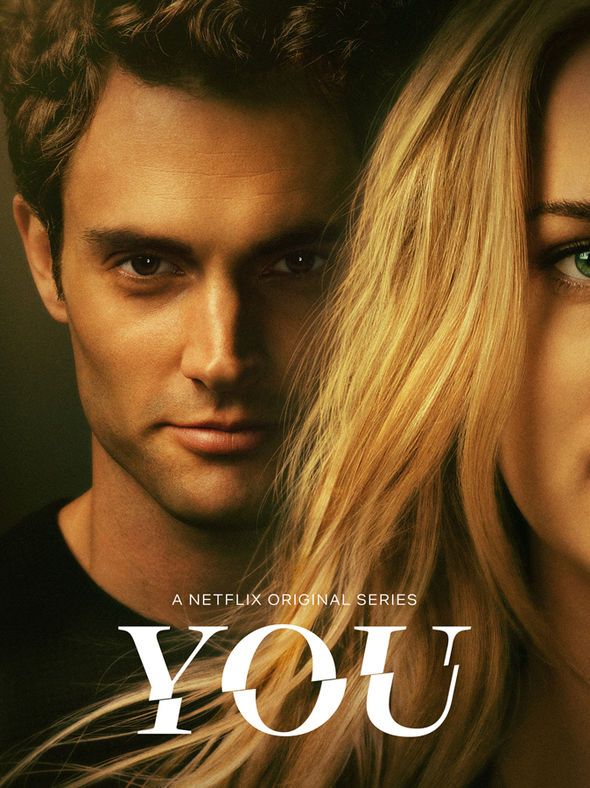
While reading this chapter, I thought of Netflix and how they created a platform for viewers to watch their favorite media entertainment. The Netflix Originals have multiple shows and movies that allow viewers to watch at their own pace at their own time. The Netflix Original, YOU, is a psychological thriller series based on a novel by Caroline Kepnes. The show begins when Joe Goldberg, a bookstore worker in New York city, meets and falls in love with this beautiful girl named Guinevere Beck. He then becomes infatuated with her and stalks her on social media and tracks her every move in New York. He thinks he is doing her a favor by eliminating any possible dangerous obstacle that stands in the way of their “relationship”. What is unique about this show and Netflix Originals in general is that each episode leaves a viewer wanting more. Even though there are no commercials, the viewer is left with cliffhangers and becomes more invested with the show because they can go at their preferred pace.
Reading Connection

In the chapter, the author discusses how people interpret television differently than movies mainly because movies don’t have commercials or interruptions that we find a lot more in television programs. While we argued in the previous class how commercials keep audiences on their toes, this chapter argues against that theory. Having commercials can result in short/interrupted attention spans and can leave viewers not as interested. What I specifically connected to was how Netflix is one of the most streamed services in the world and they have a clever way of keeping their audiences dialed in by having episodes end with semi cliffhangers. Netflix Originals allow viewers to have a main platform for their favorite shows, movies, or documentaries all in one place. They have no commercials or advertisements so the viewer can be free from distractions while watching their preferred entertainment. I focused on the series YOU because I was so obsessed with the show and found myself binge watching it almost all day. I believe that Netflix used this theory and created shows similar to YOU in order to get the same effect on audiences as they left them with cliffhangers at the ends of episodes.

What difference does a medium make?

Reading Summary

Chapter 7 of What Media Classes Really Want to Discuss talks about how technology has changed the medium throughout the years. It also talks about how society decides how we should be using each type of medium such as television is for viewing tv shows and movies at home with family and each individual can be doing various activities while watching television. But if you are at a movie theater you are expected to sit quietly and focus all your attention to the movie and not disrupt anyone. The chapter also talks about how certain technologies have impacted other existing technologies such as the radio being affected by television. With this, society also decides what technology should be used and it depends on how each new technology is presented to society and if it’s too confusing society might decide to not adopt the invention. One example of this is when VHS and Betamax were introduced, people decided to use VHS even though it had worse image quality. The chapter also talks about how some mediums have been inspired by existing media such as folders, mail, and desktops on computers so society can easily transition to using the new mediums with knowledge of older mediums.

Outside Example

Reading this chapter made me think of how this pandemic might change the way we see movies in the future. With all the movie theaters being closed now, there are many films that have been postponed. Some of these movies that are finished but weren’t able to be released such as Black Widow, James Bond: No Time to Die, and A Quiet Place 2 might look into different ways of reaching their audiences and decrease the affect the pandemic has creating on the revenue of each studio. I really wanted to go watch these 3 movies but now it’s unknown when we will be able to see theses movies with the huge increase in numbers of people infected in the United States and the announcement from Donald Trump saying that we can expect to have people in sport stadiums in August or September.

List of 2020 Movie Release Delays and New Dates Due to Coronavirus

Reading Connection

While reading this chapter I found it really interesting how new inventions affected previous technologies such as how radio was affected by the invention of television. Instead of being a live medium where bands would play live, it became a medium where pre-recorded music would be played. Now can be a new change in the movie theater industry where movies might shift to making movies premiere on a streaming service or as a pay-per-view event similar to boxing matches. I think this hasn’t been done because it might be worse for studios in the long run but as we have seen in history, new inventions have always affected other technologies and we have to constantly adjust to this fast changing world.

Ch.7 What Difference Does a Medium Make?

Reading Summary

The chapter’s main focus was to highlight the meanings and distinctions of the mediums of media. In particular, the emphasis was placed on “essence”, ranging from what makes each particular form of media unique to the factors that enable those unique traits. For example, technology and its development through innovation have transformed the ways we view media and the way it fulfills our needs. The chapter argues that mediums are not unique for a variety of reasons. For one, there are clear connections, evolutions, and overlaps between even the most far-ranging mediums. Because of this, no medium ever starts from scratch and must find content in previous existing mediums. It is important to remember as well that mediums do have their own uniqueness, but historical and technological connections exist to never give them complete essence.

Outside Example

What immediately comes to mind for me is the transformation of popular books into movies. These adaptions have a long history of being used by writers and are broadcasted on mediums from theatres to television to Netflix. Some are successful in both fashions, such as Hunger Games or To All The Boys I Loved Before, while some fail mightily as movie adaptions, such as the Percy Jackson series.

Reading Connection

The reading discusses the hierarchy that exists between mediums, since mediums have some sense of essence, and that is clear in the different ways books are adapted into films. For example, something airing on television first is less common now and is usually associated with older films like Alice In Wonderland or Treasure Island. This is especially true now with the small number of people that watch live television. However, something airing in blockbuster fashion in theatres, such as Twilight, Lord of the Rings, or The Godfather, carries a much greater prestige and importance to viewers knowing that this adaption is coming to theatres. Taking that balance and applying it to streaming services such as Netflix, Disney+, or Hulu creates some importance, as many will watch a movie if it is popular, but subscription to the service is needed and that limits those who can watch the movie. For example, Disney+ has released Onward on its streaming service instead of theatres. While the film’s release was not highly anticipated such as a film like Frozen, but the release on this platform instead of theatres creates even less prestige. Contrarily, movies like The Irishman was nominated for best picture despite not being actually released in theatres, a growing trend in the cinematic universe.

Behavior in its Place

This article explores human behavior and how media has a lot to do with how roles in society have changed over time. Meyrowitz begins by explaining how people modify their behavior to fit a certain situation, sometimes subconsciously. He then presents two theorems that explain how human interaction has changed throughout history and how electronic media is the key to understanding these shifts. He explains that with the rise of electronic media, many social spheres have merged and it has blurred the lines between child and adult, masculine and feminine, and politician and an average citizen. The study of social behavior is now less about places, and more about how people from different places, cultures, and backgrounds interact in the media.

This article reminds me of how the different generations are portrayed, and how they are classified mostly based on the amount of media consumed. For example, many people would call my generation, the kids that still played outside when they were little, but got phones at a younger age, and watched Disney back when it was good. On the other hand, kids today will probably be talked about as the generation always on their phones and tablets, the generation of mass information and Tik Toks. Also, within different generations, different social norms have been created. Over time, people have become less private in the media, their relationships with their teachers/parents/peers have changed, and their access to knowledge in never ending.

This idea of a generation defined by their media is described when Meyrowitz says media is an, “extensions of the senses, and he claims that the introduction of a new medium to a culture, therefore, changes the· “sensory balance” of the people in that culture and alters their consciousness” (Meyrowitz, p.3). Due to the lack of face to face interaction, the merging of social spheres, and an audience online ranging from young children to adults, the “sensory balance” of children today has definitely been altered. The article later argues, “By bringing many different types of people to the same “place,” electronic media have fostered a blurring of many formerly distinct social roles” (Meyrowitz, p.6). Young people today cannot be shielded from the media which will impact the way they interact in school, society, and the workplace.

Monday – What Media Classes Really Want to Discuss, Chapter 7

READING SUMMARY

Chapter 7 of What Media Classes Really Want to Discuss covers what a medium actually is in technology, focusing on television, film, and the internet. Each new medium automatically changes existing media and how it shows realism. For example, paintings were once the most realistic medium, then photographs, and then television; a medium’s “essence” changes over time with the introduction of new mediums. The best technology is not always chosen by society, since the need is not always clear or even yet created. A technology’s purpose is often not clear until it is introduced to society. Media are also a combination of other media; television is a mix of film and radio. As new media take from old media, old media look to newer media to remake themselves; this two-way borrowing is called convergence. We also often discuss the “potential” of a medium rather than focusing on the present, making us look only at society’s fears and dreams with a certain technology instead of the current technology. In the end, the internet is not an individual thing but instead several media. It all depends on how people use it; the internet is one piece of technology, but different “machines”.

OUTSIDE EXAMPLE

One of the first things that Chapter 7 discusses is how we interact with television differently than film; we often do chores or work when watching television, but sit down and actually watch a movie in theaters. Television often hooks us right before commercial breaks, then repeats the plot summaries specifically for these distracted viewers; the constant interruptions to television, according to some critics, have resulted in shortened attention spans. However, in today’s world, most television is watched through streaming services, and many of these do not have commercials. Though they do not have commercials, we are still hooked by them without cliffhangers before commercials, and often get distracted when we watch them. For example, at school, my friends and I got really into Scream the television show. It didn’t have commercials because we streamed it, but once we reached the end of an episode, there was always a big cliffhanger, and we’d be forced to watch the next episode.

READING CONNECTION

My friends and I binge-watched Scream the television show earlier this year. We would all gather on the floor and work on homework or scroll through social media as we watched it, but at the end of each episode was a giant cliffhanger with some death or murder or creepy threat. It would be late at night and we’d say, “Last episode of the night!” but then hit a cliffhanger and all agree to watch another (a terrible cycle). Although Scream did not have commercials, we were still hooked at the end of each episode. What Media Classes Really Want to Discuss talks about how viewers are left on cliffhangers right before commercial breaks, and that commercial breaks are the culprit behind our shortened attention spans, as constant commercial interruptions break our line of thinking. However, we get hooked on television shows without commercials; streaming services like Netflix have shifted the cliffhangers to be at the end of each episode so that we are forced to watch another, like with Scream. We are distracted viewers even without commercials, simply due to social media rather than commercials. I agree with the ideas in What Media Classes Really Want to Discuss, but commercials are not the culprit of shortened attention spans and cliffhangers, as proven with streaming shows. The cycle of distractions and cliffhangers is inevitable; there will always be another death, creepy note, or other cliffhanger at the end of each episode like in Scream.

Giannetti- Ideology

Summary

In this reading, Giannetti describes the numerous factors in films that affect the ideology portrayed. Every movie presents some sort of ideology, however significant to the overall plot. Different ideologies regarding politics, religion, culture, ethnicity, sexuality, gender, and women’s rights each affect the over tone of the film and the audience’s likelihood of accepting the portrayed ideology. Depending on the country the film is created in, the ideology that is likely to be expressed can be drastically different. One audience in one community will be deeply moved into agreement, while another audience is outraged by the message being expressed. Directors sometimes portray characters with certain characteristics and values that they do not believe in themselves. Others leave behind hints of their beliefs and values in each of their characters. The same can be seen through movies.

Example

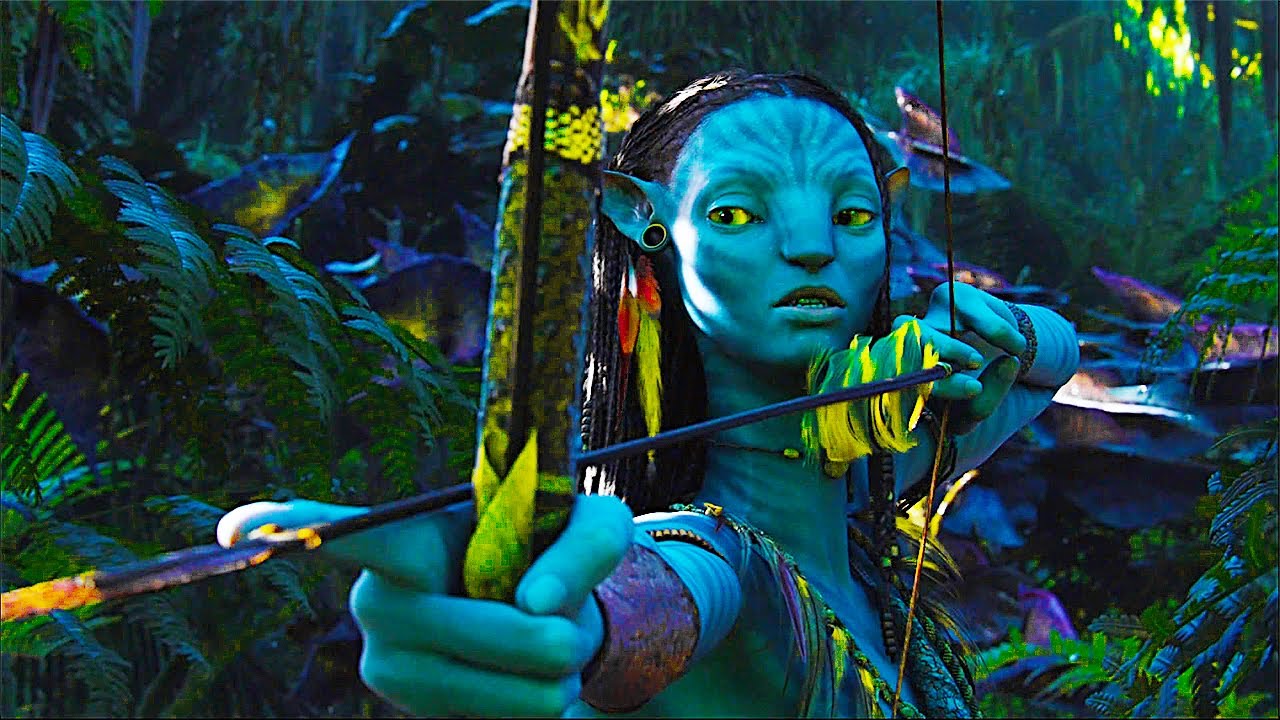
While reading this, the first movie I thought of was Avatar by James Cameron. There were mixed reviews about this movie’s ideology. Some believed the movie highlighted that white men are the only ones capable of saving an inferior, non-white race. Others believe it is an attack on capitalism and corporate culture. I was not aware of this controversial debate until I was much older, since I was around nine or ten when the movie was released. It had always been one of my favorite movies. I was only old enough to understand that it was the first movie of its kind to be filmed in such a way, and the message I understood was that the humans were the evil ones in this movie, not the aliens.

See the source image

Connection

James Cameron’s Avatar had a main message conveying environmental concerns. If the human race had not damaged its planet to the point of inhabitation, then they would have never needed to invade another planet and impose themselves on Pandora’s occupants. In America, the right-wings felt that this movie attacked capitalism and diminished national pride, since this movie had echoes of how Europeans invaded the Americas and killed Native Americans, both voluntarily and involuntarily. The leftists felt that this movie supported the view of that non-white races needed a white man to save them, due to their inferiority to defend themselves. As mentioned in the reading, audiences were not sure which of these views, if either, are supported by James Cameron. He could be a director that makes controversial films without leaning one way or the other, and he only wants to stir conversation among his audiences.

Agenda 4-3

Joshua Meyrowitz (1985) “Introduction: Behavior in its place,” No Sense of Place: The Impact of Electronic Media on Social Behavior. Oxford: Oxford University Press.

Topic: Jacob Sanchez’s Personal Meeting Room

Join Zoom Meeting
https://zoom.us/j/2622686644

Meeting ID: 262 268 6644

If your wifi drops out and you want to call into our zoom meeting:

Call into one of these numbers closest to you then enter our meeting ID and #

+1 346 248 7799 ( Houston)
+1 669 900 6833 (San Jose)
+ 1 929 205 6099 (NY)
+1 301 715 8592 (US)

Activity for Today is the same as Monday

Y’alls paragraphs are so good I want to get to everyone

What is an example of a live event that has changed for you in quarantine? Simple group events, live interactions, etc.

Grocery shopping has changed from being a list and deciding which time is the best to go to a store

Now, what are the rules for going to the store? Is it open?

Do they do delivery, how? Do they have what I want, need? Is it safe to go?

Agenda 4-1

Chuck Klosterman (2004) “The awe-inspiring beauty of Tom Cruise’s shattered, troll-like face.” Excerpt from Sex, Drugs and Cocoa Puffs. New York: Scribner.

Paper #1 is now due to Tlearn Friday (4/3) before class, Enjoy the Extension!

Topic: Jacob Sanchez’s Personal Meeting Room

Join Zoom Meeting
https://zoom.us/j/2622686644

Meeting ID: 262 268 6644

If your wifi drops out and you want to call into our zoom meeting:

Call into one of these numbers closest to you then enter our meeting ID and #

+1 346 248 7799 ( Houston)
+1 669 900 6833 (San Jose)
+ 1 929 205 6099 (NY)
+1 301 715 8592 (US)

Activity for Today (Report on Monday’s Activity)

What is an example of a live event that has changed for you in quarantine? Simple group events, live interactions, etc.

Grocery shopping has changed from being a list and deciding which time is the best to go to a store

Now, what are the rules for going to the store? Is it open?

Do they do delivery, how? Do they have what I want, need? Is it safe to go?

Space Time and DVR

The author of this article talks about what live sports are like in comparison to recorded sports events when you’re rewatching them. You get much more excited when watching them live instead of running it back. There are 5 reasons why this happens. The first is with commercials, there is less drama and less of a cliffhanger. The second reason is that because its not happening live, the person watching gets out of touch with it being actually real because it already happened. The third reason is that the rewind and fast forward gives the person watching power over what they’re watching. They can fast forward to spoil what happens to release the drama. The fourth reason is that there’s no superstitions or anything the fans can do to get involved, because the events have already transpired. The last reason is that spoilers ruin the reason to even watch the sporting event.

I love football and my favorite college team is the University of Texas since I’m from Austin. I have friends who play for UT and opponents I played against in high school, such as Sam Ehlinger, the current quarterback. His mom is a good friend of my dads through work, so I got to witness first hand his whirlwind of popularity after his sophomore year in high school. I have a personal interest in many of the players on the team, either because I know them or have played against them, so I wanted to watch all of the games even though they had already passed. We had games on Saturdays so I would often miss the UT football games, but I would rewatch them.

My situation is different from a normal audience member watching sporting events. Even huge sporting events I’ll miss like the World Series or other events like that that I miss I won’t rewatch them, I’ll just watch the highlights. It’s different with UT however. Below is Sam’s Junior highlight film where he broke multiple records and beat my high school 77-3. We are often featured in that highlight video because he made us look terrible.

Sam Ehlinger High School Football Stats Westlake (Austin, TX ...

https://www.hudl.com/video/3/3185948/5721e5710dcb0d12f888ee6f

No Sense of Place: The Impact of Electronic Media on Social Behavior.

Reading Summary

We all have different personalities dependent on the people we are around. We also adjust how we act or how we describe things and activities based on the people or environment we are around. We each perform different roles in different social
arenas, depending on the nature of the situation, our particular role in it,
and the makeup of the audience. People also have the option of combing different groups of friends and audiences together. The combination of many different audiences is a rare occurrence in in-person interaction, and even when it does occur, people can usually expect more private and isolated interactions. Electronic and social media, however, have rearranged how many people mingle on social forums. Unlike the merged situations in face-to-face interaction, the combined situations of social media are relatively long and inescapable, and they therefore have a much greater effect on human behavior, both on the screen and in person.

Outside example

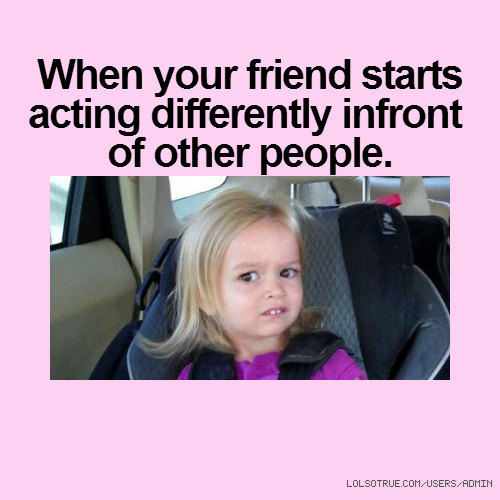
This is a meme about judging people for acting differently around different groups of friends or people. In this meme, the creator is criticizing those who either have different personalities around different people or choose to act different in different social groups. This is trying to say that you have one personality and you should always act like that when in reality that is really not the case.

Reading Connection

Every single person has multiple personalities depending on the people they are around. People are always adjusting little things about themselves in order to match things or traits they find interesting or attractive in other people. So the reason someone acts different around different people is they are simply copying the personality traits they like best from that certain person. Criticizing someone for having a different personality or acting a different way around certain groups of people is hypocritical, because no one has one set personality that never changes. I like to believe that no one actually has a personality and the way we act is all dependent on who we surround ourselves with and learn from. In the reading it is explained that the separation of people into different situations fostered different world views, allowed for sharp distinctions between people’s “onstage” and “backstage” behaviors, and permitted people to play complementary roles with each other. So in contrast with the meme provided here, I would say we are allowed to have different and changing personalities. Whoever you want to be or act like at that time is up to you and you shouldn’t have to worry about if certain actions are true to your personality, because in the end your personality is just a combination of traits you’ve learned from people you admire.

Design a site like this with WordPress.com
Get started