What is Semiotics?

Semiotics is the way signs are related in society, represented by the idea that X, (standing for a color, magnitude, word, etc.) is equal to Y, representing the meanings behind each sign. The underlying questions presented in semiotics when analyzing signs are: “How does it present this meaning?” and “Why is it indicative of this meaning?” (pg6). These questions are key to figuring out the cultural background of each sign and the “referent” ( what the sign is referring to). This article also mentions “concepts,” or any picture/idea that comes to mind when a sign is present. The communication theory is the study of how messages are put together to be exchanged effectively and mainly rely on semiotic factors. This theory encompasses the idea that certain connotations of a word can contain different meaning, and how societal norms shape the way we communicate. Iconicity is the way visual symbols contain specific meaning, Indexicality is how behaviors are representative, and finally symbolism is the way a signifier can be symbolic.

The first thing that came to mind when reading this article, is how semiotics have changed drastically over time because of the way our generation communicates. From bitmojis and emoticons to gifs and snapchat filters, as technology has increased, so has visual semiotics use in our everyday language. In a study done by Esther Mazer entitled, “Symbolism as the Language of Millennials,” he says that visual marketing tactics have become more effective in recent years due to Millennials ability to understand and receive visual symbolism. This means a mutual understanding of the signifier and the signified through marketing, as well as a “parallel between the efficiency of the design and the efficiency of symbols’ usage in society” (Mazer, 2). This study asserts that pictographic language is becoming a replacement for written information in order to appeal to a new generation. (https://digitalcommons.cedarville.edu/linguistics_senior_projects/19/)

In the section of the article titled “signs” it uses the example of colors that indicate meaning. The article says, “The word red, as we saw, qualifies as a sign because it does not stand for the sounds r-e-d that comprise it, but rather for a certain kind of color and other things.” This is similar to the way we communicate over text with hearts or with facial expressions. With context, each emoticon can mean something completely different and the way the message is received is quite subjective. In paragraph 18 it also mentions that, “experiments have shown that the connotations of many (if not most) concepts are constrained by culture.” This observation under the section titled “Signification,” further supports the idea that as culture changes, semiotics (the way things are related) change by generation.
“Debbie Does Salad”

Summary: The first part of the article focuses on the recap of the sit down with Barbara Nitke. It discusses her perspective from watching several different food networks shows to see the parallels between the different techniques of producing the show to the techniques of producing a porn film. Then it goes into the biology behind the gut being the second brain. It connects this to the gut reaction when watching these shows to show the connections we make when watching. It says that it’s not necessarily about the subject of the show but how it is conveyed. It then states a more general theme of television in how it creates a place of “desire and fornication”.

Personal Example: When reading about how food network shows romanticize the food in the way that does porn does, it made me think of our generation and social media. Social media is a place where people highlight there best moments in life and idealize it. They can show off what they want to portray to seem like they’re living their best life. This can especially be seen with college student freshmen who are trying to portray that they’re thriving when in reality the transition is hard on everyone. Along with the editing and filters, people can idealize the way people look at them based on their posts.

Reading Connection: On page 57, it gives the quote from “”We create this sensual, lush world, begging you to be drawn into it… It’s a beautifully idealized world. Who wouldn’t want to be a part of that world?”. A lot of people post only positive moments in their life and in this way they want to draw you in to believe that their life is idealistic. The influencers on social media now are pushing this idea further with their travel or makeup accounts. They show off everything to promote the perfect lifestyle that companies want them to portray using their product.

Debbie Does Salad

Reading Summary

Kaufman’s article first starts by depicting a visual description of cooking shows that goes into depth on all the different aspects that occur behind the cameras. While the viewer may not initially (or ever) realize or ponder what goes on behind the scenes, much preparation and coordination transforms and elevated the viewer’s experience. Surprisingly, Kaufman brings into light the similarities of the execution of food channel shows and porn. One example of the connection between the two is that both parties wish to be in the world that the producers have created, but they cannot. Additionally, it is mentioned that too much storyline draws away from what is being shown, whether it be food or sex. The stars must be people that are liked by many or have a good personality and must be good at what they do to easily convey their message.

Outside Example

Initially I read the article and had no idea what I could possibly try to relate to the connection food has with porn. I did however remember seeing a photoshoot/video session for my high school’s football team a few months ago. Because I went to a highschool in Texas and my team had been 5A state champs three years in a row, the school placed importance on montage videos to play on the mini jumbotron before games to hype up the crowd. I don’t have footage of them making the video for the montage last year but I included a video that looked kinda similar to what I saw. The montage they played at our games had shots of the players in the weight room lit by few strategically placed lights where the players were holding up footballs or doing whatever. In addition to this, fast paced editing and loud music were utilized set the tone for the game.

Reading Connection

This article reminded me of the montage video because I had never really considered how much effort the producer put into it and what extensive planning and preparation went into shooting it. In addition to this, the crew had to decide what angles, spooky fog, and lighting would give the desired effect of hyping up the crowd. In this sense, the goal of the filming company was possibly to imitate scenes from movies and TV shows that used the same effects and video techniques to showcase the characters that are ready to do something badass. Similar to a movie production crew, a large amount of planning was used to create the perfect scene and evoke a particular emotion. In post-production, there would be a similar importance placed on the power of editing and music choice to get the desired outcome.

Messages, Signs, and Meanings

Reading Summary

Semiotics is the study of what things mean. The thing of which a sign refers to is called the “Referent”. There are two types of referents: concrete and abstract. A concrete referent is something that exists in the real world, while an abstract referent is something that is imaginary or conceptual. The article puts much stress that referents are widely and commonly used in all types of places and that if properly used, signs are a very efficient form of communication. There also exists 66 different types of signs, three of which are the most common: icons, indexes, and symbols. Icons utilize repetition and imitation as a referent. They appeal to the part of the human’s brain that deals with shape, color, and dimension. Indexes work by relating or transferring focus to the another referent. There are three types of indexes: spacial, temporal, and person indexes. Symbols refer to something depending on the specific context it is in and what it is used for.

Outside Example

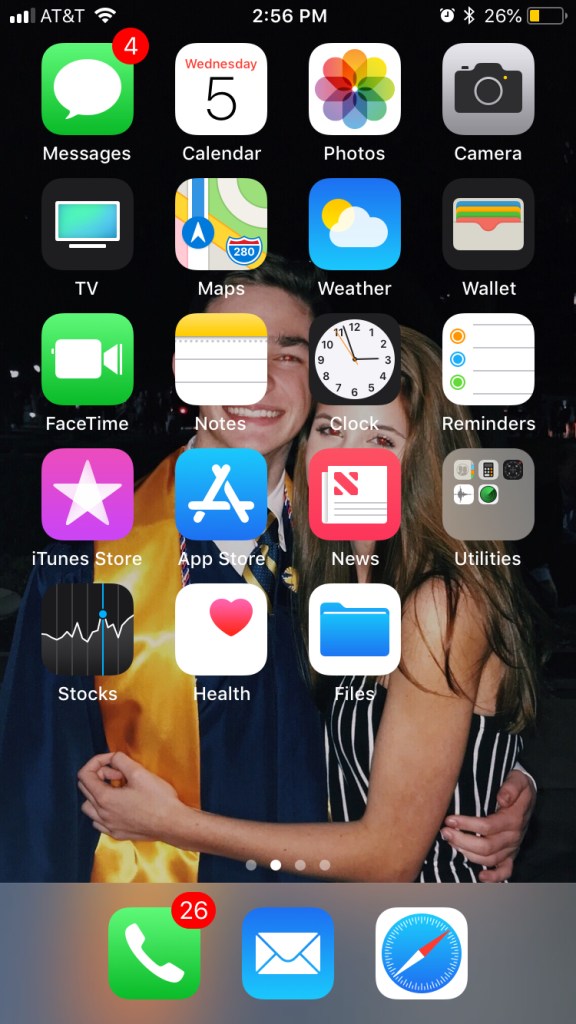
My first thought of these signs were the app icons. While the look of the apps has changed over the years, they are still very important to convey what the app does from the outside to more easily be user friendly. Instead of using recent technologies to convey what feature resides within the app, it instead uses old, sometimes outdated technology as the icon. Examples of such include the film camera, a manilla file, an old camera, a speech bubble, a traditional telephone, envelope, newspaper, and a compass.

Reading Connection

One thing that’s interesting to note is that the apps’ icons resemble older technologies to convey what they are saying. In this sense they are using a combination of both iconicity and symbolism to tell the user what the app is. For example, FaceTime uses an old film camera in its icon. The idea of a film camera is condensed into simple shapes for the user to understand that is it a camera itself. From there, the brain understands that the film camera is symbolizing the feature to talk to someone over a video chat. I imagine this is the case because the old technology as the icons are a universal symbol already understood by a wide range of generations, and applying a real world object to something entirely digital helps minimize confusion.

Gestalt and heiarchy

Reading Summary: 

In “creating visual hierarchy with type” the narrator explains how to organize and use visual designer concepts to a bunch of text. She demonstrates how to create a big bold header. After applying many of her ideas the text is organized, easy to read, and attractive. Overall the hierarchy tells the reader what to read and where to go from there. In “Using gestalt theory to guide layout” the narrator shows us a layout with texts, boxes, and pictures. Using gestalt’s theory, she organizes parts of the layout with color, same font size, and location. She explains that our brain automatically sees the patterns and is able to depict what goes with what. 

Outside Example: 

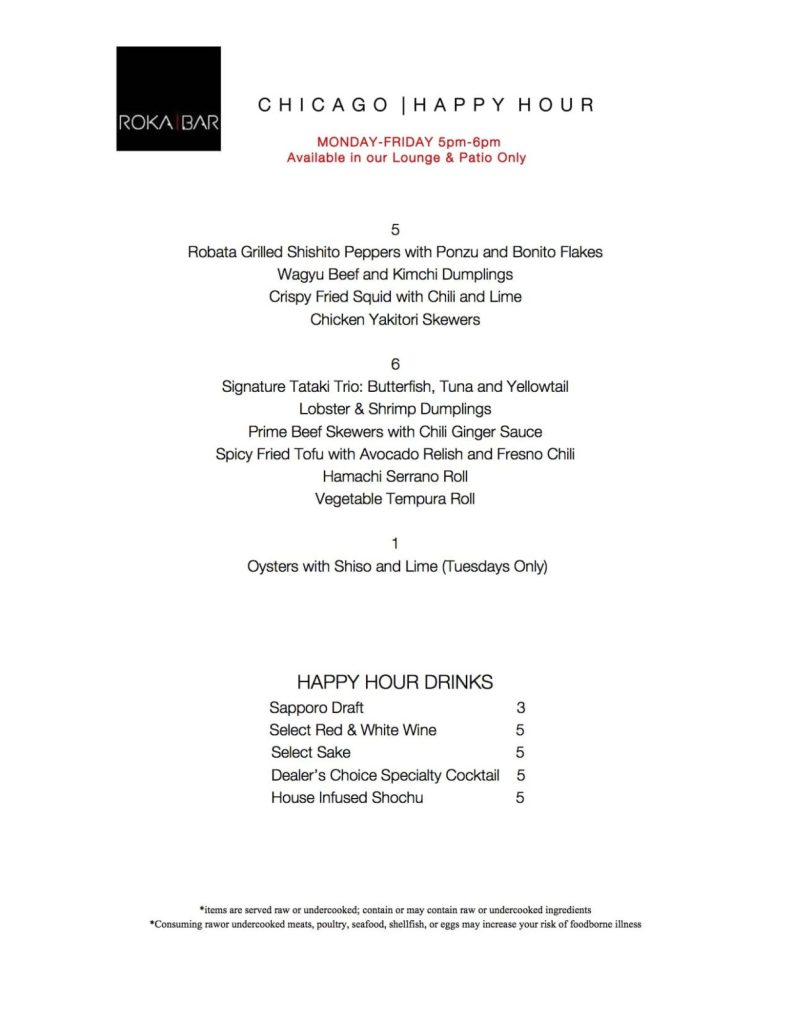
When I was watching this video I was super hungry and I immediately thought of most menus at restaurant. A common menu has many sections, the breakfast, dinner, drinks, and appetizers. My favorite restaurant Roka Akor has an amazing dinner menu. Dinner was always centered in the menu and it was the first thing your eyes saw as you opened it. The expensive food had descriptions and bigger bolder font. The appetizers and drinks were both on the back page. 

Reading Connection: 

The menu creators used many of the concepts that the two videos taught. First the menus have a hierarchy. The expensive dinners and meals appeared first then, you moved on to the drinks and desserts. This created a flow where you saw the most expensive meals first since that’s when you are the hungriest. The menu also has different background colors that show that there are separations in the menu between the appetizers and sides. This allows the brain to easily decipher what’s what. Lastly, there were photos that showed how elegant the meal and the restaurant was. 

“White Space is Not Your Enemy” Chapters 6-8

Reading Summary

Chapter 6 focuses on the concept of a grid for graphic design. The reading emphasizes the importance of a grid as an organizational tool. To define it, “a grid is a series of horizontal and vertical lines charting out an area” (pg 58). The first and most useful step of grids comes when one thinks of the location of the focal point. The grid helps the creator find the best and correct space for everything. The chapter also goes into detail on how to create your own grid which is helpful if you have a different sized paper. Moreover, the reading discusses alternative techniques such as ‘breaking the grid’ as an example to show how to arrange the information in a different way if you want to evoke emotion or to simply break away from the general grid.

Chapter 7 discusses the layout of visuals and text and how they work with grids. The chapter first introduces the reader to the idea of a focal point and where to locate it. Some examples like ‘The Golden Proportion’ and ‘The Rule of Thirds’ are used to show that the focal point can be placed in different places and still catch the audience. Also, the reading discusses the Gestalt of proximity, similarity, continuity and closure to help the flow of the text and the visuals.

Finally, chapter 8 discusses type which in media means: the words typed onto the document. The chapter goes over some of the different styles of fonts available to users and how each font is seen and should be used for different purposes. Although one can use the font we desire or stick to Times News Roman, the reading discusses that for headings or titles one should use a bold, decorative, and different font than that of the text body. However, the text body should has a more simple and readable font since it is the longest piece of text in the document. The chapter goes on to explain the use of different techniques to emphasize a part of the text, to organize longer and shorter texts, and to make the whole text visually appealing to individuals.

Outside Example

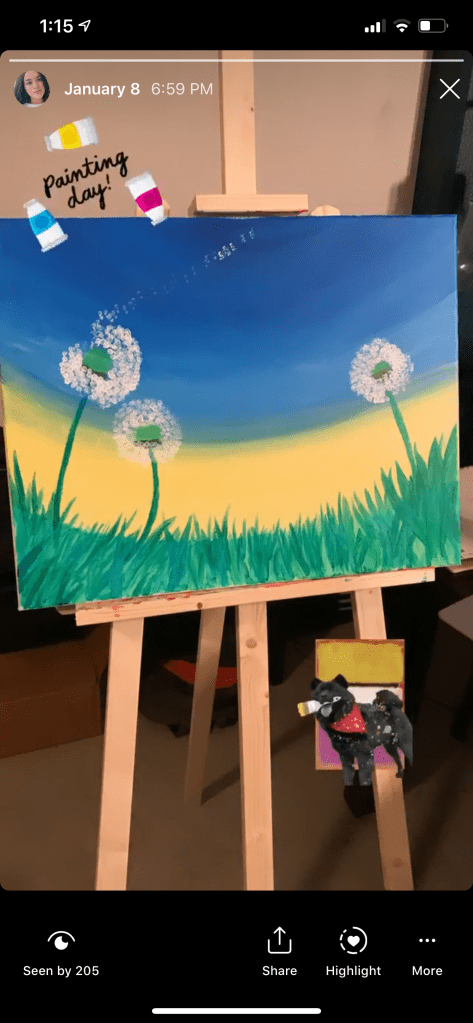
As I was reading these chapters, the first thing that popped into my mind was instagram stories because they are composed through the use of grids, layout and type. Although the amount it takes to create an instagram story is not as long as that of creating a newspaper, they still share a similar process of organization with the ultimate purpose of appealing to an audience. So when it comes to an instagram story, we (at least I do) think about the location of our focal point, which tends to be us, and how it is positioned. Then, we follow up by adding a caption to it which instagram has provided multiple fonts and colors for or you can just write on it with your finger! Then, we like to also add some ‘stickers’ that we can move around to where we feel looks best. Finally, once we decide on the perfect pose, location and font of the text and stickers, we decide to post for people to view with the intend of them liking it.

Connection

In my example, you can find a lot of the techniques suggested by the reading to create an aesthetic piece. For example, you can clearly notice that the focal point is the painting because it is right in the middle and it takes up the most space. Just like the reading said, the focal point needs to catch the attention of the audience which is what I tried to do by getting closer to it when taking the picture. Once I felt satisfied with the position of the painting, I moved on to the ‘negative space’ surrounding the painting. I knew the painting was pretty but not enough to stand on its own. So I added the text ‘painting day.’ This part is what took me the most time because I didn’t just need to decipher what to write but I also needed to decide if I was going to type it and if I did, what font would look more appealing? What should the size of the font be? and its placement which chapter 8 discusses and offers suggestions for. Yet, I didn’t have any knowledge on this when I was posting that story so I just went by what I thought would be most appealing and went for the sticker that said ‘painting day’ with paint around it because it looked cute and eye-catching. Yet, I had to make it smaller so that it wouldn’t obstruct the sight of the focal point, the painting. Again, the reading talked about how the size of the font matters especially if you want it to guide the eyes of the reader elsewhere. After adding that sticker, I still felt that there was a lot of empty or ‘negative’ space in the bottom of the picture so I decided to add another sticker. Now that I have read the chapters and see this picture again, I don’t think I made the smartest choice adding the sticker of the dog because it looks a bit odd. I believe that the size of the dog could have been a bit bigger or changed to another sticker that fit the setting of the painting would’ve been better to create a cohesive look like chapter 7 talked about. Yet, I believe the layout of all the objects in the picture are good because they have a diagonal look and it leads the reader from up to down which is one of the most important steps that the reading discusses.

The reading made me realize that grids, layouts, and types are all around us and we even take part in using them but we don’t even realize it.

White Space is Not Your Enemy

Summary:

This week I read White Space is Not Your Enemy and analyzed chapter six through eight. Chapter 6 discussed how to effectively utilize layouts and text. The chapter emphasized useful tools to help accomplish this including grids, ratios, and graph paper. Beyond this it explained components involved with grids. This includes formats, margins, trim and bleed, columns, alles, and the gutter. The chapter encourages one to acknowledge that sometimes simplicity is key and having a focal point is key. In addition to the grids and variables, the placement of both text and photos should not be overlooked. The end of chapter six focuses on how to accomplish a modular page, which is frequently used in newspapers. Chapter 7 continues to stress how critical text is. This ranges from the font categories, font size, and font readability. The chapter addresses the pros and cons to bold and italic type as well as writing in all caps. Chapter 8 strays beyond the format of the information to the color usage. It explains how color can invoke visual impacts, organize information, and evoke emotion. By using the color theory and the relationship between primary and secondary colors. 

Outside example:

The Incarnate Word Yearbook. As I read this chapter I immediately thought about my position as Chief Editor of my High School’s yearbook. I had to teach new members the importance of everything listed in chapters 6-8 including consistency in fonts and color patterns. In addition how to effectively use photos on pages keeping in mind details that people often overlook. Having the photos face the direction of the page was one of the main problems I had when reviewing pages as well as an accidental change in font size from page to page. Colors were also important, as I went to a catholic private school, religious colors were often prioritized and colors of rival High Schools were often avoided. 

Connection:

I thought of yearbook because the components of the chapter are directly applicable to the methods Yearbook Staff refer to on a consistent basis. Typically we would pick a book with a company that would have the digital book loaded with the layouts we chose. In addition every page would start in grid form, showing all margins, columns, headlines, bodies, areas for photos, as well as the bleeding lines. This is the key way that my example of yearbooks is connected to this chapter, because this is the basis of how to create a successful yearbook.

Semiotics

Reading Summary

The article by Danesi breaks down the concept of Semiotics. In simple terms, semiotics is how individuals interpret the meaning of signs. “It answers the what, how, and why of meaning” (Danesi, 11). These interpretations vary from person to person depending on cultural influences and context of use. Additionally, every definition of a word has another definition and repeats in a constant cycle. Danesi emphasizes 3 major types of signs; icon, index, and symbol. Our interpretations of these is usually developed during childhood.

Outside Example

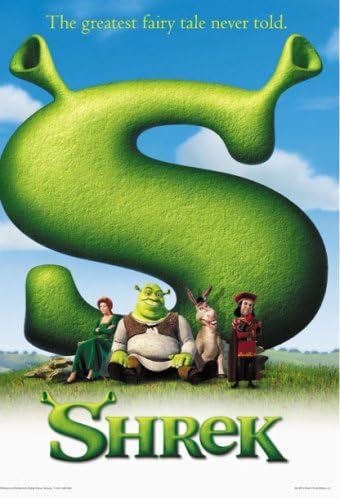
Traditional fairytales have been developed around a similar plot and use the same characters. If asked the basic premise of these movies, all individuals would likely respond with the classic hero journey. Specifically involving the good and bad guys, the damsel in destress, the sidekick, friends, the evil one, etc. All these thoughts are preconceived ideas that have been implemented since childhood. Shrek can be considered a modern-day fairytale in which characters have and represent multiple ideas. All though maintaining the normal fairytale plot and characters, one can interpret these in different ways. Shrek is clearly an ogre in form but is also prince charming in character. The connotation of ogres is negative and often seen as yucky and gross. In opposition, prince charming is seen in a positive light as a magical and dreamt of figure.

Image result for shrek movie poster
https://www.amazon.com/DreamWorks-P521-Shrek-Movie-Poster/dp/B000Q06TRC

Reading Connection

Shrek implements the idea of semiotics through its characters having multiple interpretations in signs. Representing a variation of animals, ideas, and characters; each have versatile meanings depending on how one views them. One may consider Shrek a gross ogre or dreamy prince charming. They also can view donkey as an animal, friend of Shrek, or sidekick. Depending on the context in which Shrek is seen, the individual develops their own assumptions and meanings.

Design a site like this with WordPress.com
Get started