“On Repeat” segment of Radiolab – Jacob Nicholson

Reading Summary:

During the Radiolab podcast a narrator, Jesse Thorn, talks about this comedy skit where Kristen Schaal dances like a horse and Kurt Braunohler sings like a crazy person. They go on for a very long time and the crowd initially finds it funny then doesn’t then finds it funny again. The idea was to break the expectation that breaks the original expectation and overall keep doing the same thing over and over again. They then cut to a different podcast where they talk about this lady Mary Sue who is stuck in a mind loop. She didn’t know where or when she was, and this brought immediate panic to her mental health. However, it was determined she wasn’t having a stroke and in fact everyone struggles daily with these two questions. When and where am I? Mary Sue eventually got more and more of her memory back.

Personal Example:

            Hearing about this loop and loss of memory reminded me of this video I watched about Eddie Hall.  Eddie Hall is a strongman record holder He holds the record for the heaviest deadlift ever at 500Kg. When he completed this feat of strength, he had severe health issues after. He immediately started bleeding form the face and passed out. For the next few days he said he would constantly be repeating himself and forgetting things. For an example he said he had the same conversation with his wife multiple times. He kept asking her who that guy was, who was at their house. It was Eddie’s brother. As time went on he recovered and now is completely fine and lifting heavy again. 

Reading Connection: 

            Eddie hall had a more severe medical condition then Mary Sue, but their symptoms were similar. They both experienced loops in the mind and memory loss. The podcast said that the reason the brain keeps asking where, who, and why? Is because it is in survival mode. These questions are asked because they are typical to safety and something, we as humans ask ourselves multiple times a day. Mary Sue did recover faster since her condition wasn’t caused by lifting over half a ton. The reason Eddie Hall experienced this condition was because his body was in a life or death mode. He knew he had to command around 70% of muscle fibers to lift this much weight which would only be caused if his body was in that extraordinary mode. 

Persuasive signs: The semiotics of advertising

In this article, the author presents many examples of how advertisements contain hidden meanings. One of these examples is the way peach products are marketed to consumers. The author points out that in ads for peach perfume, peach wine, and lipstick, the ads all include hidden meanings of sexuality and scandal. The language and visuals for these ads included references to Adam and Eve and the forbidden fruit, and seductive language such as succulent and sizzling to describe a shade of lipstick. This article also references a men’s cologne ad with a handsome man in dark shadows, wearing an undone suit collar. The author points out how the darkness, the undone clothes, and the stoic, strong man, all point to hidden meanings of forbidden pleasures and primal urges. The passage concludes with commentary on how the language used in most advertisements also contain subliminal messaging and that semiotics in advertising is strongly related to consumers connotations.

This add for the Chambord Martini is a good example of subliminal messaging within advertising. This ad is similar to the Verses cologne ad because it is marketed as a drink for distinguished men and women and hints towards the same messages of seduction, and forbidden pleasures. One thing that stands out to me in this advertisement is the fact that the woman is the focus of the photo with her man or “lover” caressing her and protecting her. His suit blends in with the dark background, making the woman’s white dress and the bright purple martini pop. The shadow of the bottle of the liquor also points directily to the woman’s breasts. The shadows that are cast in this picture and the positioning of the product, both contain subliminal messaging of sex and the transition from day to night.

This advertisement shows semiotics within advertising and how symbols are used for subliminal communication. On page 103 under creating textuality the author explains, “from a psychological standpoint, the human mind seems predisposed to link meanings together in some way that has its own culture-specific logic” (Beasely, Danesi, p103). This applies to the cologne and martini ad because the models, clothing, and lighting are all liked to certain cultural norms. These two ads in specific, use the culturally accepted stereotype of the strong, working man, and the feminine, sexy woman. Both ads perpetuate the logic that a woman needs a strong man with a black suit, expensive cologne, and high-end alcohol.

“On Repeat” – Monday

READING SUMMARY

This podcast discusses two stories, both involving things “on repeat.” The first story is about a comedy skit put on by Kurt Braunohler and Kristen Shaal. Kurt sang an obnoxious and loud song about a horse as Kristen danced. The audience laughed, but then Kurt and Kristen kept repeating the song and dance. After about four times, the audience did not think it was funny anymore, but then after nine to eleven times, people began to laugh again. The audiences’ brains expected this skit to be funny, so they laughed, but then had the expectation that it would get better or change. This expectation was then broken, as it did not get better or more funny. The second story is about Christine Campbell and her mother, Mary Sue. Mary Sue called her daughter one day and told her to call back, that something was wrong. However, when Christine called back, her mother did not know the date and did not recognize the truck that had been in their driveway for ten years. Christine called paramedics thinking it was a stroke, but in reality, Mary Sue had transient global amnesia, meaning memory loss that came and went every so often, leaving her for up to 24 hours without memories of what day it was, etc. The weird thing was, though, that every time Mary Sue had this memory loss, she would have the same conversation, repeating every minute and a half to two minutes, starting off with “what day is it?” and continuing with the same laugh and other questions, as if she was trapped in a loop inside her mind.

OUTSIDE EXAMPLE

At the end of the short summary paragraph on the website that has the podcast, it says that the doctor wonders “just how much control we have over our own actions.” This reminds me of when we know a pattern so well, such as walking to class or driving to work, that we don’t even think about it and just arrive at whatever location we usually go to. We know how to get there subconsciously, just doing the actions without thinking. One time last year, I was driving home from work and realized that I remembered nothing from the drive home until I got to a stop sign near my house. I must have just zoned out, but obviously did not get in a crash or run any red lights. I just knew how to drive home without even thinking, and that was a bit scary. The same thing has happened walking to class in high school, when I was so used to the same schedule and hallways that sometimes I would just end up in the next class without even remembering walking from the last one. My body knew the actions and did them without my mind really having control or remembering them, simply because I have repeated those actions so many times.

READING CONNECTION

This podcast’s purpose was to discuss how much control we actually have over our actions, like how the audience laughed at the skit due to expectations rather than actual humor, and how Mary Sue kept saying the same things over and over again without realizing the conversation was simply repeating. This is similar to me driving to and from these common places like work or school without even thinking, since I’ve repeated those actions so many times. I often wouldn’t remember even driving home or walking to class if nothing different occurred, like a high amount of traffic, that actually caused me to remember the trip, similar to Mary Sue’s story of not remembering the conversation, so she kept repeating the same things. Of course, this simple zoning-out on the way to school or work or class and forgetting what happened is very minor compared to Mary Sue’s transient global amnesia. Overall, the idea is that repeating things you’ve done for years, like laughing at a comedy skit even if it isn’t funny and driving to work, causes you to forget what you are actually doing, and how much control you have over your actions.

On Repeat

Reading Summary

The first part of the podcast looks at a segment where two comedians engage in a ridiculous performance. They sing this song that is repetitive and very much toilet humor, but those in the audience enjoy it at first. As they continue in the song, the audience gets less and less amused with the song. Nonetheless, the performs persist and the audience begins laughing again. Neither the performers nor the audience understand how this pattern of behavior works, but it is very consistent across their shows

The second part of the podcast describes a woman with transient global amnesia, which is a temporary condition where an individual cannot form new memories. Every ninety seconds the memory of the individual resets, thus they are stuck in a constant loop of time, memory, and response. Despite this condition having no real causes nor long term effects, people engage in the same survival tactics of asking where and when they are as well as responding in identical loops. This leads doctors to believe that the brain takes away free will from the individual by trapping them in this loop because of an inability to escape. To escape, the “loop’s” time period extends longer and longer until the individual fully regains all of their memory from that time period.

Outside Example

The first thing that came to mind was the below scene from Dr. Strange. Strange knows he is overmatched against the Dark Dimension leader Dormammu. Originally in confronting the evil force, Strange attempts to compel him from taking over the Earth. Because of the Dark Dimension’s immense power and ability, Strange does not attempt to physically fight him. Instead, he forces a continued loop for eternity where he continually confronts Dormammu by resetting time through the power of the time stone.

Reading Connection

In this scene, the power of the loop is clear. Strange cannot fight Dormammu physically, as Dormammu easily kills him time and time again. However through the power of the time stone and the Eye of Agamotto, Strange is able to reset time for eternity to the moment he first encounters Dormammu. Strange enters with the same phrase every time, saying, “I’ve come to bargain,” but Dormammu kills him in various different ways. Both characters knows they’re in this loop, but Strange is hoping that Dormammu will be willing to leave Earth alone in exchange for escaping this eternal loop, and Strange is successful in the bargain. The tactic is forbidden by the sorcerers that Strange is apart of because of the dangers it presents, but the strategy worked.

The View From the Other Half

Summary

    This podcast discussed how transsexual men and women must adapt to how to love after their transitions.  It centers around the difficulty of navigating love from the male perspective after growing up female and transitioning into the male gender.  The men explained that it was challenging to find a woman to date who would accept them for who they are. Many women that they dated before were strictly into women, and finding a woman who is open-minded is difficult, even in today’s seemingly-open community.  One of their friends, Nate, struggled with their sexuality until finally understanding that he was not a lesbian, or a straight woman, but a gay man. Another friend, Ray, met a straight woman, Amy, who had never dated a trans man before, and after they began dating, other people began looking at her differently due to her decision.  At the end of the podcast, the transition is compared to falling in love since both involve a leap of faith into the unknown. 

Example

    This podcast reminded me a lot of an episode from the television show Queer Eye, where the Fab Five makes over a trans man, Skyler, after his recent miscetomy.  They help him find the right tailor for him and change the gender marker on his ID.  Skyler also taught them about common misconceptions of trans men and women and the daily struggles that are often overlooked or forgotten about.  Up until this point in the show, mainly heterosexual men were the subjects of makeovers. This opened the show up to reach more people, while also allowing people from all walks of life to tell their story and have the difficult conversations necessary to learn and stay open-minded.

See the source image

Connection

    This episode reminded me of the podcast because both told stories about the difficulties the trans men faced.  The podcast focused on the romance aspect, while the show focused on the everyday struggles that we might not think about.  The podcast highlighted the mindset others have around them, and in this episode, the Fab Five admit their own shortcomings or misperceptions of the transsexual community.  Both the podcast and episode taught me so much more about the trans community and the challenges they face that I had never considered or fully understood before.

View From The Other Half

Summary

This audio addresses the issues of a trans man adjusting to new social expectations of being a male. The beginning problem of a trans-male is the interactions of their new male persona with straight females and how to approach them in an attractive way. The moment described in the recording between females in a separate cars shows the struggle of gaining attention without fear of rejection due to their recent transition. His friend, Ethan, who seemed to have no fear of the rejection received backlash in some of his attempts. Attraction to women became more complicated and difficult after the change. Finding target audience was so difficult because females were uncomfortable with a male that had once been a woman in a sexual sense. Although, they had all the desires of a male and appearance of a male it was considered taboo. The confusion of the women added to the internal confusion of the trans men. Often times, first dates did not lead to a second. Situations like this created insecurities preventing the trans men from advancing in relationships. Lack of advance confused the partner even more. Essentially, this audio shows the added complications of romance in a trans person’s life regardless of the indifferent desires.

Outside Example

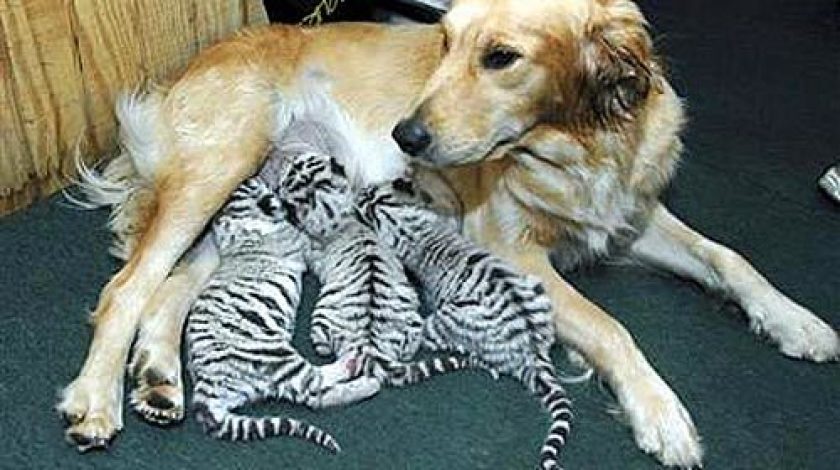
When listing to the audio I was reminded of a story of an unlikely animal caring for a different species. I grew up watching animal planet and other television stations with animal interactions. In some shows they would unlikely things in nature and I found these shows to be among the most interesting. In one show it displayed an elderly dog caring and even nursing a tiger. A feline and canine are often thought to be complete opposites and even enemies, but this dog cared and even loved this ‘enemy species’. The tiger reciprocated the love and grew up and played with the dog’s other pups. We cant be sure that the tiger knew its differences from the pups, but regardless they lived together in harmony.

Connection

The audio talked about pursuit of love and acceptance, but had many obstacles that mostly involved the rejection from others. The speaker’s friend however still found a person that loved and accepted him for his true self. Similarly, the tiger cubs were orphaned and without the necessary care of a parent. The dog, regardless of there species differences, accepted and love the cubs through raising them as her own. The audio recording and the story of the dog and tiger cubs are similar because love can be found in uncommon situations through accepting personalities.

Blog post #6 for Monday’s reading on March 2, 2020

Reading Summary

Kristen Schall and Kurt Braunohler do a comedy bit where Kurt say’s “Oh Kristen Schall is a horse, Kristen Shall is a horse, look at her dance, oh look at her dance, oh look at her dance like a horse” as Kristen dances like she is riding a horse. They continue to do this repetitively for a very long time until the audience is no longer laughing at it. Jesse Thorn explains why doing this makes the audience laugh, then not laugh, and then finally it is funny again when it is over. 

The podcast then transitions to have Mary Sue Campbell and Christine Campbell as the guest. They explain a story about how Mary Sue has a weird loop in her head where she is stuck in the past and forgets the present. Jonathan Vlahos explains that Mary Sue has Transient Global Amnesia. She had lost the ability to form new memories temporarily. Every ninety seconds her memory reset. She slowly starts fading out of this loop till she escapes it.  

Source: https://www.wnycstudios.org/podcasts/radiolab/segments/161754-repeat

Outside Example 

The first thing that came to mind was Live. Die. Repeat. also known as Edge of Tomorrow. The movie has a lot of cgi and is a fiction story. It is a movie starring Tom Cruise and Emily Blunt. It is a science fiction action movie where every time Tom Cruise’s character dies, that day starts over. The monster that the U.S. is fighting is responsible for the creatures invading and is also responsible for him being stuck in a loop of that day. The movie ends by Tom Cruise’s character learning from every time he dies till eventually he gets to the monster and kills it ending his loop of that day.

Reading Connection

The horse joke that Kristen and Kurt make is funny. The thing is that it becomes unfunny after sometime. The reason it becomes unfunny is that repetition becomes scary over time. The thought that it might not stop makes it no longer funny, but rather wondering when it will end. Then at the end it is funny because it happened. The same thing happens in the Mary Sue story, except unlike the horse joke and the movie, the story is seriously scary because it is an uncontrollable loop.

Edge of Tomorrow is a fictional story that’s created by Hollywood. The story of Mary Sue is pretty scary because it is not. The idea that she was stuck in a loop and could not force her way out of it is pretty scary. It shows how the human brain has a way of taking over even when we think we are in control. It also shows how we have no control of it when it does take over. Unlike the Hollywood movies that show they have no control in their loop, they can just walk off a set and it is all okay. The Mary Sue story shows, we don’t have that same luxury.

Persuasive Sign

Reading Summary

The paper starts off with an example of an ad for Marilyn Peach, which uses a technique called “connotative chaining”. The paper reveals that this chaining is what causes ads to be effective. The paper then goes into another example of connotative chaining which correlates colors and signs of a cologne bottle to mythology. Overall, the article is stressing the importance of which connotative chaining has on the overall effectiveness of an ad and in certain cases, it is quite important to take in colors, layout, and possible symbols to account to clearly convey a subconscious message in the viewer’s head.

Outside Example

https://www.google.com/url?sa=i&url=https%3A%2F%2Fwww.adsoftheworld.com%2Fmedia%2Fprint%2Frayban_paint_can&psig=AOvVaw2CYAZL0i_pKAdPufxjPQ1o&ust=1582092469671000&source=images&cd=vfe&ved=0CAIQjRxqFwoTCLjuie-32ucCFQAAAAAdAAAAABAD

I thought this advertisement for Ray-Ban, the sunglasses company was interesting due to its bold colors and interesting combination of objects. A first glance at it may cause one to think “Huh that’s interesting. Theres a stick of lit dynamite in a paint bucket and a girl wearing some ray bans next to it. This is a cool ad because I think the colors look pretty sick too”. But underneath this surface level there are some aspects that help set in some ideas into a viewer’s subconscious.

Personal Connection

So the main connotative chain I see here could be interpreted as, dynamite+paint -> big mess -> not easy to hide an explosion of color -> maybe don’t hide because the color is cool -> you think these colors are cool in your head, so see how this explosion of color is pretty sick? -> Ray-Ban’s has this explosion of color -> Ray-Ban’s are sick. In addition to this, one can compare this idea of a cool explosion of color to glasses by the layout of the ad itself being split up into two separate ideas, the girl and the paint, each one representing the left and right lens. The colors by themselves also have a meaning to say “These are bold colors and you know what else is bold? Ray Bans. See? They’re so bold, we’re saying that you shouldn’t hide and ray bans will help you stick out and be cool”

Design a site like this with WordPress.com
Get started