Summary:
Rules and fiction compete for a players attention once they are in a fictional world. These fictional worlds are always incomplete as ass aspects simply can’t be laid out. It is extremely difficult to decipher between whether these fictional worlds are abstract or representational games. It described Tetris as abstract, however said chess was an in between game.There are rice main types of games which include, abstract games, iconic games, incoherent world games, coherent world games and staged games.
Outside Example:
My outside is both Webkinz and Sudoku. As a child I loved staged games that incorporated both competition and staged worlds full of characters and rules. Webkinz is a stuffed animal you buy with an attached code that gives you that animal in a virtual world with games and social constructs with other online players. Sudoku is a number puzzle game known for its level of easy medium hard and all about working the brain out.
Connection:
Webkinz was quite ideal, however as I have gotten older I rarely participate in games with fictional environments and I prefer abstract games or iconic games like Sudoku, 2048, and card games that are simply thought with no other attachment to a different environment or characters. The reading explained the differences between abstract and fictional and therefore I applied it to how I have shifted in game preference from one to another with age.
Myths and Cyberbole
This article discusses cyberboles which are myths in the media and how these myths operate in the cyberspace. First, the author explains how new technology companies use phrases like “the end of television” and “the end of advertising,” in order to promote another product or technology. Based on unfounded claims, these myths of endism are often misleading and don’t actually take into account real evidence. Another way media has changed how we interact is through virtual communication. While some would argue that this form of communication is “fake” and is not real connection, this article supports the idea that virtual communication such as social networks and skype has paved the way for real emotional connections to be made. Virtual Reality is also brought up, as many people fear this fantasy it creates and the negative impact it could have on young people, a technological fear that began in the 60s. Another cyberbole is the fear of disappearing computer, and the idea of the internet being always on instead of being something consumers log on. This article claims that the transition to smaller monitors and hand held entertainment has created a certain unfamiliarity with the world.
This article reminds me of my parents. It’s funny to me how many of these online myths are bought into by the very people that claim the internet is all fake and we would be better off without it. My Mom is a pretty anxious person and for as long as I remember she has freaked out about articles she has read about the negative impact of social networking, and articles titled “Netflix is ending cable television.” As a kid I wasn’t allowed to watch Spongebob or have video games because she thought they would take me out of touch with reality. As I was reading this article it reminded me of how although in the media it can sometimes be difficult to tell what is fact to what is fiction, media illiteracy can cause fear and misunderstanding for older consumers living in a highly technologically advanced world. Although this pandemic has caused a lot of fear in the media, technology has paved the way of true connection for people around the world, and dispelled many of the fears surrounding virtual communication.
In the article, the author mentions how these cyberboles have shaped what people believe about technology. Specifically when discussing virtual reality or imaginary communities, people who lack knowledge on these forms of technology fear the idea of leaving their bodies, or inauthenticity of online communication. However, Kathrine Halyle’s argues, “with experiences created from digital information and patterns, human functionality expands because the parameters of the cognitive system it inhabits expand…It is not a question of leaving the body behind but rather of extending embodied awareness in highly specific, local and material ways.” When talking about online communities the author clarifies that imagined communities don’t make them inauthentic, they are just grounded in mental abstraction as opposed to physicality. Understanding these differences and myths in the media can create media literacy and encourage new ways of connection.
Myths and Cyberbole, Trends and Tipping Points
Reading Summary:
A cyberbole is a myth or exaggeration. One issue is called ‘endism,; referring to predictions that new developments will result in the end of other methods and approaches. Endism is conceptually and practically flawed – conceptually because it is an absolute and absolutes are rarely found in our relativist world, and practically it ignores counter forces that proponents of particular changes fail to see or afford due valence. A populist concept that frames and distorts the discussion is called cyberspace. It is a much over-imagined and emotionally conceptualized space that deflects our attention from the real issues of substantive importance. The problem in generalizing all that is online as cyberspace is that it focuses attention on things that are happening in some other space, not here. This is true for virtual reality as well. People who use social networks move back and forth between the real world and the virtual world, and sometimes they are ‘in both worlds’ at one time. However, some would say that both are the real world, as they are interactions, people are just interacting with their friends in different ways. The text talks about how because we have a virtual world where things seem so perfect, we often feel the need to keep up this personna in real life. In online chats, people cannot hear accents, which can make some people feel more comfortable talking to others online. Additionally, if people are busy, the conversation can just pick up whenever it is most convenient for both parties. The text also discusses how media is changing over time. For example, when computers were first becoming popularized, it was a big deal to have to remember to log in or log out, but now using a computer is just a daily part of life for most people and not something that they have to think about. The text talks about what will happen in the future as media continues to intertwine further and further into our lives. For example, there is constantly new technology coming out – facial recognition, voice recognition, etc. – that the lines between cyberspace and reality continue to be blurred.
Outside Example:
https://www.buzzfeednews.com/article/tasneemnashrulla/coronavirus-victim-alexa-woman-asked-for-help
This article talks about how a LouAnn, a woman in a nursing home asked her Alexa for help when she was suffering from the coronavirus. She has passed away, but there are about 40 recordings of LouAnn talking to her Alexa about some of the pain that she was in. Her sister said that Alexa was “like a good friend to her.” Additionally, LouAnn’s Alexa was her primary communication tool, as she would call her sisters through the device.
Connection to Reading:
Even though Alexa would be considered “virtual reality,” LouAnn was able to contact her family using her Alexa, which made it possible to have contact with others. Without technology, people who are quarantined with the virus would have to be even more alone and not be able to talk to their loved ones. Similarly, even though Alexa isn’t a real person, the device was able to provide LouAnn with a friend and someone to talk to throughout her pain. The reading discusses how virtual realities can be intertwined with our real world and are not always totally separate, and this news article proves that point. Despite the fact that LouAnn was not able to see her family or did not always have someone with her, she was able to connect with her family as well as find a way to cope with some of her pain through this device.
Agenda 4-8
No Class this Friday (Good Friday)
Louis Giannetti (2008) “Ideology” in Understanding Movies: Eleventh Edition. Upper Saddle River, NJ: Pearson Prentice Hall.
Jacob Sanchez is inviting you to a scheduled Zoom meeting.
Topic: Jacob Sanchez’s Personal Meeting Room
Join Zoom Meeting
https://zoom.us/j/2622686644?pwd=OFR0L2xaNEtnbUd0UUZZUW8waU5yQT09
Meeting ID: 262 268 6644
Password: 104413
Activity for this week
Answer either question 1 or 2
1. What has changed for you since last week? (What are you worried about now?)
2. If you could make any new technology to escape boredom what would it be?
Ex. 1. Is Amazon shopping or delivery a public health issue?
2. Something to make VR drinking and board games easy in quarantine.
Ideology Blog Post 4/8
Reading Summary
In this reading, the author defines ideology as “a body of ideas reflecting the social needs and aspirations of an individual, group, etc.” He states that virtually every movie we encounter conveys a certain ideology to the audience. Movies present us with role models, ideal ways of behaving, and sometimes an implied morality based on the filmmaker’s sense of right and wrong. However, every movie has an ideological perspective whether it be the filmmaker’s or not. Sometimes these perspectives are straight-forward, but others can be hidden and embedded within the film. Ideology is another language system in film, but it is often a disguised language that speaks only in code.
Outside Example
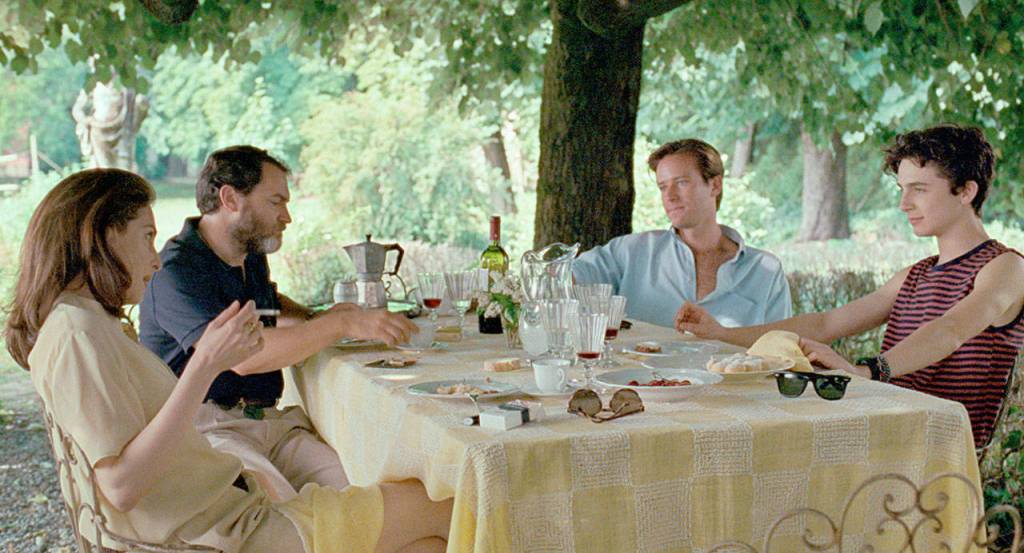
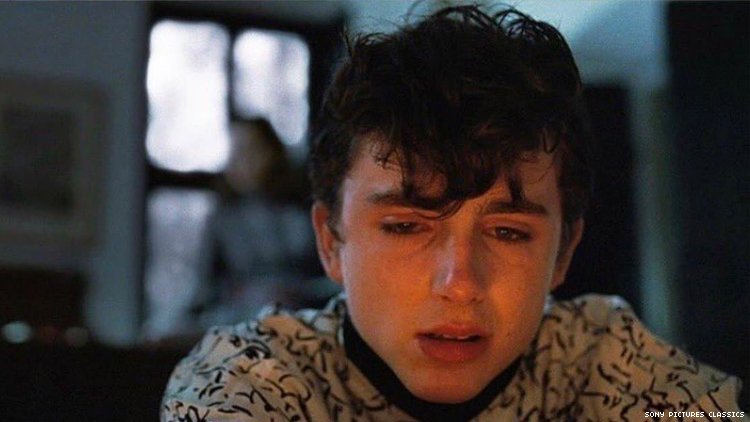
When reading this, I was reminded of the film Call me by your Name. This film is set in Lombardy, Italy in 1983. It regards the story of a 17 year old boy, Elio, who falls in love with a handsome doctoral student, Oliver, who is studying as an intern for Elio’s father. This film is critically-acclaimed for it’s superb cinematography despite the young age of Elio being controversial.
Reading Connection
In the reading, the author brings up the topic of what a movies tone conveys to the audience. He states “a movies tone refers to its manner of presentation, the general atmosphere that a filmmaker creates through his or her attitude toward the dramatic materials…tone can shift from scene to scene.” During the beginning of Call me by your name, when love is coming into fruition, the tone is set by scenery that is often light and airy. The cinematography and poetic narration presents the feeling of passion and romance. However, in the ending scenes when Oliver has left Elio, the setting is very dark and dreary. The audience can sense and feel the heartbreak that Elio is going through. The tone in this film shifts to adjust to the feelings that the characters have in a certain setting.
Ch 7 Good Sire
Mediums are very important to what we are trying to convey to an audience. We typically look at them in relation to technology, but they’re more inclusive than that. Smith talks about painting, photography and film. Different mediums can influence how we absorb a message. Mediums are always changing because technology is always changing. They evolve somewhat from each other.
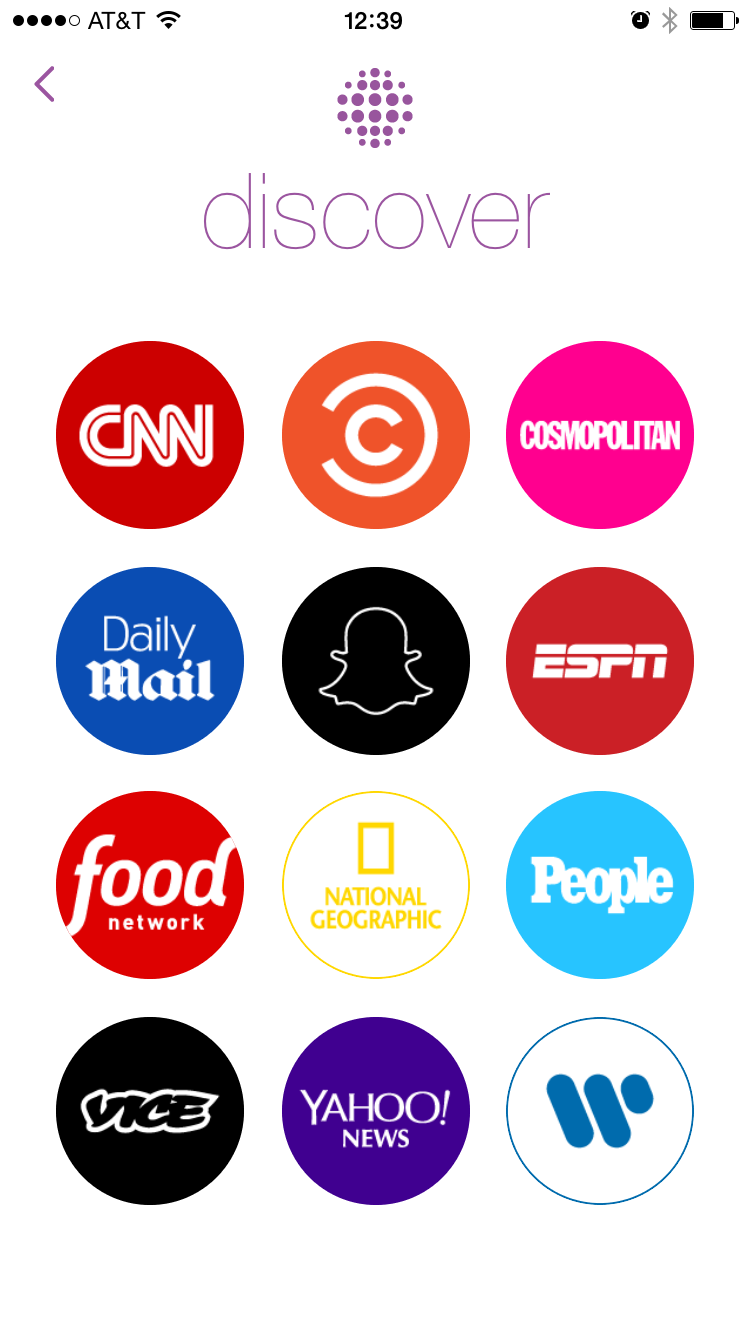
This made me think about how I no longer watch the News on TV. In fact, I almost never watch live TV. I get my news from the news tiles on Snapchat.
My grandparents and my parents both got their news from television. My great grandparents got their news from radio. We now get our news in the palm of our hands. Because I’m used to the speed of a phone. I don’t want long ads in between looking at the news like on TV. There are max 10 second ads in between snapchat news. The stories are also short and quick to appeal to a younger audience. This is an example of how mediums are always changing.
Agenda 4-6
Smith, G. (2011). What media classes really want to discuss. Chapter 7, pages 117-134.
No Class this Friday 4-10 Good Friday
Password now required for zoom meetings, if you have this bookmarked just check
Jacob Sanchez is inviting you to a scheduled Zoom meeting.
Topic: Jacob Sanchez’s Personal Meeting Room
Join Zoom Meeting
https://zoom.us/j/2622686644?pwd=OFR0L2xaNEtnbUd0UUZZUW8waU5yQT09
Meeting ID: 262 268 6644
Password: 104413
Activity for this week
Answer either question 1 or 2
1. What has changed for you since last week? (What are you worried about now?)
2. If you could make any new technology to escape boredom what would it be?
Ex. 1. Is Amazon shopping or delivery a public health issue?
Ex 2. Something to make VR drinking and board games easy in quarantine.
Ideology
Reading Summary
The article discusses ideology as a body of ideas reflecting the social needs and aspirations of an individual group, class, or culture. The term is generally associated with politics and party platforms, but it can also mean a given set of values that are implicit just like in filmmaking. Virtually, every movie presents its viewers with role models, ideal ways of behaving, negative traits, and implied morality based on the filmmaker;s sense of right and wrong. Therefore, every movie has a certain ideological perspective. These perspectives are shown to benefit certain characters while it hurts others. The reading explains neutral, implicit and explicit ideological categories. In a neutral category, the social environment is insignificant which allows the story to move on smoothly. The emphasis is on the action and entertainment of the film without any analysis to make. In an implicit category, the protagonists and antagonists represent conflicting value systems but they are not crucial or essential to the film. In implicit films, the viewers are set to construct the characters’ value systems based on what they see. On the other hand, an explicit categories are films like those that include propaganda, which repeatedly advocate a certain point of view.
Outside Example
When reading this article, I began thinking of Disney Princess movies. More specifically, the animated movie of “Cinderella.” This film was produced in the 1950s, so gender roles were strong and alive. The film is about a young girl, Cinderella, who lives with her wicked stepmother after her father passes away. Yet, the life with her stepmother and two stepsisters is very brutal. They are often jealous of Cinderella’s beauty leading them to disrespect her as women and a person. Cinderella is basically seen as the maid of the household who has to endure insults and orders. In the film, there’s a ball but her stepmother prohibits her from attending but a fairy godmother appears that makes Cinderella appear completely different (poor and dirty to looking rich and beautiful). This transformation allows Cinderella to attend the ball, where Prince Charming falls in love with her by just her looks. Cinderella eventually heads back to her house because her transformation would only last until midnight. Once she gets home, she keeps being tortured by her “family” and is even locked up in her room. But at the end of the film, Prince Charming goes door to door looking for the woman he saw at the ball. Cinderella’s stepmother hides Cinderella so he won’t find her but eventually he does and rescues her. This movie shows not only gender roles of a man having to rescue a women but also that women destroy women.
Connection
The film “Cinderella” connects with the reading because it contains an ideology about gender roles just like the reading’s example of “Pretty Woman.” Just like in their example, “Cinderella” shares the idea that a woman’s beauty will lead her to be rescued by a man. When Prince Charming sees Cinderella, he is completely drawn to her by her beauty but they do not seem to have a conversation. He immediately starts dancing with her and little-no conversation is shared between them. This reveals that the movie’s message was that women’s beauty is essential in obtaining attention from anyone. In addition, Cinderella had to transform from looking like a maid to looking beautiful and worthy of a prince in order to be noticed. One is left wondering if the prince would have approached her if she had shown up in her usual “maid like” attire. Moreover, the film also illustrates the ideology of women tearing down women because of jealousy. The female figures that Cinderella has are always tearing her down emotionally and physically. Showing this type of movie to young girls will make them grow out to these perceptions. Watching these movies as a child may lead to unattainable beauty standards, unrealistic need for a man and not supporting women. The reading describes this pattern of individuals looking up to movies as what society should be like. Today’s world would not permit a film like that to come where the only female figures of the main female character are not supporting her. In today’s Disney princess world, women support women or women achieve their own paths.
CH 7 Jacob N Monday
Reading Summary:
Mediums have many different definitions. If we treat hardware and mediums the same, then the technology is viewed as natural and the programs as naturally occurring. Mediums have an essence meaning they do some things better then other things. For an example before pictures were invented, the medium essence used to be a painting, but after that it became a photograph and painting became modeled after the photo. The history of mediums is based on technological inventions. These inventions became mediums and popular due to social needs. Another definition of medium is a blend of different medias, like tv is a combination of radio, storytelling, and photography. Another definition is seeing medium as a virtual machine. It requires more than the technology; it requires the viewers and producers as well.
Personal Example:
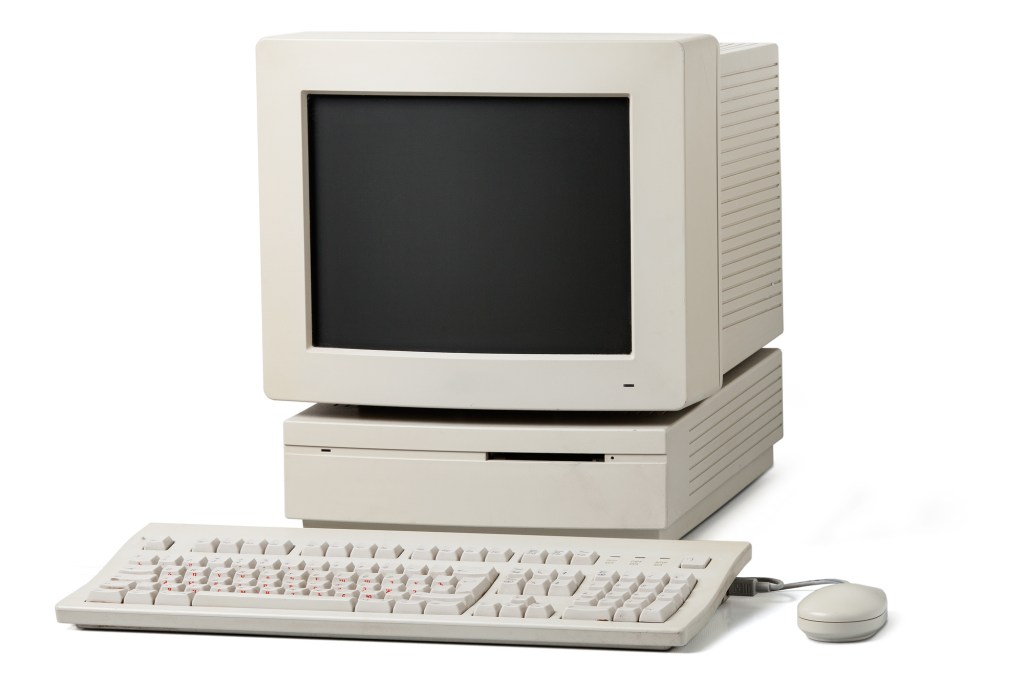
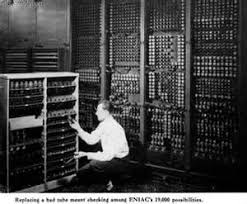
My personal example is my computer science class. We learned about the history of computing. Initially a computer was a giant room filled with vents and plugs. Then new inventions made it smaller and smaller and more personal. The inventions were ushered in by social needs. The usage for computers changed as well. They started out as giant calculators and today you can do anything with them. The world is hooked up by computers but they would be nothing without users.
Reading Connection:
Computers themselves have a medium that changes. It has many definitions. One could be the change is usage or essence of the computer. Like I said it started out as a giant calculator and now it can do anything. The history of mediums is based on inventions like computing. They are shaped by social needs and have changed a lot over the ages. A computer is a virtual machine. It is used to run programs and control things. However, these acts require a user and a program. The world is hooked up by computers.
Ideology
Reading Summary:
This reading discusses the topic of ideology and how different films employ different ideologies. Giannetti explains that ideology directly affects the tone of the film regardless of what type of ideology it is. Across different cultures and different places in the world, the set of common values or accepted values is drastically different. The idea portrayed by one movie may be seen as radical to one group of people while others support it. Also, Giannetti explains that it is up to the author/director to decide what type of ideology they want to employ in their media. For some, they want to put forth their own ideology. For others they mix it up depending on the characters.
Outside Example:
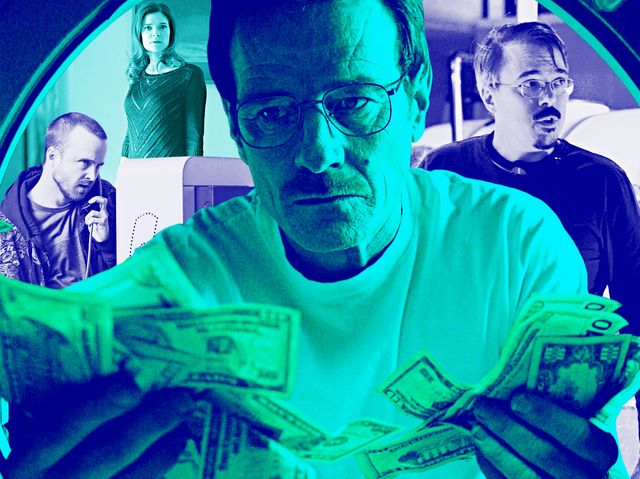
My first thought was to think of examples in TV shows that I have watched and how they would fit in to this concept of ideology. Immediately, I thought of my favorite TV show of all time: Breaking Bad. Breaking Bad was directed by Vince Gilligan and the main character is Walter White. Walter gets the news that he has cancer and he decides to sell drugs in order to make money for his family before he is gone.
Reading Connection:
In the show I found that Gilligan made it so that Walter came off as extremely innocent. Also, he eases into everything bad decision so that viewers are better able to sympathize with them given his circumstances. I think Gilligan puts these good characteristics in Walter to make it so the audience sides with him during his bad decisions. By the later seasons of the show, I started to question myself about how I was rooting for a guy who was a murderer and a drug dealer. I think it comes down to the ideology and the fact that Gilligan made Walter’s set of beliefs seem super reasonable. As a result, this seemingly innocent ideology helped to justify his bad decisions and make them appear as more minor.
 Comm 2302 Spring 20