Ch 8 Interactivity

Reading Summary

Smith talks about how interactivity is the force that drives new media, but that it is hardly defined. Part of the reason is because its meaning can change and is flexible. Different mediums are interactive in different ways. We watch TV, but we play games. We use our voices to call and our fingers to text. These mediums are all interactive, and they all count. There are varying degrees of interactive, however. Watching TV is not very interactive, while playing a game may be much more immersive. This leads to him saying that interactivity can be stronger or weaker depending on the medium.

Outside Example

The obvious example is VR. VR allows you to take a more personal role in your games and play from a new, more interactive perspective. This trailer is of Half-Life: Alyx, which I can talk about.

Reading Connection

VR is perhaps the most interactive media currently available. It takes the choices and controls of games and intensifies them by immersing you in the experience. Typically, your field of view matches that of the characters, and there is a sense that you have become your avatar. Interactivity is at its highest here.

From The Green Berets to America’s Army: Video Games as a Vehicle for Political Propaganda

Reading Summary:

Video games can be very persuasive. Immersion, intense engagement, identification, and interactivity are traits of video games that function as mechanisms for influencing attitudes. Propaganda is closely related to ideology, but the terms have distinct meanings. Ideology refers to shared values and beliefs that shape individuals’ understandings of institutions and social relationships. In contrast, propaganda is developed by an organized group and systematically disseminated with the intent of prompting certain attitudes and behaviors. Propaganda can be blatant or subtle. It thrives in democratic systems as an alternative to the physical force that underpins totalitarian regimes. One can watch TV distracted, but video games often require audience attention. Video game immersion is often accompanied by intense player engagement. Focused gamers develop many characteristics of a “flow state,” which is characterized by focused concentration, time distortion, a sense of control over one’s actions, and satisfaction derived from the factors intrinsic to the activity being practiced. In many of the most popular video games, we identify ourselves bodily with our character in the game world, and psychologically with the broader narrative arc defined by our character’s choices. Filmmakers have long recognized the psychological power of such identification processes. Video games are also interactive; the user chooses and the computer responds.

Outside Example:

Civ V The Complete Edition PC Key | Voidu

When I was reading this, I thought about how in high school I used to play this game a lot with my friend. It consumed my life and I would even have dreams about the game and that I was conquering other countries. This is when I realized that this was too obsessed with this game and take a break. It was crazy to see how quickly I could become so engaged and obsessed with a game. When I would play this game, I was so focused on it and nothing else, hours can pass and I wouldn’t even realize.

Connection to Reading:

When the reading talked about engagement, I think that closely relates to my example. The reading also talks about losing track of time and just associating feelings with the game to feelings in real life. For example, if I wasn’t doing well in the game, I would let that affect how I felt about my own life as well as how I responded to others. This is the same for when I was doing well in the game. After doing this reading, I realize how video game designers can put propaganda in video games to get people to feel a certain way about certain things without players noticing.

Ch 8 Jacob Nicholson Monday

Reading Summary-

Interactivity is what defines new media. However, interactive has many different meanings and are defined by the media. Interactivity can mean better control over media, better connectivity to others, the ability to imagine, and physicality. Some major qualities that define good interactivity is how the user can interact with objects, either in a game or in the chat room. Another quality would be the speed in which the media responds or runs as well as the ability to create choice for the user, allowing the user to do what they want. Overall, interactivity is based on the design of the media, the stronger the design the better the intractivity.

Personal Example-

Vr and immersive gaming is the future of video games. I personally do not own a vr headset, but I have played it before. I have played the Music Saber game where you slash these blocks to the sound of music. You also have to move and dodge obstacles. There are plenty of games on VR like boxing and horror as well. The immersive capability of the console and headset can turn any game into straight fun for hours.

Reading Connection-

The reason VR is the future is because of its ability to be more interactive. With the VR headset you can now use your full body to move and punch, while as before you just had a controller and fingers. You are able to interact more fully with even the simplest of games. I remember playing Tap Tap revolution on my iPod and now I’m playing the same game essentially on the VR with the music saber game. The reason that the music saber game is way more popular is because it has more interactive capabilities.

Welcome to the Post-Modern World

Summary of Reading:

This week’s chapter suggests that in the post-modern era we are “forced to be free” (7). In the pre-modern era, social constructions of reality were binary in nature. Such societies did not entertain the possibility of other different world views existing alongside their own. In the modern era, people began to suspect that other realities existed whereas the post-modern era forces us to make choices about our realities.

Outside Example:

One example I thought of while reading the chapter was the movie “The Matrix”. “The Matrix” is a sci-fi action film centering around a computer hacker, Neo, who begins to suspect that the world is not as it seems following repeated encounters online with the phrase “the Matrix”. When the stranger Morpheus offers to show him the truth of his reality, Neo discovers that the world (as he knows it) ended in the early 21st century in a war between humans and intelligent machines. The machines modeled “the Matrix” on the world they conquered, keeping humans pacified in the simulated world while the AI harvested bioelectric power for their own use. Neo joins Morpheus in the fight against the machines and to free the humans they’ve subjugated.

Connection to Reading:

In the film, Neo must make a choice about his reality. Morpheus offers him two pills – a red and a blue one. Swallowing the red pill would reveal the truth of the Matrix while the blue pill would allow Neo to continue living a comfortable yet oblivious life in the Matrix. Neo ultimately chooses the red pill and awakes to an entirely different concept of what the world is like – a life as a slave at the hands of the machines.

Monday, 4/20 : Interactivity

SUMMARY

The reading for today aims to define and go into detail about the idea of media interactivity. “Interactivity” is defined as new media that allows a two-way flow between the user and software. Media can be separated into two major piles: media that is interactive and media that is not. But the definition is tricky. Some would view television as not interactive because you’re simply sitting on the couch watching a screen. On the other hand, it’s argued that just by watching the content, a viewer is having to come up with ideas, beliefs, and opinions, meaning the content is in fact interactive. Another significant part of this definition is the idea behind “control” and a user’s ability to decide what happens, for example a video game.

OUTSIDE EXAMPLE

As a fan of Netflix’s Black Mirror, I was absolutely stoked about the release of Bandersnatch, the first film to come from the series. This was in 2018, and a movie like this was yet to be released, especially on an online platform. The movie itself begins, and then suddenly, you as the user, are asked to make a decision for the character. It’s a simple choice, but as the film progresses you realize every choice you’re making is significant to the plot. The cereal you made the character eat that morning can send you down a completely different path than if you had chosen the other option. It was the first movie I’d ever seen where I, the viewer, was in complete control of how the movie went.

CONNECTION

In the reading, the debate about film and television really stumped me. I try almost every time I turn on the TV to really take in and analyze what I’m watching, so I believe for me it would be interactive. But when I look at my sister, who sleeps to the sound of That 70’s Show, I can see how the definition could not fit that situation. With Bandersnatch specifically, you cannot argue that it isn’t interactive. It’s a purely interactive film product. You have to be alert and tuned in to what is happening, or the story simply stops. But I would say this is one of the only types of films that can be certainly defined as interactive. All other media products are up in the air.

Blog post #10 for Monday’s reading on April 20, 2020

Reading Summary

In Chapter 8 of Greg Smith’s book “What Media Classes Really Want to Discuss”, the existence of interactivity within media is discussed. Smith argues that there is no such thing as passive media. That all viewers are active viewers and that this is shown through how people react to things such as television shows. There also is the interactivity concept that a media source is interactive or not interactive, but that isn’t an accurate way to describe media since media morphs. It also isn’t accurate because no one views the media in the theoretical way. An example of theoretical would be a completely silent theater to watch a movie, but in reality you have people coughing or laughing or making some noise. Regardless of what it is, there is a different reality of how the media is experienced for every viewer. This also can lead to a Blair system of sorts for each medium. There is a common thought that books are more intellectual, but this comes from valuing spatial imagination more than other intellectual thoughts. 

There are strong designed media spaces, which are created and have a planned pay off such as video games, and there are weak designs such as blogs or chat rooms that have no planning or planned pay off. The thing is that in a video game world, the actions are limited to what the creator has intended. The reality of a video game is limited in its interactivity. While interactivity is a part of what makes video games enjoyable, it is not the only reason and may not even be the primary reason. It is the choice that interactivity gives that helps new media develop and advance. 

Outside Example 

The best example I can think of is a Bear Grylls show that’s on Netflix called “You vs Wild”. In this show there is a plot line that is set up to where Bear Grylls is somehow in the wild somewhere and you have to direct him on how to accomplish some goal (getting to safety, delivering essential medicine, finding a criminal, etc). You, the viewer, get to pick what Grylls does in a cut scene that happens about every 3 minutes in the show. There are always two options during the cut scenes. 

Trailer for show: https://youtu.be/pwcr3cc0LZM

Reading Connection

First off, I personally found this show terrible. The choice you make always has a dumb result. An example is there was a choice of how to get over a crevasse. The choices were swing on a vine or climb over a log. I chose to go over the log. Grylls got mid way across the log and started bouncing on the log say “wow this is really sketchy” and then there was a cut and he was on the ground at the bottom of the crevasse. It was cringe. I now realize the reason I hated this was because of the interactivity. While the show gave me choices with how interactive the cut scenes were, the way these choices were carried out by Grylls was still out of my control. It still was frustrating just how little control I had of this show, despite having more interactivity than a regular tv show would normally have.

Fiction

Summary

In Juul’s analysis of video games he discusses the worlds that games take place in and how they create the different game experiences. He begins by describing different types of fictional worlds in games. The first is Half-life, where not much can be inferred about the details of the world outside of what has been told or shown to the players. The second is incoherent, the game contradicts itself and frequently presents conflicting information about the in-game world. Abstract is a game like tetris where the game pieces have no individual meaning and do not represent anything else. Iconic games is where individual aspects of the games may have recognizable meanings, but may not be connected to one another. Coherent games are games where a world is layed out and details can be inferred and all pieces have meaning whilst connecting with one another. Game designers establish these worlds using a combination of graphics, sound, text, cut-scenes, haptics, and rules to create their desired worlds.

Example

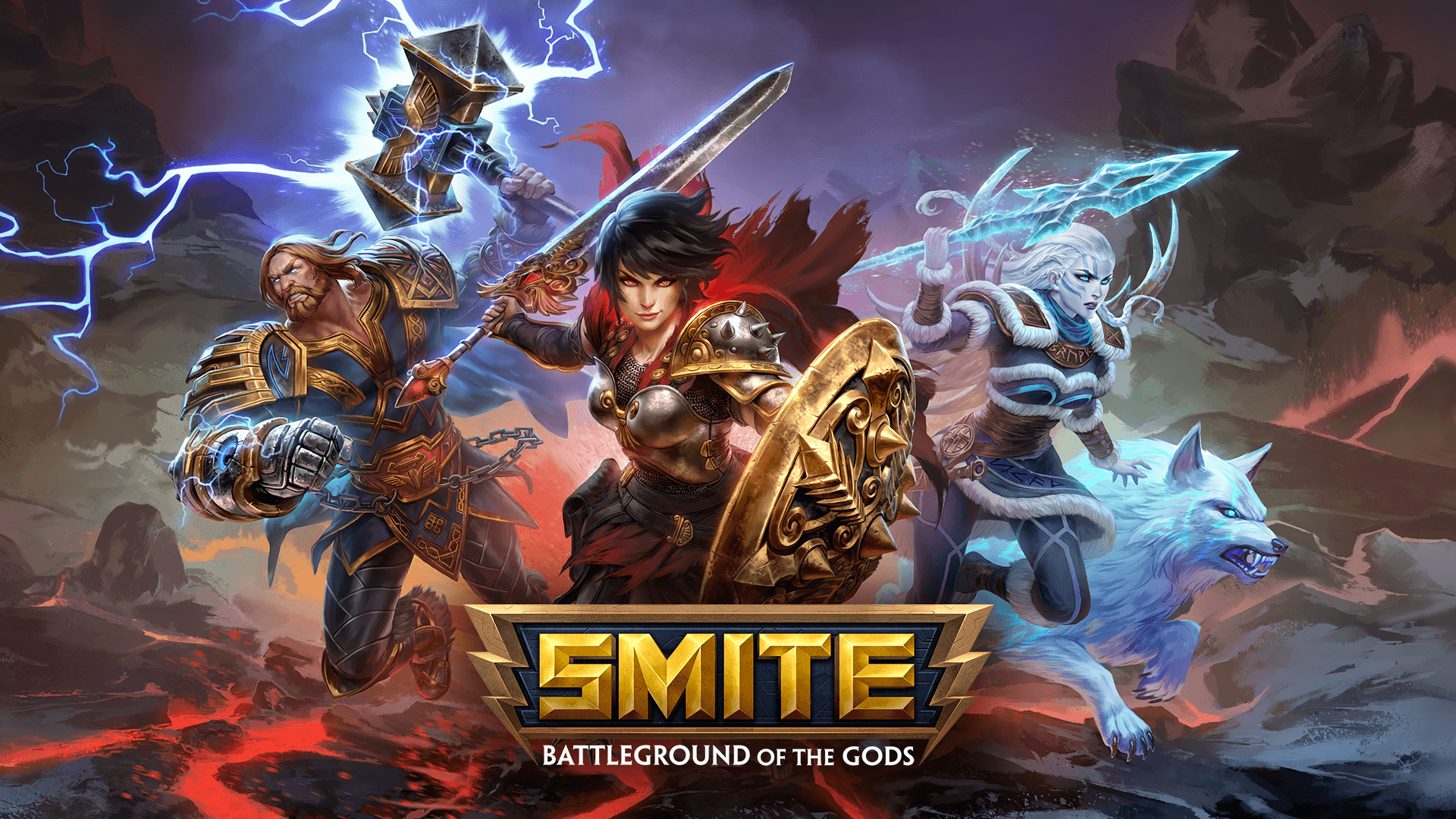
Recently, a friend of mine has been encouraging me to play Smite with him. In Smite, you choose a god to play as and team up with other people to fight. In the version we often play, you have to take down the other team’s tower, phoenix, and titan to win. There are NPC characters, called minions, that are designed to defend you and help you to attack the other team. There are dozens of gods to choose from that have different specialties. They can specialize in magical or melee attacks and have special abilities based on what god they are and the religion they are associated with. You are also able to fight smaller monsters for power-ups within the game, but it is not necessary.

Connection

I thought of Smite while reading this article because of two reasons. One, it is one of the few video games I have actually played. Two, I feel it is a good example of an iconic game. The gods you can play as in the game are representations of real gods from mythology. However, most of them have no association to one another outside of the game. Based on the abilities they have you can make assumptions about their interactions with one another and form your own opinions about them, but there is little additional backstory given about why all these gods are fighting one another in an arena.

“From the Green Berets to America’s Army: Video games as a vehicle for political propaganda,”

Summary:

Special Force is a video game, designed by a militant Shia group that is widely known as a terrorist organization. It is a first person shooter game that simulates an Israeli invasion of Lebanon, created in hopes of getting new recruits. Americas army is a video game that hopes to demonstrates life in the U.S. military, looking to enlist young Americans. These games could technically be classified as political propaganda, but the creators call it “educational entertainment.” Propaganda can be defined as a deliberate attempt to shape ideas and persuade people conduct a certain behavior that furthers the goal of the propagandist. Propaganda is generally meant to reach more than just one person and is usually created by an organized group. Some relate propaganda to being deceitful, however, much propaganda is used to disseminate helpful behavior, like not to drink and drive. Propaganda is an alternative to dictatorships and totalitarian regimes to help foster certain behaviors. Video games could be seen as both propaganda and education, because education inadvertently shapes opinion and cognitions.

Researchers highlight four common characteristics of video games that are independently linked to attitude change: immersive, intensely engaging, identification, and interactive. Video games demand attention because they create the feeling of being surrounded by a completely different reality. Users are immersed in another world were they can experience, sight, touch, sounds, and the perception of bodily movement. Users are intensely engaged in video games, often losing sense of time and characterized by extreme focus. This state of being allows for better reception of information, because video game users are not passive recipients, but are actively taking in new information. Video game players often identify with the character they are playing because they make decisions for them and then react to the conditions that stem from these choices. Those who design the video game place the player in a situation where he will end up with the intended moral perspective, due to circumstance. For example, the interactive aspect of video games allows the designers to reward certain behavior and condemn other, shaping the users moral perspective. Many scholars have decided to use the medium of video games as a tool to inspire social change.

Outside Example:

I have never been one to play video games so it is hard for me to think of something that applies. I guess one example would be the game animal crossing for Nintendo. I was obsessed with this game when I was younger and I am so happy that it recently made a comeback. I have not bought the new game though because I can’t afford a Nintendo Switch right now. Basically, in the old version, you are given a town and can choose to build your house anywhere. Then you work a job and make money buy selling things you find, enough to pay off your mortgage to get a bigger house. You can customize your house with furniture and wallpaper and things. You have neighbors who are animals and you can make friends with them. You can customize your appearance and change your clothes and things.

Connection to reading:

This game, although I don’t believe it is propaganda, does use some of the characteristics of video games, such as intensely engaging, identification, and interactive. When I was younger, I would play the game for long periods at a time, trying to make money to pay off my mortgage. I was very engaged and really wanted to pay it off so I could get a bigger house and things. I had a lot of motivation. I also identified with my character because I helped customize her and I instructed all of her actions, so I felt like she was me. It is an interactive game because you make your own decisions and the players react to those decisions. It is kind of like a game of life, almost in real time, but a little sped up. It is very entertaining, which is why it is gaining popularity again.


Video Games as a Vehicle for Propaganda

Reading Summary

In Delwiche’s chapter, he argues the ways in which video games can shape attitudes and beliefs similar to those in which propaganda does the same. He identifies “four I’s – immersion, intense engagement, identification and interactivity” as the “mechanisms for influencing attitudes.” He first explains that the gamer becomes completely immersed in a different reality similar to the feelings of getting lost in a good book or a movie. This can be partially due to the intense engagement that is required. Because the gamer is in control of their actions and the way in which the game is run they must be focused. Additionally, because they have control over their character, they have the ability to characterize it in such a way the becomes personal and therefore leads to a sense of identification. Lastly, the interactivity is due to the reward/ punishment system of video games. Different actions lead to different results coming full circle and emphasizing the importance of why the four I’ are appropriate when engaged in video games. Due to the four I’s there’s a learning and persuasive factor built into video games but the way in which it is received is solely dependent on the gamer. Delwiche gives examples of other games that lack parts of the four I’s and therefore do not have as great of an influence in persuading the minds of individuals like those of some video games and propaganda.

Outside Example

This reading reminded me of the period in which school shootings and mass shootings in general were continually occurring and being broadcasted. Many articles were written during that time calling out video games as major influencers of encouraging violence and the reoccurrences of those tragedies.

Reading Connection

Like the chapter being fixated on the persuasion of individuals and power to shape their beliefs from video games, this was a heavily covered topic at the time. Video games were said to normalize violence and encourage it because people were so immersed in the culture and how captivating it could be. The chapter mentions that video games have the power to influence in many ways whether good or bad. Specifically, the idea of reward from shooting other opponents and the feeling that follows winning could be blamed for excessive violent behavior and tendencies.

“From the Green Berets to America’s Army”

Summary: The article begins with giving two examples of video games designed to recruit people, Special Forces for the Shia group and America’s Army for the US Army, as a form of “educational entertainment”. It then presents the idea that interactive games can be dangerously persuasive. Next it gives us an overview of what propaganda is and what is included in it. It tells us that it is different from ideologies in its persuasiveness and introduces the question of whether or not these video games classify as propaganda. It then talks about the characteristics linked to attitude change. Immersion is being fully occupied in this separate reality, with this transportation to another world where only the video game exists. Intense engagement gets the gamer in a flow state where they are motivated and engaged. Identification allows the gamer to be present biologically and psychologically with the character, much like film does. Interactivity shows the judgment-behavior-feedback loop. The example of Kuma War shows how it could be viewed as propaganda but how it fails to have these characteristics. It then gives several other video examples where this idea can be seen. The article concludes with the idea that game researchers should acknowledge the political and moral effects more.

Outside Example: When reading this article, it made me think of the Bandersnatch episode of Black Mirror. This was an interactive episode where the viewer made choices for the character and got to watch how it played out. I remember being completely invested in it while watching to the point where I realized I’d spent an hour and a half doing it.

Reading Connection: On page 95 it talks about immersion and how it gives the gamer a “sensation of being surrounded by a completely other reality”. Bandersnatch definitely accomplishes this by hooking the viewer into the drama occurring. On page 96 it says that a flow state is achieved with focused concentration, time distortion, etc. I felt this flow state when watching and didn’t even realize it, only acknowledging it an hour and half later after finishing it. On page 97 and 99 it talks about identification and interactivity. This is where Bandersnatch really excels. It makes you identify with the character because you put yourself in his shoes when making decisions and it is interactive in the way that your choice makes a direct effect on the narrative.

Design a site like this with WordPress.com
Get started