Content Analysis

Content Analysis Summary

Content analysis is a process that is defined in different way by different analysts. All definitions include similarities of requiring a detailed systematic approach in order to interpret media information in a useful way. The process of obtaining useful information is detailed and very specific in order to obtain useful data. The first step in any experiment or study is to find an applicable topic to research. In many ways the study of media follows the steps of the scientific method. The research process ends in analyzing collected data and drawing connections to find indicators in media. The study may be interpreted differently for the reader from the coder. Content analysis must be reliable or it will be viewed as not important to the real world. An issue with studies is the wide variety of users of media. The broad spectrum creates many variable for the researcher to interpret. Content analysis is important because it allows people to more easily understand the world and the media within it, although not always completely reliable.

Outside Example

When reading about the study of interpreting media I could not help to think about all the media platforms including social media. Majority of the modern world is connected through medias such as Twitter, Instagram and Snapchat. Twitter is a social media platform that allows anyone with internet access to post thoughts, opinions, pictures and videos. There is an inconceivable amount of information flowing through the servers on a daily basis. Twitter is where I stay up to date on current issues and news, but when reading through Twitter I have to use discernment to interpret what information is useful and what is not.

Reading Connection

Twitter is a forum of media used daily by most and the reason Twitter came to mind during this reading is because of the amount of information that is put into Twitter. A content analysis study through twitter would require the collection and observation of millions of tweets. Of course, when a specific topic of study is selected it would narrow down the useful information, but would still require trained discernment to make the information useful. Content analysis, I would assume, makes many conclusion about the world through Twitter.
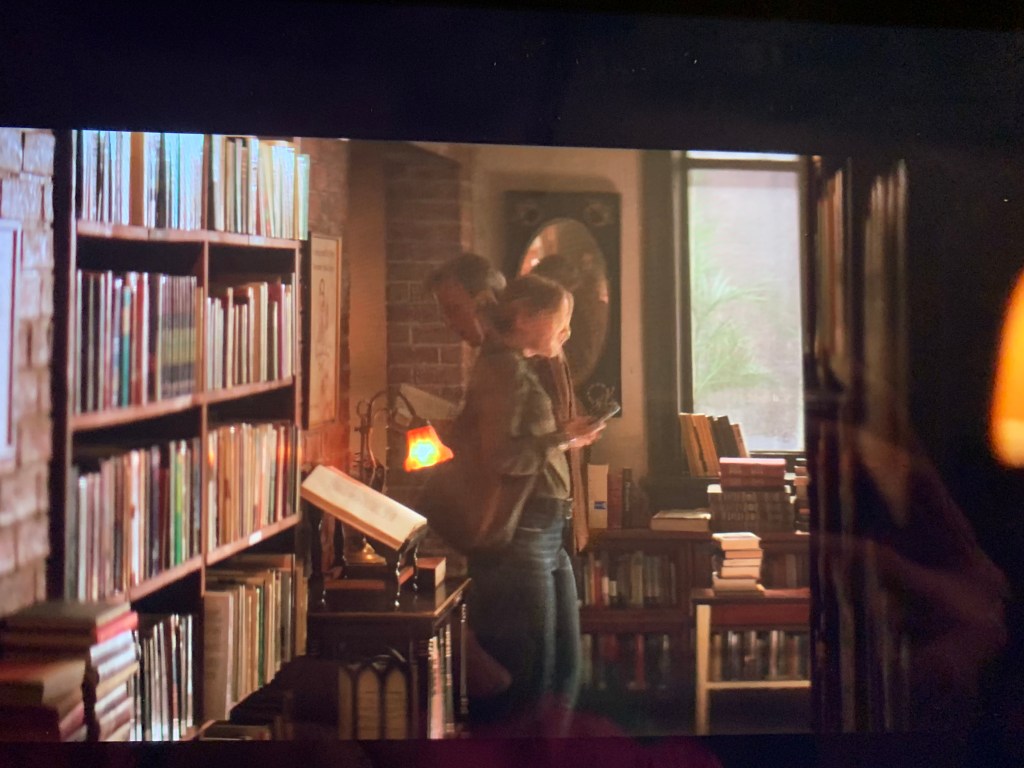
How do we identify with characters

Reading Summary

Chapter 3 discussed the question of “How do we identify with characters?” Smith explained that there are many different techniques such as camera angles and characters that make the spectator feel as if they shared the same experiences or as if they were the characters onscreen. For example, the chapter discussed spatial attachment which is the camera technique of recording really close to or always following a specific character. This technique allows the spectator to constantly see the life of this character. At this point, the plot does not matter that much because the eyes of the spectator are solely on the one character creating a relationship between the two. Another impressive way that the chapter mentioned that media uses for identification is casting. The chapter goes on to explain other methods that media makers use to provide such experience to their viewers such as alignment, point of view and more. The chapter also emphasizes on the idea that identification also has some limitations as it can not be predicted. Some people will not feel any sort of connection to the characters no matter what techniques are used therefore one can only describe how a film/show makes its appeal.

Outside Example

For this chapter, it felt most appropriate to use the relatively new TV show, “You” about the life of serial-killer Joe Goldberg. Yet, I have never heard any of my “spectator” friends describe him as a serial-killer. Why? Well, the media-makers of the show worked magnificently to create a relationship between the spectator and the character of Joe. When we are first introduced to Joe, it is at a normal setting, a bookstore, with a normal situation, him seeing a girl walk in and being attracted to him. This seems normal, doesn’t it? There is not a single bit of serial-killer characteristic that Joe reflects. In fact, we feel an instant connection to him because he is a normal male that seems to want to get the girl so we may or may not assume that this show may be about a love story which it is but it turns out to be way more complicated than how we are first introduced to it. After making this connection, the media maker or director starts showing the true colors of Joe but the connection between the spectator and the character has already been made. Hence, throughout Joe’s journey of killing many people, we never question him or are incredibly upset at him because we have already been connected to him since the start.

Reading Connection

I chose the television series, “You” because it has uses camera angles, point of view and characters to create an unexpected connection between the character and the spectator. It’s an unexpected connection between a serial killer and the viewer. How is this weird connection made? Well, as described in my previous section, the show starts as if it were a normal love story between a man who works at a bookstore and a woman shopping for a new book. The first minute of their first encounter makes Joe seem like a nice guy who is admiring her beauty the moment she comes into the store. This perspective of Joe is made through the use of point-of-view. Like chapter three described, putting the spectator literally in the shoes of the character forces the identification with him/her. Throughout this first minute of Joe admiring this woman, we do not see the actual actor who plays him because he is simply checking this woman and we are doing so with him. To be more descriptive, there isn’t just staring, Joe Goldberg’s thoughts are being shared with the spectator and we only hear beautiful compliments towards this woman. Never would we have imagined that Joe was going to begin to stalk her in the next 10 minutes and murder her by the end of the show. Throughout the show, the techniques mentioned in the book are constant. We are often put in what Joe sees and more importantly, how he sees it which what the book says is the absolute way to make the character identifiable.

Picture from Netflix’s show, “You.” This image shows how we are put in the shoes of Joe Goldberg to see the woman he is attracted to.

Assignment was turned in late because I just got into the class and gained access to the wordpress.

“It’s just a movie”

In this chapter, Smith argues that every detail in film is done purposefully and is crafted specifically to relay a message. Details that may seem arbitrary such as shirt color, lighting, and even the chance occurrences are chosen to symbolize a deeper meaning. Smith also makes the point that the production of movies and T.V. shows are too expensive to not be specific in every shot, and that even if the director didn’t intend a message, they may unconsciously communicate their own beliefs. Finally, while many believe analysis distracts from the entertainment value of a film, Smith argues that media-makers want audiences to read into and find meaning in the details.

I connect with this article on a personal level because I am the one who is constantly analyzing the meaning of movies and how each small detail contributes to a bigger picture. Specifically, in the movie “Us,” a film directed by Jordan Peele, I spent weeks researching the hidden messages within the dialogue between characters, voice inflections, and societal parallels. Peele, known for his hidden commentary on American politics, and layered themes, uses horror to expose the true horrors in society and conceptualize our own world. While his first well-known horror film, Get Out is clearly discussing racism in the United States, US is not as individually categorized. This leaves meaning up to the audience, and challenges viewers to question society and themselves.

Jordan Peele movies are a perfect examples of how directors make choices intentionally to communicate a message. Every small detail in Peele’s films, even the ones that seem unimportant, either foreshadow what will happen at the end of the movie, allude to themes, or call out injustices within our society. What I like about the movie Us is that it doesn’t contain just one idea, but a broad range of messages on the duality of human nature, societal oppression in the US (hint the title), and the guilt of privilege. I find that the analysis of this film not only makes the movie more enjoyable, but leaves a lasting impression which is what all film-makers desire.

What is realism, really?

Reading Summary

While we perceive most aspects of media such as film and television to reflect the real world in great depth, there are actually many parts of it that fail to capture the realism of life. Smith brings to light two forms of realism originally introduced by John Caughie as the “dramatic look” and the “documentary look”. The dramatic look aims to place the invisible viewer within the show or movie while also being able to meticulously edit every detail, while the documentary look cannot be reshot and is aimed to make the viewer feel as if they are actually on site. Spontaneity is a key aspect of recreating realism. In a documentary look, everything appears to be more real because nothing is planned and anything that can happen, may happen. In some cases, verbal spontaneity allows for a slightly more realistic feel in the dramatic look, but the director would still want to keep everything planned. Depending on the scenario or look that the director is aiming to achieve, a film or movie can have as much or as little realism as they choose and still entertain viewers.

Personal Example

My first thought came to National Geographic’s Planet Earth. This 2 hour long documentary showcases wildlife from all around the globe, giving viewers a different look into parts of nature they didn’t know existed. National Geographic achieves a realistic effect by including sounds of nature, close up shots, and an absence of any camera crew or equipment. Viewers enjoy this type of content due to its slower pace, relaxing tone, and the added benefit of learning something new.

Reading Connection

One may think that the director relies only on the documentary look, but many aspects of the film are not entirely realistic. Some of these aspects are close up shots of animals in their natural environment as well, time-lapses, and stop motion shots. While the actions of the animals featured are natural, the pace of the film as well as the closeness to the wildlife would be very difficult to obtain in real life. In addition to this, the sounds of nature that accompany the video are primarily made in a sound recording building, where artists use everyday objects to recreate the sounds that would happen in nature.

Blog Post #2 for Monday’s reading on January 27, 2020

Reading Summary

Glenn Sparks poses the question, “how would one ever go about discovering the effects of media content?” She states that it is through three scientific approaches, content analysis, surveys, and experiments. Content analysis are rigorous analysis of the media content, but do not allow someone to understand the effects. Content analysis allow for your claims to have some merit in the sense that content analysis can show what media contains. Coding agreements and statistical analysis play a role in determining how reliable your content analysis is. The interpretation of the data is what decides if your claim has merit based on your analysis. 

Source: Glenn Sparks (2013) “Analyzing content” in Media Effects Research: A Basic Overview. 2013. 

Outside Example 

I have thought about how the media I consume affects me multiple times. I particularly have thought about how what media I consumed as a child and how it differed from my friends. Some of my friends whose parents didn’t let them watch certain movies or shows when they were younger tend to have been more sheltered. Me and my friends have talked about whose parents let them see an R rated movie first. What really made me start thinking about this is my sister who is terrified of boats or ships or anything on the water. She watched Titanic when she was 7. She now will admit that is what made her so scared of water and she has still not gotten over it. 

Article about teenage media consumption

Reading Connection

Sparks talks about how you need to use scientific ways to prove how media consumption effects the consumers. I have my sister who has had media effect her. I understand that media consumption needs to have a scientific way to prove its effects, but I can reasonable assume for myself that media effects people and it effects each person differently. That is my own nonscientific assumption though, so it has no merit. Content analysis could help support my idea that media has images that could be considered scary in them, but it couldn’t prove my assumption about how it effects people like my sister.

How Do We Identify With Characters?

Reading Summary

This chapter focuses on the importance of media creators to create identifiable characters. Not only does this make the program more enjoyable for a viewer, but creates a deeper and more invested story by bringing characters to life. These identification processes are essential to placing spectators in the shoes of the characters, as well as the primary identification creating important first impressions. The alignment and spatial attachments are necessary in order to learn about the various characters and whether we should view these characters’ actions and arcs and essential or background. Once these are determined by the viewer, we move into a moral evaluation of the characters, or an allegiance stage. While these steps are usually done subconsciously, there are still limits to how effective these developments are for viewers and writers alike. For example, we complete all of these steps simultaneously as well as us viewers simply being spectators of a fictional creation in that none of these characters are in fact real people in real life. However, film and television still utilize these methods in order to develop captivating characters, well-developed plots, and complex reactions.

Outside Example

This reading reminded me of the Netflix series, You, and its main character, Joe Goldberg. Despite the show’s high popularity, I only heard about it by seeing many tweets about Joe and his polarizing nature. After viewing the show’s first season, I knew what I should feel about the character, but still had a side of me that sympathized and understood to a small degree what he struggled with. He is portrayed and acts as a psychopathic serial killer who is blinded by his love for a girl he seeks to learn, fix, and love in that order. On the other hand, he is presented as a displaced outsider of society who seeks tradition and despises conformity.

Reading Connection

It is clear the writers of this show sought to create a character that is subtly sympathized but still recognized as a psychopathic serial killer, and I believe they did an effective job with that balance. The question remains as to whether this balance exists simply because Joe is a white man who manages a bookstore, as I believe if this were not his background there would be no sympathy for his demise. This show mainly uses the tools of alignment and moral evaluation, as it steadily provides background knowledge on Joe’s past as well as why he behaves as he does. Additionally, it challenges our moral evaluations as to whether the stalking, torturing, and murdering of criminally innocent but morally bankrupt characters is acceptable or at least understandable in the pursuit of a better life for someone you love. This show does not seek to provide a character that looks like us because he is the opposite of the mainstream in every way imaginable, but his distaste for what society has become and the ways it views love are sympathized by many viewers. The character of Joe simply presents the question as to whether we view his failure to receive love and happiness as a result of his actions or a result of the world we live in today.

“What is Realism Really?

In this reading, Smith examines the effects of different choices to represent actions in the media we consume. For example, using the “documentary” look, directors can make the actions in their movies appear more spontaneous and as if it could really happen. For an audience to enjoy and perhaps identify themselves within the protagonist, the director may choose this style to allow the events to seem more feasible. Within this, some directors can employ strategies like “verbal spontaneity” to show that the characters portrayed have chemistry and are having a more realistic conversation. In the “dramatic look” the audience is given a more powerful point of view, capable of seeing a more refined series of events. With this strategy, directors can make audiences feel like they are experiencing something otherworldly, to make the events seem grand and abnormal. Both of these strategies serve a purpose to provide context for the events of the film or tv show, and to make the audience believe the events of the narrative.

Reading about the documentary look, I kept thinking about the fight scenes in “Captain America: Winter Soldier”. This fight scene is when Cap and his friends first have hand-to-hand combat with the Winter Soldier for the first time. The way the fight scenes are shot is interesting because it’s shot almost like someone passing by was recording it on a phone. The camera is shaky, cuts a lot, and is often behind objects like cars looking at the main characters. https://www.youtube.com/watch?v=qXPOl6EjbWg

This tactic was used to make the events of the Winter Soldier attacking Cap and his friends seem like it could really happen. The events of the attack happen in the middle of a busy, urban street. The shaky cam and angles make the audience feel like we are experiencing the anarchy like the other civilians running away from the explosions.

Blog Post #1

Reading Summary:

In “It’s just a movie,” Smith discusses the importance of analyzing film and television in response to questions from students in his introductory media class. Smith begins by acknowledging that many people are tempted to compare films to everyday life. In doing so, they often associate little things in movies to be random occurrences as they would be in everyday life. However, according to Smith, these individuals are looking past the fact that it costs millions of dollars to produce a movie and each detail is highly scrutinized by many different people. As a result, each seemingly random occurrence likely has an importance in the bigger picture of the film. Smith follows this up by illustrating that movies are a joint experience for both the director and the audience. The audience interprets the movie based on their own past experiences and many different interpretations can be drawn from the same movie. Smith depicts the idea that film depends on the audience to make inferences and use their prior knowledge to help them interpret a movie. Finally, Smith responds to those who argue that one cannot enjoy film and TV if they are analyzing it. Smith contends that he now feels a more complex enjoyment as he is able to appreciate the movie for entertainment purposes and find pleasure in the creative techniques bestowed in the film.

Outside Example:

During my senior year of high school, I took the role of being one of three rally leaders for the school. Rally leaders are assigned with the job of putting on a performance to create more school spirit in the student body and the task of bringing awareness to school events ranging from sports to concerts. Our “rallies” took place in front of the entire administration and school body and included teacher vs student games, skits, and other forms of entertainment. We began each rally with a short video that served as a segway into the actual event. As a rally leader, we occupied all the roles of being the director, actor, and producer of the short video. 

Reading Connection:

Through this process of making videos for the rally I saw first hand the importance of details in something as small as a short film. We would bring 5 to 10 outfits for the video and would shrink over 3 hours of content into a 5-6 minute video. We would only keep the best videos and take multiple shots for each scene. Through this experience, I was able to realize that every shot has a purpose. Judging from my experience making these short rally videos, I realized just how difficult and long the process of making a movie is. Additionally, I found a newfound appreciation for movies and the techniques utilized in film. I am now better aware of the director’s position in relation to the actor and the use of angles in film as well. Overall, my experience as a rally leader confirms what Smith says throughout his piece. I am able to enjoy movies for the sake of entertainment while simultaneously appreciating the technique of the film and all of the hard work put into the details.

Design a site like this with WordPress.com
Get started