“Precession of simulacrae”

Summary:

The reading describes how today the “simulation” is no longer based on reality, but the creation of the hyperreal. In a simulation, things that are supposed to act and function as that which is real, become, in fact, real. This means that the simulation is no different from reality because it functions in the same way. If someone is to stage a hold up or a robbery, how would anyone else know that it was a “simulation”? If one does all of the things that a robber would do, there is no difference between the simulation and reality. This person would most likely go to jail, if caught. However, this simulation becomes dangerous because it suggests that “law and order themselves might be nothing more than a simulation.” Baudrillard uses Disneyland as an example. The park tries to maintain the idea that this world is “imaginary” and should be distinguishable from the rest of the world. However, Baudrillard says that the world surrounding Disneyland is no longer real and that it is all a hyperreal simulation.

Outside example:

So this reading really confused me and I’m not even sure I know what the author was trying to say. Like genuinely, most of it went right over my head. When I was reading the part about creating a simulation in real life and how that would not be possible it made me think of the show What Would You Do? on ABC. This premise of this show is that hired actors act questionable scenarios in public and the camera records to see if anyone steps up to say something and intervene. It is kind of like a good samaritan kind of thing, a social experiment.

What Would You Do? Season 14 On ABC: Cancelled or Renewed ...

Connection to Reading:

In these scenarios the only people who figure out that the whole thing is technically a “simulation” are the people who decide to intervene. The other people who are eating in the restaurant or walking by on the street have no idea that they are being recorded. It is interesting thinking about this from the perspective of the reading because there is truly no difference from the simulation and whatever reality actually is. These people have real emotional responses to some of these situations and this is where the simulation crosses into the real.

Precession of simulacrae

The age of simulation thus begins with a liquidation of all referential —worse: by their artificial resurrection in systems of signs, amore ductile material than meaning. The reading used Disneyland as a perfect model of all the entailed orders of simulation. It explains how Disneyland is presented to make us think although it is more imaginary than not the rest of the world is real, however the truth is everything is a part of the hyperreal simulation. Therefore if nothing is real it is not possible to make up the false, and or illusions.

Outside Example: My Outside example is the media. I think the media can sometimes be used as an escape. whether it be photos, facebook, instagram, twitter, tik tok, or other trendy platforms they act as imaginary places that create a hyperreal setting of which you occasionally dream as false or fake.

Connected: I connected this to the reading because the reading discusses how Disneyland is a place where people leave their lives at the door and enter a different one. In a similar way, people can leave their daily personalities or even their identities and take on new ones on the web through numerous platforms. For example sometimes people make food accounts or humor accounts to escape their everyday lives or even enhance them. However, the idea that media is misleading or false and everything else is real is as well, just a hyperreal order of simulation. Nothing is real, some things are just higher up in the order

The Postmodern World

Reading Summary

This chapter by Anderson summarizes the evolution of society concerning cultures and beliefs. He explains how we’ve transitioned from larger more traditional cultural groups with structured beliefs and guidelines to a bunch of loose subgroups that form based off a multitude of those larger beliefs and ideals. From politics to religion, many social factors of society influence and shift our belief system. Postmodernism is a result of three major processes. The first is the “breakdown of old ways of beliefs” (Anderson). The second is “the conflict about the nature of social truth itself” (Anderson) and the third is the birth of a global culture with a worldview” (Anderson). He goes into depth on these three processes and explains the traditional versus modern shifts and what has influenced these shifts. The postmodern world provides more options to freely choose and support beliefs of all kinds including the choice of not. Thus the formation of many subcultures. These subcultures highlight the vast differences amongst society through different kinds of beliefs and the postmodern tendencies to be outspoken. Because of the extensive birth of subgroups, much more overlap and similarities between the beliefs are shown as they all originated from some larger aspect. This overlap is described to be shown through memes which display “replicating mental patterns” (Anderson). Through all this growth diversity is born.

Outside Example

Social media can be described as a large cultural group with many subgroups within. Multiple aspects of the reading reminded me of modern day influencers and their influence on society through a social media outlet hence their title. Influencers are generally individuals who have a large following and focus their posts on a specific topic or multitude of topics. They usually are sponsored by different products to promote because businesses and organizations know they have the ability to inform and convey their beliefs to individuals that will accept them. Additionally, if popular enough they are often paid to do so.

Reading Connection

Like higher powers and politicians have the ability to form groups and shape beliefs of people, social media has provided a similar outlet through the use of influencers. Individuals who have been granted a form of power through popularity and money are able to form groups of followers who share similar ideas. Because of their likeness, individuals often try to copy their behaviors and be more like them in hopes of achieving similar status. This concept fits in postmodernism as it has adapted to futuristic times and allows lots of freedom within to make decisions for oneself.

Baudrillard Simulations

Summary

This reading discussed simulations and the difficulty in determining what is reality. Baudrillard claims that the real “is a hyperreal, the product of an irradiating synthesis of combinatory models in a hyperspace without atmosphere.” The reading describes how real signs can be easily substituted and claimed as real. There is no distinction between the real and the imaginary in a hyperreal. Baudrillard uses Disneyland as an example, claiming that the amusement park revels in the American profile. He continues by saying that illusion is impossible now because real is impossible. One cannot fake a robbery with fake bullets and no intentions of hurting anyone or stealing money, because the signs of the illusion will combine with real signs. This could result in arrest or death or even success.

Example

This reminded me of the scene in Divergent, where people are placed in a simulation that they fully believe is reality in order to face their fears. In these simulations, they are unable to rationalize that they are aware they are in a simulation. Tris is considered special because she is able to recognize that she is in a simulation and controls the outcome. Later on in the movie, the antagonist uses a similar simulation to control what people see, causing them to kill their friends or innocent people.

Connection

This is consistent with Baudrillard’s claim that we are unable to distinguish between artificial and real signs. Besides two characters, this simulation convinced everyone who took part in it that what they experienced was real. In the end of the movie, the antagonist found a way to combine illusion and reality in order to make people kill for her while they believed they were killing intruders or threats. This was an illusion that resulted in real death.

Chuck Klosterman (2010) “This is Emo”-Jacob Nicholson

Reading Summary:

Love is defined by one’s perception of it, and that perception is usually unattainable. Media, like romantic movies and love songs, have created this fake fairy tale perception of love. This fake fairy tale has been able to help and hurt people. When this fairy tale involves a seemingly less attractive person then it can help romanticize and bring attention to those who are less attractive. However, usually the opposite occurs. In most romantic media pieces, there is a prince and princess, and each character is so unrealistic and unattainable. This can lead to a helpless unsatisfied feeling when trying to find love in real life. In the end the love most humans want is fake love. 

Personal example:

This made me think of one of my favorite movies. It is called “Your name” and it is the most popular anime movie produced. The premise of the movie is there are these two high schoolers, a boy and a girl, and they switch bodies when they fall asleep. They start out annoyed at each other and the fact that they are binded somehow. Later in the movie the switches stop happening and the characters realize they deeply miss one another. Turns out the reason the switching stopped is because of an asteroid hitting the earth. I don’t want to spoil the rest in case someone wants to actually watch the movie. 

Reading Connection: 

I believe this movie has twisted my perception of love. When I watch this movie of course I wish I was living that life and could switch bodies and have an adventure like them. The characters relationship is exciting and full of mystery. Overall, the relationship is just like any other romantic comedy, unrealistic. I may not actively think it, but I feel since watching this movie and movies like this, that I sublimely expect an exciting relationship. I expect my relationship to be like a movie and have a Disney ending. This is never the case and it can lead to disappointment. Though I do remind myself that these expectation are unreal.

Blog post #11 for Monday’s reading on April 27, 2020

Reading Summary

Klosterman talks about fake love. It is impossible to compare fiction characters such as actors on a screen to a real relationship. Klosterman uses John Cusack as an example of an actor that women love because of his fictional characters. It creates an unfair advantage. The same can be said for musicians, such as cold play, that make melodic songs about fake love. These fake loves promote a fake feeling of love, lead people to want that feeling for real, but they cant have it.  “Real people are actively trying to live like fake people, so real people are no less fake”. Personality types can out grow their constructs due to media though, such as a nerd being able to get an attractive women because they are funny. Media leads us in to a point of misdirection that makes us need something more than what we want. 

Source: Chuck Klosterman (2010) “This is Emo” in Sex, Drugs and Cocoa Puffs. New York: Scribner.

Outside Example 

The show Married at First Sight is a show where two people have a blind marriage. Four love “experts” (take that for what you will) find candidates that they think would match up well together. They then have the women plan the wedding. At the wedding, the man stands at the end of the aisle and finds out who his bride is as they are walking down the aisle. They have no idea who each other are, what they look like, nothing. It is a completely blind marriage. The show then follows them for eight weeks. At the end of the eight weeks they decide wether they will stay married or get a divorce. As you can guess the odds are not very high, but surprisingly higher than you would expect. 

Clip from show: https://youtu.be/-IvMysOD0IQ

Reading Connection

This show is a reality show about relationships. In the show the relationships are deemed as “experiments”. The show is not an accurate portrayal of relationships. The show is actually kind of scary to think about when you imagine the people that are watching see the show and compare it to their own relationship. Some of the relationships do have some bright spots and last, but the majority don’t work out. The fact that people leave it up to equations and others kind of ties into Klosterman”s idea of how people only want the basics, but seem to need something more. The best part of this show is seeing the couples individual idea of what a relationship is clash as they are forced to be married to each other.

Simulations 4/29

Reading Summary

This reading discusses simulations, and how they are no longer that of a “territory, a referential being, or a substance. It is the generation by models of a real without origin or reality: a hyperreal.” It is essentially stating that reality no longer precedes the simulation but rather, the simulation precedes reality. Baudrillard continues by making the claim that the real itself has been replaced by signs of the real, “that is, an operation to deter every real process by its operational double,” which helps in explaining and is consistent with his idea that “human experience is of a simulation of reality.”

Outside Connection

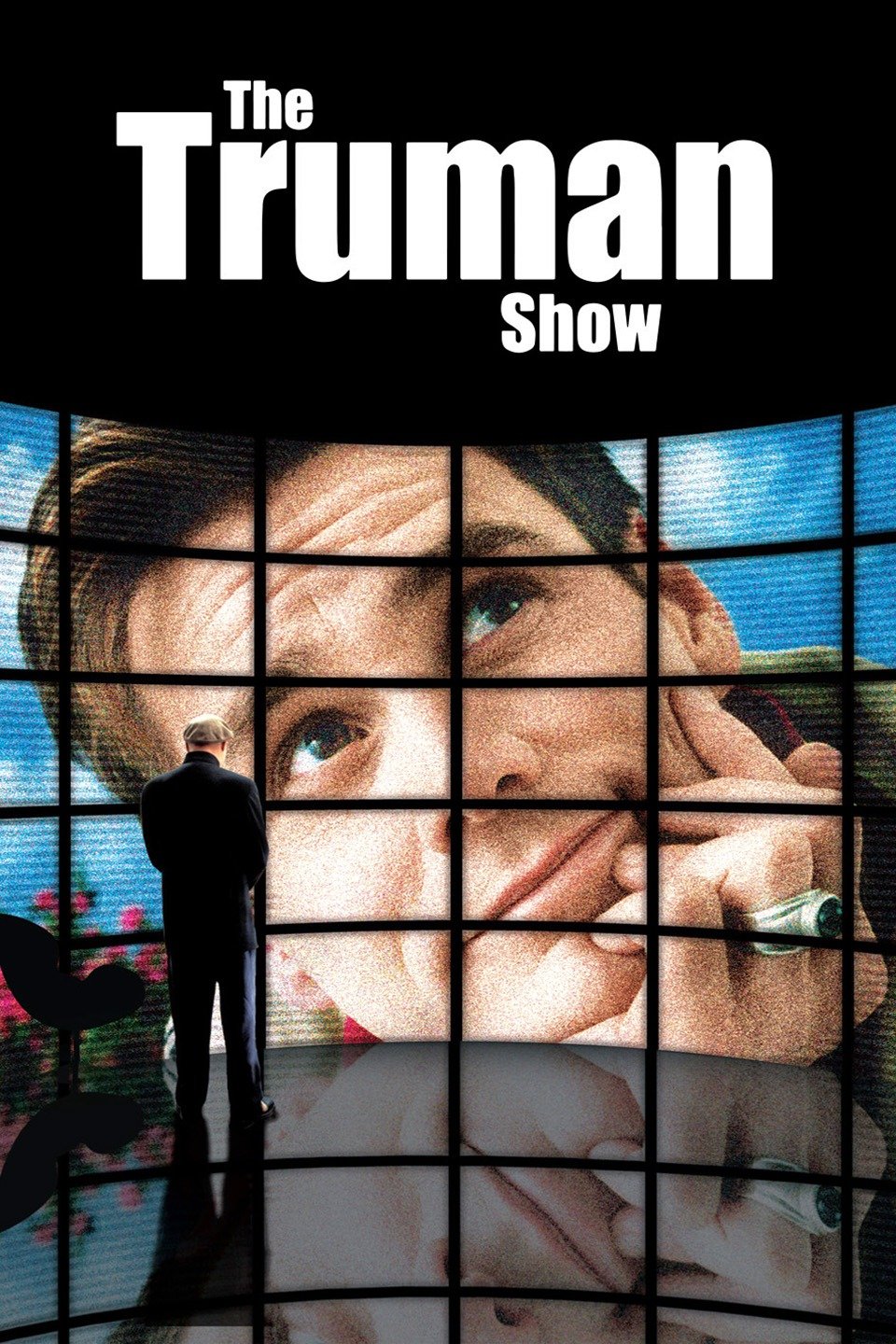
The Truman Show is a fictional movie that tells the story of a man whose life serves as the content for a world renowned television show that began at the moment of his birth. The show has broadcast non stop since then, following every aspect and catching each moment of his life. The catch is that he has no knowledge of any of it, as the producers of the show created the world in which he resides, bringing in actors to play his neighbors, co-workers, boss and even his wife. Essentially, they are simulating reality for Truman.

Reading Connection

The Truman Show is a simulation, and much like Baudrillard describes in the reading, rather than reality preceding the simulation, the simulation precedes reality. All of Truman’s actions, reality, are the result of previous interactions he has had with the actors, simulation, that play the roles of his neighbors, co-workers and his wife. The movie is also a fair representation of the idea that the real itself has been replace by ideas of the real, implying that “human experience is of a simulation of reality.”

Simulations: Wednesday

Reading Summary

This reading discussed how simulations are not an imitation, duplication nor a parody rather they are hyperreal. According to the reading, the hyperreal is he process of removing the real process by using its operational double. The operational double is the descriptive simulation which provides all the signs of the real. The reading uses Disneyland as the perfect model of a simulation. The illusions of many Disney Worlds is what makes the operation successful. The reading explains that Disneyland is presented as imaginary to make the audience believe that the rest is real. In other words, Disneyland “is meant to be an infantile world, in order to make us believe that the adults are elsewhere, in the “real” world and to conceal the fact that real childishness is everywhere…” The reading goes on to describe the hyperreal by saying that staging an illusion is no longer possible because the real is no longer possible. This might sound confusing but it only means that the simulation is more than an illusion and more than the real. The simulation showcases the truth of an event with the use of symbols of the real.

Outside Example

As I was reading this chapter, I was reminded of a time in high school when the police department came and made a simulation of a drunk environment to make us aware of the dangers of being under the influence. So, what they did to recreate this was make all the students wear the drunk simulation googles while attempting to walk in a straight line. These googles blur your vision and make it seem as if you are going in circles meaning you have zero control of your vision. Therefore, 90% of my class was not able to walk in a straight line. The other 10% probably just have some serious skills or the simulation is just not as realistic for them. For me, I was not able to walk in a straight line because it was way too blurry. The vision aspect felt very similar to that of being under the influence but the body sensations obviously were not. In fact, since I was not under the influence, I actually stopped mid-way of the line because I knew I was going to probably fall and make a fool of myself. However in real life when a person is drunk, they tend to not have this sense of awareness so they fall and make a mockery of themselves in many ways. After the ‘walk in a straight line’ test, the police officer made us wear the googles and play a driving video game which had a driving stick and steering wheel. If I remember well, I think we all failed that test which proves that if we can not drive with some simulator googles, we can not drive while actually being intoxicated.

Reading Connection

The example of the drunk google simulator connected to the reading because they both display how simulations are a products of an irradiating synthesis of combinatory models in a hyperspace without atmosphere. This means that the drunk google simulator is meant to seem more real than reality itself. Something fake and artificial like a simulator comes to be more definitive of the real than reality. This is may be because when we are living the reality, we can get stuck in the moment and forget about the consequences or benefits of an event. In the case of the drunk google simulator, one is able to see how being drunk can lead to some dangerous consequences because we know that the simulator is showing something more real than the real. This is because the simulator created a real event from memory and command models like the reading said. The drunk googles is a substitute of the real ‘drunk state’ to show this “operational double” of driving while intoxicated and trying to walk on a straight line.

“This is Emo” 4/27

Reading Summary

In this chapter of Sex, Drugs, and Cocoa Puffs, Klosterman discusses how no one will ever be fully satisfied with love. He believes that everyone has the “inability to experience the kind of mind-blowing, transcendent romantic relationship” that is seen in movies and the media (Klosterman 2). What we see in the movies is not realistic and there will never be that kind of love found in reality. He explains how the media portrays this kind of romantic fantasy that society must follow in order to find true love. As audiences, we can sometimes take on the roles of characters and follow in their footsteps thinking we will find the same kind of love, but Klosterman argues that this is corrupt. The media always leads us down the wrong direction of love and making us think we want something deeper. Unfortunately, life is not like the movies, and Klosterman makes a definite argument that this “fake love” we are trying to find will never surface because it is not real and we, as human beings, will never be satisfied. 

Outside Example

For my outside example, I chose the movie La La Land starring Emma Stone and Ryan Gosling. In this movie, Mia, Emma Stone, is an aspiring actress and is unhappy with both her career status and her love life. Sebastian, Ryan Gosling, is a struggling jazz pianist and he has made it his goal to save jazz as its popularity is declining in Los Angeles. The two spontaneously meet and they begin to date and fall in love throughout the seasons. They face some hardships just as many couples do and they eventually break up. Mia becomes a well-known actress and marries another man who she has a daughter with. Sebastian opens up his own jazz club and is very successful. One night, the two encounter each other at Sebastian’s club and the feelings all come rushing back. The movie shows a dream sequence in which the two imagine what their relationship might have been alongside their different careers. 

LA LA LAND : Une bulle de poésie - Purple Road

Reading Connection

Klosterman’s chapter reminded me of this specific movie because it is not like the basic romantic movies we see in movies. In basic movies, the couple find each other in the end and live ‘happily ever after’. In this movie, it is quite the opposite. Although audiences see Mia and Sebastian’s relationship bloom throughout the movie, we see the reality of love, that it is not always perfect. The movie ended with Mia and Sebastian going their separate ways and even though audiences were rooting for them to be together, it did not end life’s normal romantic movies. The main point of this movie is building your own life and sometimes love must stay out of it. Just as Klosterman explains, life is not like the movies, and I think La La Land is a prime example of a realistic love story.

Video Games as a Vehicle for Political Propaganda

This article starts by discussing how some video games such as “Special Forces” and “America’s Army” are labeled as educational entertainment. However, in reality these games can be extremely persuasive and are actually made to target military recruits. Propaganda is defined as a deliberate attempt to shape ideas and persuade people to conduct a certain behavior, and Delwhiche argues that immersion, intense engagement, identification, and interactivity can all be powerful tools in influencing attitudes. While playing a video game, participants experience all of these such as immersion in another world, engagement with other players, identification as a character, and getting to control the character’s actions. Due to all of these factors, there are learning and persuasive tools within many video games, but the way each person reacts is subjective.

I don’t play many video games, but my bother is obsessed with games like grand theft auto, fortnite, and interactive sports games. While watching him play it’s hard to ignore the influence these games could have on young brains. As soon as my brother and all of his friends started gaming, they became more interested in buying airsoft guns that mimicked the guns in their game, and having “battles” in my front yard. While this seems like innocent fun, it got me thinking of how these games would impact kids who weren’t in a good place, or had access to real guns at home. Although there is no true link between the two, violent video games are often to blame for school shootings especially by politicians and in the media.

While this article goes into detail about how many of these video games are secretly propaganda for the military, it also supports the idea that each gamer is affected differently. In this same way, individuals are impacted in different ways by the violence they observe and partake in, even if it is virtual. Delwhiche discusses this idea of rewards and consequences for certain behaviors in the game. For instance, many players are rewarded for the number of kills they have, how big of a gun they buy. This could potentially send a dangerous message to young viewers, and could be educational in a negative way.

Design a site like this with WordPress.com
Get started