Role Models and Stereotypes

Summary of Reading:

The book chapter discusses how creating the “Other” is part of a media maker’s basic toolkit. To keep the audience engaged, media makers create protagonists bearing similarities to the viewer, positioning them closer to us as we identify with them. Conversely, media makers create Others who “either oppose the protagonist or present alternatives to them”, positioning them further away from us as they symbolize what “we” have rejected. Thus, Others are often “frighteningly repulsive”, embodying attitudes, values or beliefs we don’t subscribe to (92).

Outside Example:

One example I thought of while reading the chapter was the TV series “Stranger Things”. “Stranger Things” is a sci-fi horror-drama show set in Hawkins, Indiana during the 80s. The show revolves around a group of young boys who witness a series of supernatural events beginning with the disappearance of their friend (Will Byers) and the arrival of 11, a girl with psychokinetic and telepathic powers. Although the show centers around the fallout of covert paranormal experiments carried out by the nearby Hawkins National Laboratory, the third season reflects period-anxieties of Soviet presence in the United States (the show is set in Cold-War America). While anti-Soviet propaganda is wide-spread, the characters are forced to question their perception of the Soviet “Other” when they capture a Russian scientist, Alexei, who helps them uncover the secret Soviet base hidden under Starcourt Mall.

Alec Utgoff Alexei Stranger Things Season 3 Credit: Netflix

Connection to the Reading:

The producers turn Alexei into an “Other” in a number of ways. As the rest of the characters are Americans, he is an outsider as he is Russian. In addition to this – by subscribing to the idea that all Soviets were “commie bastards”- Alexei is once again “Othered” by association with communism, a value opposing American capitalism and American freedoms. While the rest of the characters speak English, Alexei can only communicate in Russian. Although initially considered the “Other”, the audience and characters slowly come to understand that Alexei (ie. the Russians) may not be so different from themselves after all. For example, Alexei enjoys cherry slurpees and going to the fair just as any resident of Hawkins does. By slowly eliminating differences between the protagonists (and by extension, the viewer) and the supposed enemy. In this way, the media makers create an intimacy between the viewer and Alexei which makes his sudden death so shocking and upsetting.
Ch 6: “Role models and stereotypes: An introduction to the ‘Other'”

Reading Summary:

This chapter talked about how groups often try to be “inclusive” while still maintaining a distinctive identity. The words “we,” “us,” and “you” have a great deal of rhetorical power. If a title of a news article says “you,” it is addressing you directly and is more personable. You are now part of the “us” group. Oftentimes, news articles “other” people, saying that “we” are threatened by “them” (the chapter was referring to the title, “Radical Muslims are out to destroy our way of living”). This is called “interpellation,” or when a person accepts that they are being addressed. Over time, through repetition, interpellation can send messages of who belongs and who does not. If media presents protagonists who are somehow “like us,” then they also create a world of Others who either oppose the protagonists or present alternatives to them. The chapter talks about how many cultures are often projected as “others” in the media. For example, if you don’t know any or spend any time with Native Americans, you might stereotype them as the media portrays them. However, if you have many Native American friends, you are less likely to generalize and think that all Native Americans act the way that the media portrays them. Othering is often used in films when mediamakers are trying to make the antagonist look as bad as possible. The antagonist often portrays people’s worst fears in order to ensure that the audience will not like the antagonist. This is especially common in horror movies. It is often hard to classify people into such broad groups as “role models” and “negative stereotypes.” A standard othering strategy is making events happen in the past. This already makes the event seem distant, and the people seem different from ourselves. It allows the narrative to be more straightforward than if it were taking place in the present-day. Some media texts display the “other” as someone who is almost perfect, so they must be liked. This is called the power fantasy. Exnomination is another othering strategy that literally means not naming. By not naming what makes someone different, you are not othering them because it is not notable enough to mention.

Reading Connection:

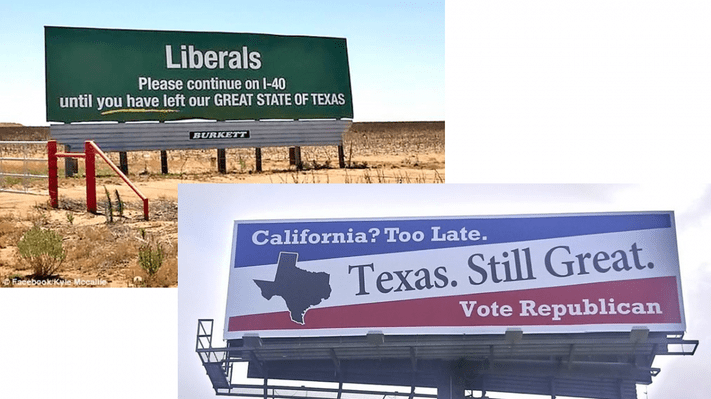
When reading about othering, I thought about some of the signs in Texas. These signs are “othering” the new people moving to Texas, most notably the Californians and liberals. The second sign is generalizing that all Texans vote Republican and that all Californians are liberals. Both signs generalize that native Texans are more likely to vote Republican and want liberals to get out of the state. This gives liberals and new people moving into the state the clear indication that they are seen as the “others” and are not the norm.

Connection to Reading:

The signs connect to the reading, as the reading talked about how the media can show people who is considered part of the norm and who is “othered.” Through repetition of the stereotype that Texans are usually more conservative and other states, especially Californians, are more liberal, people start to believe it as true. For example, The Dallas Morning News reported that native Texans were more likely to vote for Beto in the 2016 midterms and transplants voted for Ted Cruz (this was based on a CNN exit poll). If you know a lot of liberal Texans or conservative Californians, this might not be surprising. However, because the stereotype of conservative Texans and liberal Californians is repeated so many times, it is something that many people believe is true.

Smith Chapter 4

Summary

Genres are categories of films which guide audiences choosing what to watch or consume. Each genre has a set of fairly consistent expectations for how the events of a film within the genre should unfold, producing a level of predictability while leaving room for some variation. For each genre, there exists a set of codes, or recognizable components and characteristics, that filmmakers work with to create stories. These include certain specific types of characters, images, narrative situations, settings, styles, and themes. Genre is also used by critics to analyze films and how they fit into certain definitions of genre categories. Within an entire work of film or television that fits into a specific genre, there are modes of expression which invoke certain feelings or emotions not directly tied to the genre, allowing filmmakers to not be bound by genre expectations. Some argue that genre should not be considered something inherent within film or television, but rather categories that are socially constructed by the way audiences engage and talk about media.

Example

This reading reminded me of a YouTube video I recently watched on the genre of “magical realism,” where elements of magic/fantasy are combined with realist storytelling. The video gave examples of the genre such as the movie The Killing of a Sacred Deer by filmmaker Yorgos Lanthimos, which I watched last year and really enjoyed.

Connection

The video and the film mentioned above highlight many of the things Smith writes about on genre. The video discusses how within the genre of magical realism, filmmakers work with a set of codes or expectations, drawing from elements of realism and fantasy to create something entirely unique. The Killing of a Sacred Deer, described as a psychological horror, had moments that invoked different feelings of horror, suspense, humor, and tragedy, consistent with Smith’s discussion of “modes.”

Genre Schmenre

Reading Summary:

In chapter 4 of What media classes really want to discuss, Smith dives into the idea of Genre and how it impacts the way audience members view the media with which they consume. Each Genre has a wide variety of movies that can fall within them and as Smith discusses, certain components hold more importance in some genres versus others. Generally, the genre of a movie guides the audience and gives them a vague structure with which they can expect the film to follow. Overall, Smith gives insight to the fact that movies are not bound to certain genres entirely and that a movie can have components of different genres mixed within it. Also, Smith illustrates that Genre isn’t just a part of movies as it is also a part of everyday life. For example, brands have their own signature styles and allures that can be grouped into general “genres.”

Outside Example:

21 Jump Street is a movie that serves as a blend between the comedy and action genres. The movie stars well known actors such as Jonah Hill and Channing Tatum. Hill and Tatum go undercover as high school students as part of the secret jump street unit in order to fight drug crime. 

Reading Connection:

After reading chapter 4 of What media classes really want to discuss, I immediately thought of 21 Jump Street. Most of my favorite movies are under the comedy genre, but they also have an intense storyline with lots of action. 21 Jump Street is no different as it combines both the comedy genre and the crime/action genre. I enjoy these types of movies a lot because they have a plot that keeps me on the edge of my seat while also having a lot of laughs throughout. As Smith discussed, there are movies like 21 Jump Street that can occupy many different genres. Similarly, Smith discussed how genre affects the way in which the audience approaches a film. Part of what I really like about a film like 21 Jump Street, however, is the unpredictability. It doesn’t strictly follow the flow of a typical comedy movie or the style of a typical action movie. Instead, it combines aspects of both to create a new type of film.

Genre Schmenre

Summary:

This chapter discusses how genres invoke certain feelings, settings, and even narratives to mind through their strong correlation to those things which we have been conditioned to with many forms of Media. For example, how certain actors in movies usually give us insight as to what movie this might be or even how the basic narrative of the movie will go. This shows how genres overtime have become codes due to their consistency in all forms of media. Genre also applies to consumers, as we correlate different ideas, style, or appeal with different brands and companies.

Example:

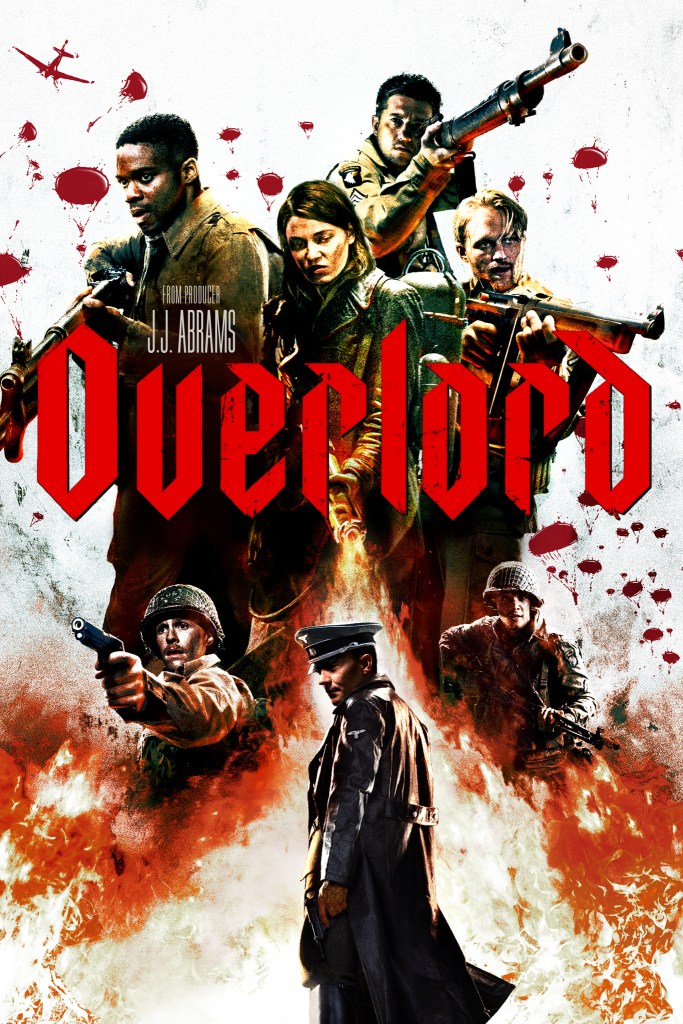
One movie in particular I think does well in mixing genres is a movie called Overlord. It was released in 2018 as an Action/Thriller but also uses elements of horror as it follows a WWII in their mission to destroy a Nazi facility behind enemy lines. Over the cours of the movie, what is your typical WWII, US vs Nazi soldiers turns into a battle between the living and undead as they find a more sinister plot by the Nazi’s to create an undead superhuman army.

Connection:

As I mentioned above, the setting and mood the movie sets for the audience follows along well with other WWII movies like Hacksaw Ridge or Saving Private Ryan as it outlines then basic Good guys vs Nazis genre that is prevalent in many WWII movies. However, the movie makes a transition that utilizes tropes we would typically see in horror genres, like unsettling music scores and jump scares which deviate from most WII films. This blend of genres not only proves that we may come to a wrong conclusion based on the genres we see, but that genres that are not always seen together turn out well.

Jacob Nicholson Film Space

Reading Summary:

A movie or film is made of many shots or still frames. Shots can be defined by distance, area, or subject. A shot defined by distancer can be a close up, or a long shot. Shots defined by area include possibly a certain room which is called and establishing shot. Shots defined by what they contain are called a two shot, tree shot, or even over the shoulder shot. Certain shots are used to convey a meaning or an emotion. There are subjective and objective shots. Objective is what the camera sees and subjective is what the character sees. Subjective is also known as POV or point of view. Cuts are versions of the film that have been edited. A rough cut is an early version, and a final cut is the version the audience will see. 

Personal Example:

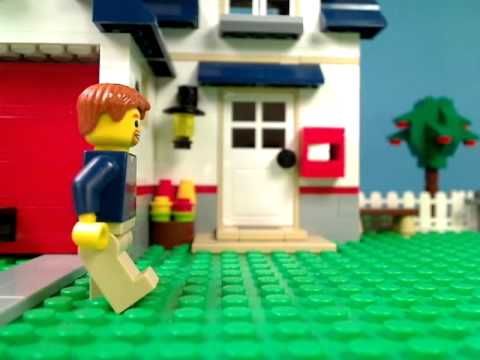
            My personal connection is when I used to shoot stop motion films with my friends. A stop motion film is a complied of many single shots that are then played together to create a “motion” picture. We used Legos and we created an Indiana jones type skit. We had to take a picture of the scene and then slightly move the character or the position of the camera and then take another picture. We repeated this process for hours until we had a few minutes of playable film. In the end we used many different shots and had to build many different scenes. 

Reading Connection: 

            I used a landscape shot that was a long shot. It was shot from below. I wanted to convey a sense of journey and adventure by showing the full room and the traps. Another one of my shots was an over the shoulder shot when Indiana jones grabbed the treasure to show a sense of accomplishment. It was near impossible to show any subjective view, however the over the shoulder gave a little bit of what the Lego man character would be seeing. A stop motion does not have cuts the same way a film might. Since a stop motion allows you to individually control each shot you end up with a final cut by default. 

An Introduction to the “Other”

Reading Summary

Smith defines the “Other” as a constructed identity not relating to our own. This concept will feel different for everyone as we are made of unique traits and come from different cultures and backgrounds. In media and literature there is a distinction of “us” and “them”. When we feel connected and included to a subject we distinguish it as “us” creating a sense of belonging but if we don’t relate the subject becomes “them” and an indentified separation is formed. There are many ways to characterize “others”; whether their traits are defined negatively or positively is dependent upon the author in charge of forming the character and its relationships. The “other” can be an individual or a group. The “other” is usually recognized through its stereotypes in attempt to be more realistic. Traditionally, the “other” was distinguished primarily by its negative traits. In more progressive times, the “other” attempts to be recognized as different but without the negative connotation. Although this can’t always be the case depending on the position the “other” takes on like villains.

Outside Example

In all media “others” are identified. The Office for example includes a variety of “others”. This distinction again will look different for everyone but for the majority of viewers Pam and Jim are easily the most relatable to “us” or me. Although aspects of other characters may be relatable, as a whole most would say they are easiest to resonate with. The other characters in The Office represent “others”. They individually embody their own character identity that makes them stand out. These characters differences are supported by some form of stereotypical attributes.

Image result for the office

Reading Connection

The Office provides a variety of characters to identify with or categorize as an “other”. The characters that are more uniquely developed are going to challenge our ability to claim their traits as our own. Because Jim and Pam are constructed to represent everyday people, they are less likely to be described as “others” and rather be like us. Like Smith describes in the reading, stereotypes form many traits of the characters representing “others”. This can be seen within The Office characters. As a relatively newer show in a comedic category, these stereotypes are taken light heartedly and are less harshly displayed.

Film, Space, and Mise-en-Scene

Reading Summary

This chapter outlined the many different methods and techniques to filmography. The first topic the chapter describes are the many different types of shots that a director can use. The first of these that are described are different focal lengths, distances, and angled shots. Additionally, different perspectives, movements, and emphases create different moods and focal points for the given shots. The second topic focused on is the different ways that shots can be sequenced together. These range from linear, elliptical linear, associative, and montage, which essentially describe how explicitly scenes will be linked together through time or objects. Branching off of this, many different cuts exist to allow for increased focus on particular elements of a scene. Finally, between these cuts there must be transitions. Like cuts, they can range from very direct to very faded and drawn out. These different choices reflect different focal points, moods, and environments that the director seeks to emphasize.

Outside Example

After watching Joker, one of the first things that stood out to me besides the incredible acting and storyline was the remarkable cinematography. In particular, the elongated shots and cuts and how those choices significantly influenced the tone of the film. A few stood out to my especially. First was the opening scene that panned into the Joker as he did his makeup and then did a close up on his face, showing his different emotions. Second, the many long sequences such as when he chases after his attackers in the opening scene, his journey to the bathroom where he identifies himself as the Joker, or his dance down the stairs as he begins his final mission all stand out to me. Furthermore in terms of sequencing, there are many openings to fan theory because of the vagueness in connecting Joker’s story (since he is a mentally deranged individual) such as whether there are multiple Jokers, if his lover was even real, or if this story was made up entirely. All in all, the cinematography in this film is exceptional and used many of the techniques described in the chapter, which is why the film was nominated for Best Picture and Best Cinematography.

Reading Connection

There are four scenes I would like to focus on.

First is the opening scene. It opens with a tracking shot closing in on Joker before doing a close up of his face. As the radio plays talking about the horrible news in the city, it shows Joker forcing the different emotions on himself as he prepares for work, which is an essential theme through the movie.

Second is the second scene of the movie, where Joker is attacked by teenagers. The scene uses many tracking shots as it follows the teenagers and Joker through the city as the chase ensues. Once he is jumped by the teenagers, the focus is drawn to Joker as he looks lifeless in a full body but zooming in shot of the hopelessness he feels.

Thirdly is the scene where Joker makes his bolt to a public restroom, where here he finds his identity and engulfs himself as “Joker”. There are only two cuts in a scene that lasts about 1:40 in the tight vicinity of the bathroom, however the range of angles, zooms, focal lengths, and camera movements put the audience member in the scene with Joker. As he carries himself through his emotions, the audience is there with Joker as he dances away his struggles and embraces his identity.

The final scene I want to draw attention to is the scene where Joker dances down the long plight of stairs before he begins what will be his final night of famelessness in Gotham. In terms of the plot, this scene is the expression of joy for Joker as he unapologetically embraces who he is and why he is. The scene uses countless cuts, zooms, angles, and depths, but all in all captures the same emotions: relief and joy. As the scene slows down in frame rate, you can see Joker truly enjoying the moment before he is sucked back into the reality of the moment before the investigators begin to chase after him.

Genre Schmenre

Summary

In chapter 4, Smith disusses how genre affects the way we view and concume media. Genre can be determined using specific codes that media makers follow when making films that are recognizable to the audience that will then be consuming that media. Genre is a very inexact way to discuss and define movies, and the things that define one genre may be inconsiquential to another; for example, location is important to identifying a western, but is a less important factor when identifying a sitcom. Some genres remain through time, whereas others last for a short amount of time and are then confined to a period in time, such as Film Noir that were made predominately during the 1940s and 1950s. If genre should be viewed as a cultural concept rather than a property of a film. This is reaffirmed in the moments when films will switch modes, changing the feel of a scene or episode, rather than confining the film to only one genre.

Example

While reading this chapter, I began thinking about the Netflix series Stranger Things. It is a television show, set in the 80s, about a boy, Will, who goes missing while riding home on his bike and the search for for him. There are three groups of people looking for Will, one group made up of his three friends and a girl with magic powers that escaped from a nearby government facility, Will’s mother and the town police chief, and Will’s brother along with Will’s friend’s older sister and her boyfriend. Each group is looking for Will, but have their own beliefs about what happened to Will along with varying ways to find him. Essentially, there are three seperate storylines going on that are somehow intricately connected.

Connection

Stranger Things is an example of how genre cannot always truely describe how a show will play out. There is three seperate storylines that can each be read as a different genre. The storyline with the three friends and girl can be viewed as a coming of age movie with fantasy elements. The friends fight and one of the boys comes to terms with liking the girl they meet, but they acknowledge the importance of friendship while growing up. The storyline about the brother, sister, and her boyfriend can be viewed as a teen drama thriller. They tackle issues such as high school and dating while also trying to solve the mystery of her dead friend. The final storyline with the police chief and the mother can be watched as a political intrigue story. They spend most of the show uncovering corruption and exposing secrets within the government that has led to the disappearance of Will. Stranger Things switches modes throughout every show, but the entire show does not fit perfectly into one genre because of the varying storylines and ways they can be viewed.

What media classes really want to discuss 52-68

Summary:

According to What Media Classes Really Want to Discuss, customers expect consistency when it comes to genres of films or television shows. If a person enjoys romantic comedies, they rely on that genre to elicit the same emotions. Media consumers rely on a “brand” and that brand is genres, directors, and actors. One can predict what the movie or show will be like according to these three factors. Film genres come with specific codes that experienced movie watchers can decipher right away. This creates a feeling of familiarity that comes with certain genres. However, media consumers are looking for variety within the framework of their chosen genre. This is where creativity on part of the director or actor comes into play. This predetermined framework for a specific genre allows creative expression to be noticed more clearly. There are many recognizable components of a genre such as certain character stereotypes that feed into a plot line or different narrative situations, such as bumping into someone in the hallway and dropping books. However, overtime a genre can change when a certain formula for a plot has been overused. This is how the genre grows, responding to the pressure for variation. However, it is often very difficult to come up with a genre definition broad enough to include all related films and television programs. Critics try and create definitions that include as many related films and TV shows as possible by focusing on one main aspect of the genre, such as including a “monster” as the main defining feature of a horror film. Nowadays, some filmmakers still make pure genre movies, with no other elements, but that is becoming more rare. Filmmakers are combining elements from different genres. Thomas Schatz suggested that we use “modes” which are similar to genres in the way that they elicit emotions, however, “modes” can refer to specific scenes. This allows for directors to be able to play with different emotions and not be bound to one specific genre for the entire film or TV program.

Outside example:

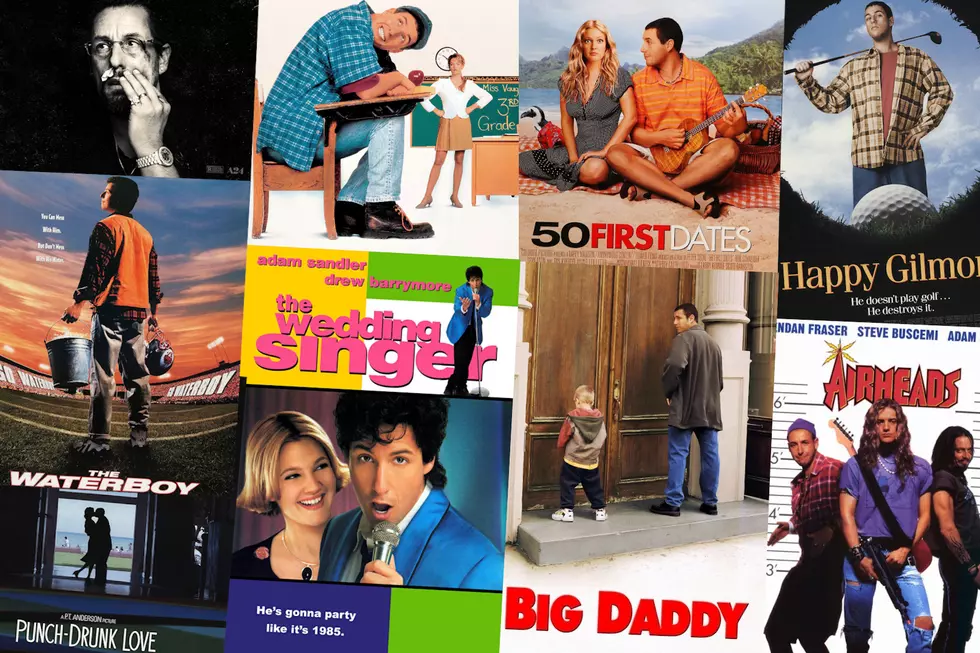
As I learned after reading chapter 4 in What Media Classes Really Want to Discuss, genre is something that is very difficult to pin down or classify. The example I want to talk about is Adam Sandler movies. Adam Sandler is a very famous actor who is known for his comedies and when I decide to watch one of his movies, I am expecting to get a good, wholesome laugh out of it. For example, I remember watching Grown Ups for the first time and thinking that it was a classic Adam Sandler movie. He seems to always play similar characters. Basically, when choosing to watch one of his movies, you are predicting the kind of experience you are going to have when watching it.

Image result for adam sandler movies

Connection to reading:

One is able to predict the outcome or emotional response of an Adam Sandler movie because they know the “code” or “formula” outline of his comedies. A good ninety-nine percent of the time, Sandler does comedies, maybe a couple rom-coms. He always makes you laugh. However, there are two Adam Sandler movies that stick out to me: Click and Uncut Gems. These are the two that don’t fit into his normal genre of comedy. When I watched Click on Netflix, I assumed that I would get a lighthearted laugh that I was looking for. However, I was unhappily surprised when I ended up crying at the end of the movie because of how sad it was. Then, just a couple nights ago, I watched uncut gems, which I was more expecting to be out of the comedy genre. This movie proved that Adam Sandler has range in this acting skills, even though he is type casted as a comedian.

Design a site like this with WordPress.com
Get started