Role Models and Stereotypes

In this chapter, Smith identifies the ways in which stereotypes are created and perpetuated in the media through “othering” and through images. Even words such as “you” and “them” create exclusion, language that is effective in advertising and makes consumers feel as if they are apart of something. On the other hand, the people identified as “them” are the ones experiencing this othering in the media. Smith uses the example of Native American Indians and the contrast of “other” values to “our” values such as savagery vs civilization or tradition vs progress. He explains that, “It is hard to separate the actual behavior of real people from the images that circulate concerning their group” (Smith, pg 96). The othering is also perpetuated through storytelling and the identification of a good/bad guy based on physical characteristics.

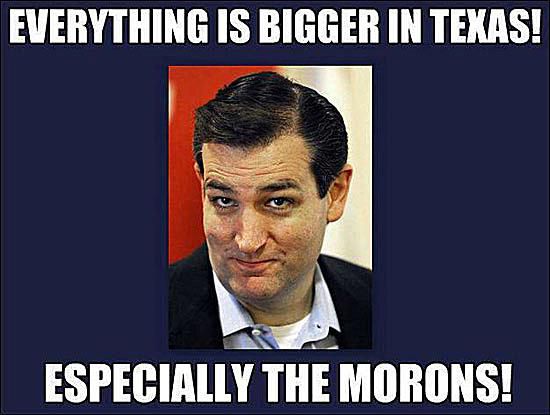
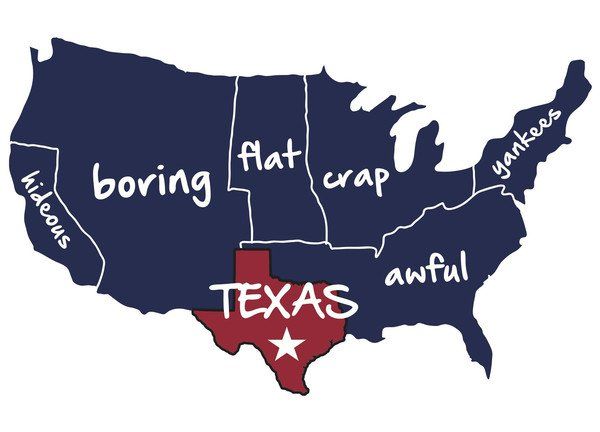
This article reminds me of memes and stereotypes made about Texans. Now I think a lot of people would say ” they hate us cuz they ain’t us,” but there are definitely “them” and “us” scenarios created on both sides of the equation. For example, I have seen a few memes based on the idea that everything is bigger in Texas, including the people, also forms of media that use the words “redneck” or “white trash” in a derogatory way. At the same time I also see Texans perpetuating this kind of media through state pride memes that definitely are offensive to other states and take the “othering” to a whole new level. Similar to the Indians vs Settlers, this same better than attitude is being shown in the first meme, where other states are referred to as “boring” and “yankees,” Texas is depicted as the opposite.

Both of these images generalize groups of people and create an “us” vs “them” dynamic. When speaking on comedy, Smith points out that, “This comic Othering cuts both ways. On one hand, the biggest Other is the biggest butt of jokes, and thus participates in a long line of denigrating humor (one of the clearest ways to see how Othering works across groups is the interchangeability of many ethnic jokes)” (Smith, pg 100). These two memes show the interchangeability of the offenses, where the othering is occurring both ways. On one hand this “joke” can be seen as state pride, while it could also be seen as offensive, and this all depends on if you are on the “us” or “them” side of the joke.
“The Impact of Electronic Media on Social Behavior”

Summary: The article starts with the example of the author telling his travel experience to his many audiences to highlight the idea of playing roles and why our behavior changes from situation to situation. He then talks about the ideology of Goffman, on how social life plays out like a drama. It then shows the limitations of this by saying “dynamism is mostly in the projection of figures against a static ground” and how it did not correspond to his time with all the changing performances. Next it talks about McLuhan and how he predicted the behavioral changes because of changes in media. The author combines the two ideas to show how media of communication sets the stage for appropriate behavior and the transition to mixed company under one audience. His next claim is about the overlapping of social spheres, causing the “blurring of formerly distinct social roles”. In the next section of the article, he talks about American’s changes of ‘sense of place’. He explains that this is due to the “restructuring of relationships between physical place and social place”. He shows this idea by showing how TV breaks down the distinction between the two places and pull us into it. It is a point of information for all audiences and does so by merging distinct communities. This no longer “mysterious knowledge” of a group not only educate us but changes social reality.

Outside Example: When reading about the idea of social life as a drama and how some aspects are kept backstage and onstage, it made me think about the LGBTQ community. During my teenage years, it was a very big issue concerning rights and as the years have gone on people are more willing to put that part of their life “onstage”. Just recently are these members being represented in the media and it is a big part of changing those social roles.  

Reading Connection: In the article it says, “some behaviors that were once kept in the “backstage” of each performance would, of necessity, emerge into the enlarged “onstage” area”. The phrase “coming out of the closet” is a synonym of this social reality coming to the onstage. In the past, identifying your sexuality or gender would’ve not been appropriate or even known in some cases. In the same paragraph it says, “Certain behavior patterns that never existed before, therefore, would come into being”. The representation of the LGBTQ community has brought information to all audiences and is now a normal social role because it was talked about enough and represented through media.

Chapter 6 “Role Models and Stereotypes”

Summary

The chapter starts off by saying that there are two approaches to analyzing stereotypes: laying out the problem and depicting the solution. It then connects these ideas to the concept of “othering”. The book states that as we see negative characteristics in certain groups more often as a pattern, it’s less likely that those stereotypes are actually true. The book then states that words such as “us”, “them”, and “they” all have rhetoric power to separate groups of people. A word that the book uses is “interpellation”, which means that someone recognizes that they are being addressed. The effect of interpellation is different depending on who is being addressed and who is addressing the person.

Personal Example

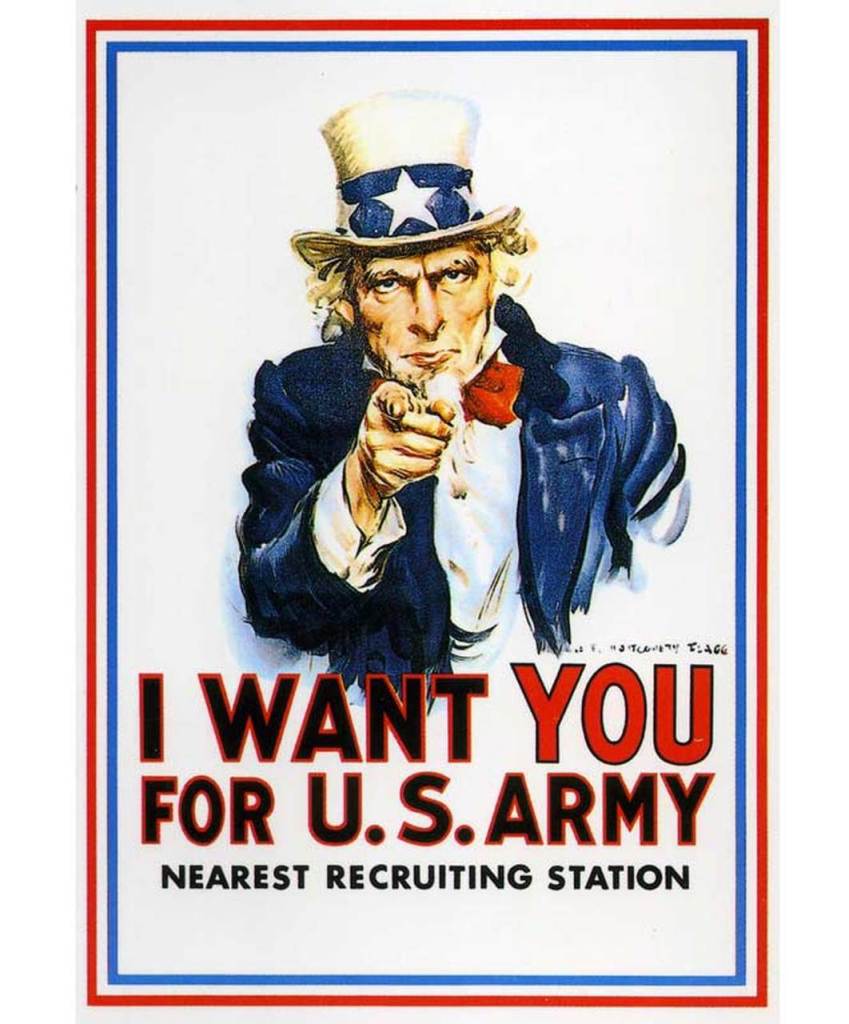
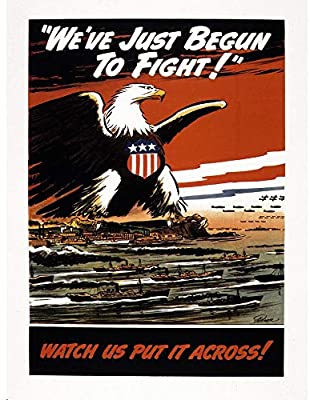
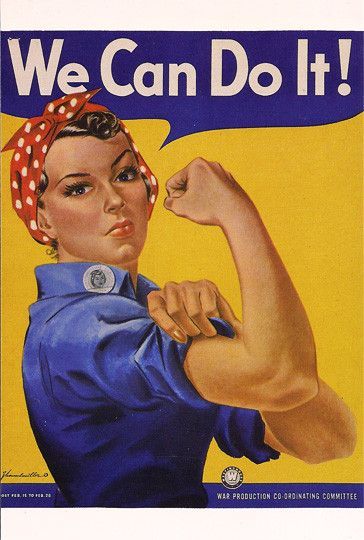
For my personal example I immediately thought of World War II propaganda posters. The purpose of them was to bring America together as a nation in order for a stronger unification. In doing so, it also helped strengthen the idea of an “us” vs. “them” idea. While not included, these posters also contained stereotypes as a result of America making a distinction between the two sides of the war.

Reading Connection

At the beginning of the chapter, the books says that the words such as “us” and “them” have strong rhetoric power. The posters that America used to unify the nation used words such as “we” and “us” to make them more personal and separate America from other countries. One of the posters above uses the word “you” to make it even more personal. That poster uses interpellation to directly address whoever is viewing the poster and therefore make a stronger call to action.

Blog post #8 for Monday’s reading on March 30, 2020

Reading Summary

The technology now exist to watch live events after they happened. Klosterman discusses in his article why “watching a prerecorded sporting event less pleasurable than watching the same game live?” If he knows the game is finished, it is hard for him to stay interested in it. He instead skips ahead to watch the ending of the game. The drama in these games are lost because you fast forward past the times where nothing is happening. It is during these times of nothing that the pressure is accumulating for the viewer. Watching it after the fact consciously distances the viewer from the actual experience. An example of this is watching Ricky Gervais’ hosting the Golden Globe Awards. His jokes had a poor reception for live viewers, but that was not the same for people who watched it later. This demonstrates the different levels of reality among the audience that were at the event, the people watching it live, and the people watching it later. There is nothing at stake if the event already happened. You are incontrol of what information you know and whether you spend your time watching. People also think they play a role in what is happening in these events when they watch them live. People will know what happened in this game from other things such as the internet, before they actually watch it. When you watch these events in real time, anything is possible, but when you watch it later, you might already know of the insane things that happened during it or the outcome. Watching a game second hand will never replace watching it live. 

Source: Klosterman, C. (2011). “Space, time and DVR mechanics.” Grantland.

Outside Example 

An example would be Bo Jackson. Bo Jackson is widely considered as one of the most athletic people to ever live. He played nearly every sport and is infamously known for his “Bo knows” campaign. He played professional football and baseball simultaneously. He would go on to get injured in football with a hip dislocation that cut his football career short and his baseball career was soon to follow. He is now most well known by people who didn’t see him back when he played because of his ESPN 30 for 30 “You Don’t Know Bo” which highlights his younger life, his sports career, and what he is doing now in his 50’s. 

Video of Bo Baseball: https://youtu.be/dv12vY_ZN7M

Video of Bo Football: https://youtu.be/-RjFR-3GTRU

Video of Bo Injury: https://youtu.be/gyteepf2hJs

Reading Connection

Watching older sports highlights or games are hard to do. As much as I like Bo Jackson, it is hard for me to be interested in watching his games and highlights even, because I know that his injury comes and ends his career early. There is something about knowing what happens that ruins the kind of star studded reaction some people have about him. I feel a lot of people my age who didn’t get to see him play sports live, find it hard to comprehend just how impactful and polarizing he was as an athlete because we see him as some one that got hurt. If you were to ask people who the best athlete of all time is, people my age would probably say Lebron James, but older people would might say Bo Jackson, because there is a different reality when it comes to how you experience their athleticism and sports careers.

The Awe-Inspiring Beauty of Tom Cruise’s Shattered, Troll-like Face 1:51

Reading Summary:

Interesting movies that pose intellectual questions or provoke philosophical thought rarely make money. It is more common for films to be made for popularity as opposed to older films. Older films are observed to ask more deep or meaningful questions. The reading presents the notion that movies are intended to lack concepts in order to cater to ‘vehicles’ or actors. Movies are no longer made as representations of real life evolution like the films Jack Nickolson participated in from 1969 to 1975. As expressed in the reading, modern films beg one question, presented in different ways, which is “what is reality?”

Outside example:

My outside example is the Golden Globe website which lists all the nominees and winners for numerous categories. It is very similar to sports in the sense of rosters and awards. It has pictures of the actress or actor and looks like a website for the wealthy quite frankly. It paints the picture that film was made as a business to find achievements. 

https://www.goldenglobes.com/winners-nominees

Reading connection: 

I chose to highlight this part of the Golden Globes website to emphasize how the film world has changed. This website, these nominees, the high status of the individuals is the goal. Popularity, as mentioned in the reading, is the priority in modern films. Modern films are focused on rewards and utilizing specific actors to amp up revenue. It has become based around people as opposed to based on concepts. In the reading it compared it to winning a grammy and i think it’s valid, these decisions are heavily determined by numbers.

Agenda 3-27

Greg Smith (2010) CH 6 “Role models and stereotypes: An introduction to the ‘Other’” in What Media Classes Really Want to Discuss. London: Routledge.  

Topic: Jacob Sanchez’s Personal Meeting Room

Join Zoom Meeting
https://zoom.us/j/2622686644

Meeting ID: 262 268 6644

If your wifi drops out and you want to call into our zoom meeting:

Call into one of these numbers closest to you then enter our meeting ID and #

+1 346 248 7799 ( Houston)
+1 669 900 6833 (San Jose)
+ 1 929 205 6099 (NY)
+1 301 715 8592 (US)

Activity due as a blog comment to this post

•Find a link to a post where there is a group being stereotyped

https://twitter.com/tplohetski/status/1242961989674156032

This is an example from Barton Springs on Wednesday •The groups of people are college students, although these look older like native Austinites, can be grouped with other people ignoring the ‘stay home’ order. What is the argument about? •More digging into story found that this was on the “free” side of Barton Springs since the actual park was closed. Ignorant idiots.

Agenda 3-25

•We will go over Paper 1, if you have any specific questions, unmute and ask or type in chat

•I will go over syllabus for the rest of the semester

•For video project, you don’t have to use Adobe, you can use iMovie or anything you’re more comfortable with

•I will keep emailing out our agenda through Tlearn about an hour before class, let me know if I should move it even earlier, I will email any important news through Tlearn as soon as I get it

•Disable your video if your connection is spotty, if your connection crashes, just check our WordPress

•So many students from California, if you share local news let us know

•If you have possible suggestions to make our class even more interactive let me know, let me know what other professors are doing that you like and dislike on zoom

•Zoom distractions, some tips from doing this before, tell other people in your house your schedule, maybe even post it somewhere so they know not to bother you, headphones if outside noises will distract you, they are working on the house next door so I use a headset

•In today’s activity if there’s something important you want to share with everyone just point it out, that’s what I want the activity to do, let us share important information and talk about it

Activity (Post to WordPress, this post in particular, as a comment)

Find a piece of media COVID related
If you have to give it a genre, describe what the genre is
What other content would it include or not include
Include examples of other similar content in the same genre
For example, pushup challenge
IG or social in general, similar to ice bucket challenges, for a good cause maybe to raise awareness, but might have blowback, wasting TP
See X do X genre
Other examples, see a dog post a dog, tp keep up challenges, etc

Mysantonio.com genre of local news
Mayoral news, stay home, work safe
How some restaurants are turning into grocery stories
HEB product limits to protect supply chain
Thinking about ordering groceries, from where and when
Hyper local news that only people in a certain area will care about.
Sometimes hard to keep straight with seeing news from UK, NYC, California, or even local news from a few days ago

Activity 3/23

I’m in Austin Texas, trapped in this house and very bored and sad. None of my boys can hang because one of my friends actually has COVID-19 so that’s pretty sketch. SO therefore the squad and I are split up and very bored. Austin is about to do a shelter in place order which means I won’t able to go outside at all without a permit. This feels like the beginning of a movie. I have my mac and that’s what I’ll be doing all my classes on. I’m worried about how this will effect my year and my sister’s senior year, as her prom and spring break were already cancelled and her graduation is soon to follow. I like this zoom stuff because I get to see the people I miss.

Activity 3/23

I have relocated back home in Dallas with my family, excluding my sister. Dallas is now on a sheltered lockdown so people can only go to essential places, and if they’re outside, they have to stay 6 feet away from everyone. I just have my laptop and Bose earbuds for the zoom calls. I am most worried about finding motivation to still do well in school, I think I’m doing ok right now. Im not too sure how this class can help in this time.

Design a site like this with WordPress.com
Get started