The Awe-Inspiring Beauty of Tom Cruise’s Shattered, Troll-like Face

Summary:

The voice of this article, Chuck Klosterman, is a retired film critic, who does not enjoy reading reviews of movies that he has not yet seen. One evening, Klosterman came across an old review of Vanilla Sky, which is a movie that he remembers fondly, unlike most. Vanilla Sky poses the question: What is reality? Klosterman makes the argument that today, it is very rare that movies with any substance can also be commercially massive. In the 1970s, movie consumers were obsessed with the vision of the director and they had complete creative control. Today, producers have complete control over a films direction, developing movies that are “high concept,” which actually means no concept. Another reason for the lack of important films is the cultural purpose that movies serve has changed. In the seventies, movies used to validate social evolution. Movies “were visions of a present tense that was just around the corner.” Movies that emerged in the 70s were manifestations of how life changed in the 60s, starting at the classic good vs. evil and morphing into more psychologically complex movies like Five Easy Pieces.

Today it is more difficult to dictate popular culture because is no longer so clear. Modern movies cannot introduce impending realities because they cannot even begin to explain our own reality. So the only real question to ask is: What is reality? Klosterman then compares Vanilla Sky to The Matrix because both movies rely on the idea that everything you experience is an illusion. In the end, both men, Tom Cruise and Keanu Reeves, choose reality, because it is more genuine, though less pleasant. Klosterman poses the question of whether this ultimate decision was necessarily the “right and moral” one. He delves deeper into a discussion of reality and perception of reality. If one perceives reality to be a certain way, whether it is true or no, that becomes truth in a sense. So, existing in the matrix or existing in the real world is no different, if each feels like the truth. This would imply that only the things that we comprehend in our reality are significant. However, in Memento, a movie about a man, Leonard, seeking revenge on the person who caused his short term memory loss. He knows that after he gets his revenge, he will forget that he has done this, and therefore his victory will be hollow. However, Leonard says that his actions still have meaning, even if he can’t remember them. They have still happened in the objective reality, which all of us are experiencing, not including Leonard. What is reality? Reality only exists if we know it’s there, however, it does differ depending on how we interpret it.

Outside example:

Wow, this article was something else to read. It seems as though the author, Chuck Klosterman, is trying to pin down reality into something definable, explainable. For the most part, I could follow his train of thought, but I felt like he was kind of contradicting himself saying that objective reality matters and it doesn’t matter at the same time. This reminds me of the plot of the movie The Truman Show. Although I have never seen the movie, myself, I do know a general idea of the plot and have done some research on it.
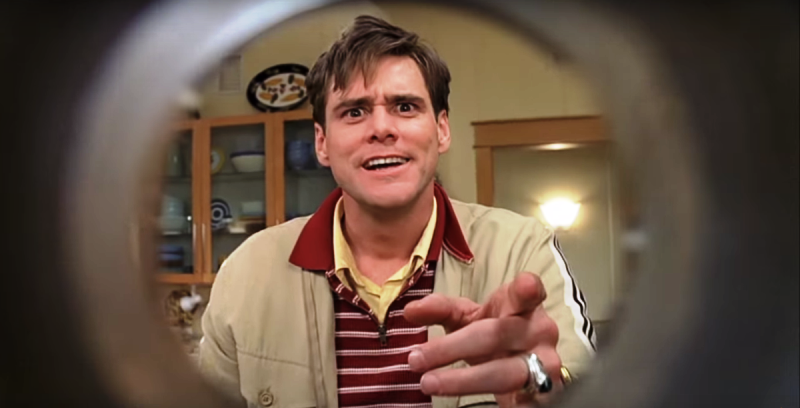
Truman Show w/ Substance Coffee Diner — casa film bar

Connection to reading:

In this movie, his whole life, Truman has been living a lie. He has been living his entire life on live television. His whole reality is constructed by the producer of The Truman Show, Christof. Everything he knows is fabricated. If this is his reality and he does not know that he is surrounded by actors, does that fact even matter? This movie can be compared to The Matrix in a way, except for the audience of the movie understands what is “objective reality” and what is Truman’s reality. Just as Klosterman was questioning in his article: What is Reality? Is Trumans reality any less real to him than my own reality is to me?

The Awe-Inspiring Beauty of Tom Cruise’s Shattered, Troll-like Face

Reading Summary

This article from Chuck Klosterman was written as somewhat of a response to a movie review of Tom Cruise’s Vanilla Sky, which received a rather poor rating and was criticized for it’s use of the “What is reality?” theme. Klosterman writes this article in support of the movie and of the theme itself, arguing that it is one of the most, if not the only, culturally significant question that film can still ask. Klosterman explained that the reasoning for this was due to the fact that movies from previous decades like the 1970’s created a “present tense that was just around the corner,” while movies coming out currently can no longer effectively do so, because while we still have some idea of the direction in which society is heading, we don’t know the specific details as to how we are going to arrive there.

Outside Connection

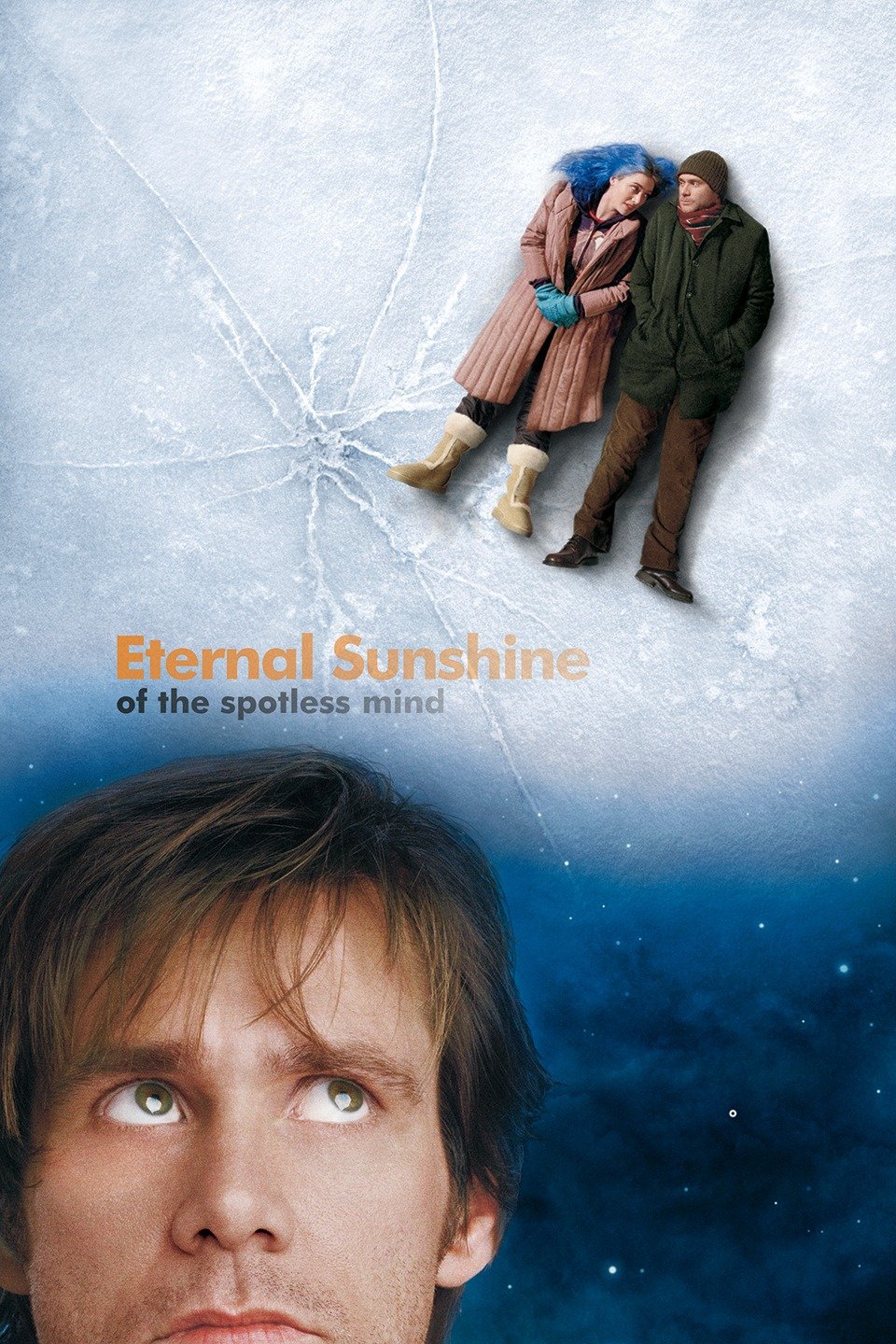
When reading this article and the explanations of works such as Vanilla Sky, Momento, and The Matrix, the first connection I made in mind was with Eternal Sunshine of the Spotless Mind, a movie in which the main characters undergo a procedure to erase all memories of each other after a painful breakup. The movie plays with the theme asking “What is reality?” by having the characters revisit the memories they shared with the other person as they were being destroyed. https://www.gstatic.com/tv/thumb/v22vodart/33409/p33409_v_v8_af.jpg

Reading Connection

Much like the plots of the movies mentioned in the article, such as Vanilla Sky and The Matrix, Eternal Sunshine of the Spotless Mind uses the concept of the alternate reality to ask the question of “What is reality?” In the movie, Jim Carrey’s character struggles with the decision of whether to live with these memories in a sort of “alternate reality” or to erase them and continue a much more depressing life with no memory or trace of his former love. Much like the examples from the text, the character here chooses the harsher reality over reliving the joyous memories he had made.

Monday – Space, Time, and DVR Mechanics

READING SUMMARY

This reading by Klosterman analyzes the question of why watching a prerecorded sport event is not as pleasurable as watching the same game live. If the game is finished, it will automatically be less interesting, and you’ll just fast-forward to see how it ends. There are two categories of reasoning for this: the rational and irrational explanations. The rational explanation consists of three reasons. First, the skipping/lack of commercials in a recorded sporting event takes away drama and tension. Second, you are distant from the event, as you do not share time or space with it, and therefore it creates little emotive response from you. Third, recording gives you too much control; is it worth your time at all? The irrational explanation includes two reasons. The first is very illogical; “perhaps my personal involvement with this game will impact the outcome.” The second shows how interconnected we all are, especially with social media today; “if this game has already ended and I don’t know anything about what happened, it was probably just a game.” Overall, a prerecorded event will never feel the same as a live one, as anything can happen when something is live.

OUTSIDE EXAMPLE

My dad is the only one in my family who actually watches games and sports. The rest of us in the family just watch our own television shows, and it doesn’t really matter when those were live. The one reason we have Hulu is because it has live sports: the only way my dad will watch the games. He would rather pay the high cost of Hulu each month than watch recorded games, or simply not watch them at all. Whenever we’re out somewhere during a game, he does not watch the game later, but instead checks his phone constantly for the score while we are at the store, in the car, etc.

READING CONNECTION

Like many people, as proven in this reading, my dad will only watch sports live because they are not the same as prerecorded sports games. Although he does not believe in the irrational explanation that his involvement in the game will impact the outcome, he would rather look up the ending score online than watch the game after it is over. It makes sense; why would you wait to figure out the ending when the whole world already knows it? I am not the biggest fan of sports, but I too would much rather go to an actual sports game or watch it live. Even with things like the presidential election, everyone either watches the news all night live to see who wins what states or looks up the results in the morning (my family typically does the later). Whether it is sports or another live event, people prefer to watch these things live or simply not at all and hear about them later.

Introduction: Behavior in its Place

Reading Summary

This chapter discusses human interactions via media and face to face and how an influence of technology has melded these together over time. Humans structure their words, body language, and actions based on the situational factors in which they’re communicating. In a face to face interaction, individuals are more conscious of what is being said and how they are delivering it. Social groups are formed and shape the way we interact. For example, the way we communicate to our parents usually differs from how we communicate to our friends in terms of words, ideas, topics, and body language. Each social group we interact with will guide how an individual decides to structure their communication and delivery. Media breaks down these social groups in terms of exposure. Although the interaction may be targeting a specific group, many other groups are exposed to the content. With media, social roles and idea are changed and shifted. The idea of privacy becomes limited and public interactions are more normalized. The filter an individual may once have during a face to face conversation is practically taken away or molds to a larger audience including many different social groups. Technology persuades our thoughts, behaviors, and interactions. Traditional social norms have taken a turn towards inclusive behaviors and acceptance of all thoughts and ideas to be expressed at any time and place.

Outside Example

While reading this chapter and the affect of media on our social behaviors and interactions I thought a lot about how the Coronavirus has and will impact us in terms of these ideas presented. With social distancing in order, our face to face human contact has been limited to those who live with us for the majority. With schools shut down and jobs being completed from the comfort of our home we are losing these day to day interactions where social groups have to be taken into consideration. Our human interactions have become completely reliant on the media and technology. Personally, and I know amongst many others, this period of social distancing has already increased my media use extensively. Whether it be through using new platforms such as zoom or checking my social media more often then needed, the human race as a whole has turned to media and technology to provide us entertainment for our boredom and for the ability to create a sense of human contact.

Reading Connection

As mentioned in the reading summary, a lack of awareness and distinction of social groups from face to face interactions widens the content in which we feel is acceptable to be presented amongst many. The amount of posts created solely off of sharing personal opinions and thoughts without a content filter during this time have increased significantly and can be almost be considered rather normal by now. I believe this is due to the lack of human contact and ability to have closed off discussions with specific individuals. focusing on specific content. I believe that due to this situation, our extensive media use is going to become even more normalized and welcomed to different platforms that it otherwise would not have been acceptable. I also think that our physical interactions are going to shift once we return to normalcy. Physical touch like greetings with hugs and handshakes may begin to feel like an inappropriate behavior because of the disease and the distance we have created.

Reality in Films

Reading Summary

In this reading, Klosterman explained his thinking in his movie review process. It seems that he has different opinions than that of other movie goers. He explains his judgement on movies is based on the concept of reality and the way a movie challenges those concepts along with actors portray characters. Klosterman gives two prime examples of movies that challenge the idea of reality, The Matrix and Vanilla Sky. In both movies the characters are offered an option between fake yet simple reality or a real and challenging reality. I both examples the character choose the later because although it is more difficult, it is the truth.

Outside Example

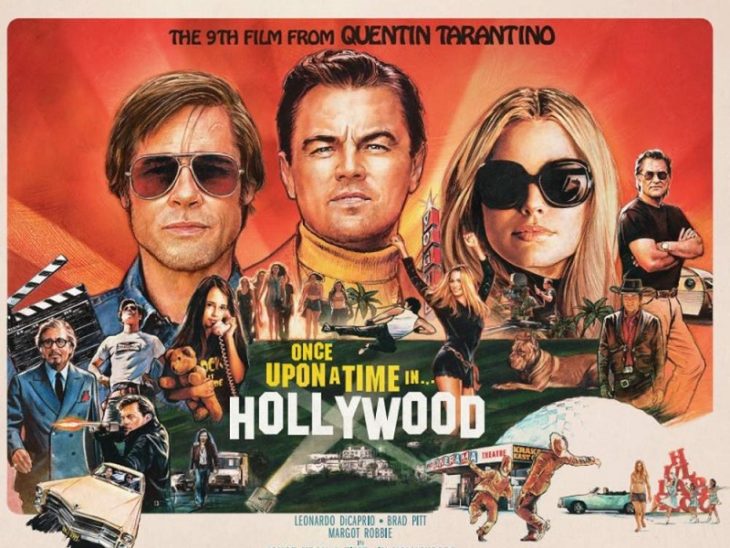
During this reading I was reminded of Once Upon a Time in Hollywood, a Quinten Tarantino film. This movie circles around the story of Sharon Tate’s murder committed by Charles Manson’s cult of misfits. but in this story there is a twist which involves two characters that would change the events of that infamous night. An actor, played by Leonardo DiCaprio, and a stunt man, played by Brad Pitt, move next door to Sharon Tate, played by Margot Robbie, which caused the murderers to plan an attack on Pitt and DiCaprio instead of Sharon Tate. In this version, their plan to kill did not go as smoothly as in the real version. Pitt’s character is considered a badass and he and his dog end up killing the intruders in a rather dark comedic fashion.

Five Cent Cine: Once Upon a Time in Hollywood – Buffalo Rising

Connection

The reading reminded me of this movie because Klosterman claims there has not been a good movie for people who truly like movies since 2003. I would claim this movie should be a movie he would agree is truly a good movie. It challenges reality by rewriting true events that once happened. The real magic about this movie is the great attention to detail put into the scenes and characters. Tarantino is truly a genius when it comes to creating movies in an unorthodox and thought provoking manner. Also, this movie should be considered to be a great film because of the required knowledge of this event before hand to appreciate the movie.

Klosterman 4/1 Reading

Reading Summary

In this reading, Klosterman compares the sophistication of modern films vs. past films (specifically those made in the 70s). He explains that current cinema verges more on having no concept and being solely vehicles for certain celebrities whereas past films validated social evolution. The reason behind this being that films nowadays find difficulty in confirming the current of pop culture because that once linear flow of cultural progression is now splintered. Klosterman states “modern movies can no longer introduce impending realities; they can’t even explain the one we currently have.” Klosterman proceeds to analyze transcendental films such as Vanilla Sky, Waking Life, The Matrix, and The Memento. All of which have a central theme: the absurdity of reality.

Outside Example

This reading reminded me of the new Tame Impala music video, “Lost in Yesterday.” The basis of this song and music video is how as time progresses, nostalgia can become a very astute liar. One lyric that emphasizes this point: “now even though that was a time I hated from day one, eventually, terrible memories turn into great ones.” Nostalgia and constantly over examining past memories can lead us into developing distorted views of past realities.

Reading Connection

A central question that Klosterman poses is “what is reality?” He offers the possibility that “reality is a paradigm that always seem different and personal and unique, yet never really is. Reality is autonomous.” This particular thought is key in viewing the “Lost in Yesterday” music video. Each character has a subjective memory of reality that only becomes more and more idealistic with time. When in actuality, the reality that was (and still is) is objective. Nostalgia often causes us to sugar coat past events allowing us to “alter” that reality within our memories. However, romanticizing the past does not ACTUALLY alter reality it only changes your perspective of reality. Reality doesn’t care about your feelings.

Space, Time and DVR Mechanics/ 3-30-20

Reading Summary

In this article, Klosterman discusses the idea of how pre-recorded sports is not as exciting as watching a live event. There are many reasons he gives to explain this theory by listing rational and irrational explanations. One reason was that when you have a pre-recorded show, you can skip through commercials, but the author argues that removing these commercials take away the build up tension between showtime. Another reason is that if the viewer watches the show later on, they are missing out on similar emotions that other viewers would originally have while watching the show live. Similarly, if someone records a sporting event they ultimately control the speed and it could be argued that the viewer wasn’t as invested in the show compared to watching it live. Overall, a recorded sports event is not the same as watching them live and the author makes good and bad points as to why this difference makes or breaks an audience’s experience.

Outside Connection

I can relate to this source because when my roommate and I watched The Bachelor every Monday night, we would always try and watch it at the scheduled airing time. The Bachelor/Bachelorette is a dating and relationship reality television show that goes into the lives of single people and their journey to find their husband or wife. It is a drama filled show that is very popular and can cause tensions to escalate, especially during the finale of this year’s bachelor.

Reading Connection

My roommate and I preferred watching the live Bachelor show because of the dramatic build up. It is definitely not the same as watching the recorded version where there was no room for dramatic effect. In this finale, the tensions were definitely high and watching the two hour live show was worth it. I didn’t mind the commercial breaks because it allowed my roommate and I to become more invested in the show and made us eager for the commercial break to end. The show definitely knows how to keep their audiences on their toes by keeping them captivated even during the commercial break which shows that the experience is different when watching a live show or even a sporting event because you can’t get the same effect if you are watching a recorded show or event.

4/1 Klosterman Reading

Summary

This article discusses how many movies attempt to tackle the question of “what is reality?”  The author complains of the lack of audience appreciation for current movies attempting to answer this question.  Klosterman claims that the movies that receive the prestigious awards are often very dull and lack deeper meaning. Some movies in the late 1990s and early 2000s, like The Matrix, left a lasting mark on both audiences and critics as films answered this question of reality in their own ways.  The Matrix and Vanilla Sky depict their main characters choosing between two worlds- one that is fake and one that is real.  Other movies take different routes that involve one’s ability to remember reality and another’s difficulty to differentiate dreams from reality.  Klosterman argues that movies no longer consist of forward-thinking since reality is difficult to define in our present-day. At the end of the article, Klosterman concludes that reality may just be “both reflexive and inflexible.”

Example

When reading this article, I immediately thought about the movie American Psycho.  It leads you to believe throughout the movie that Christian Bale, a businessman in New York, becomes a serial killer and tries to get away with his numerous murders.  The movie comes to a close as Bale seems to have possibly lost his mind and made all of this up in his head, but the movie concludes without clarification of whether or not Bale is a serial killer or schizophrenic.  This movie shows reality through Bale’s eyes, but then the audience is slammed with the idea that Bale’s reality does not align with other sane characters’ realities. The audience is quite literally left with the question: what was the reality?

Connection

Klosterman’s argument that movies from the past often depict reality or question reality much better than current movies.  American Psycho would coincide with this claim since it is highly regarded by both critics and audiences and was filmed in 2000.  Christian Bale’s character takes us on a journey through his own reality without our knowledge. Many believe that everything Bale is doing is actually happening in the reality of the film.  That is what makes the ending so shocking. So many people did not expect to face the deep question of reality at the end of the movie. Was Bale’s confession a real confession to multiple murders? Or was it the ramblings of a man who is experiencing a psychological breakdown? If you believe in the latter explanation, then the movie shows great insight into how different someone’s perspective of reality can be when experiencing psychological distress.  There are multiple theories about the possible true endings of this movie, but the director intentionally left it unclear in order to spark discussion and reflection on numerous levels.

Space, Time, and DVR Mechanics

Reading Summary

This article seeks to answer the proposed question as to why pre-recorded sports events are less pleasurable than watching them live by providing 5 (rational and irrational) explanations. The first of these is that the removal of commercials, since you can fast-forward through them, eliminates the moments of emptiness between sets where tension and drama allowed to build. Secondly, the viewer is distanced from the actual live experience and reactions of the events by watching it later, making it to where they cannot experience the same emotions with other views. Thirdly, recording games gives the viewers control as to when the game is watched and the pace of viewing. Additionally, a viewer who is watching a game recorded likely wasn’t as invested in the game anyways since they chose to not watch it live, therefore there is even less of an emotional investment. The final two reasons are deemed “irrational” explanations. The first of these is that a personal involvement in watching the game live will influence its outcome, therefore watching the game later doesn’t give the same attachment to the outcome. Secondly, in the interconnected world that we live in, it is very likely that if you do not hear anything memorable from a game, then there is likely nothing memorable that happened and is thus not worth watching on tape delay. Thus the author concludes that for all of these reasons, watching a game on tape delay will never replicate the same excitement from watching it live.

Outside Example

The question proposed by the article fails to anticipate, understandably, the COVID-19 world that we live in and the question that lays at the feet of every sports network executive currently. Without any major live sports, networks are faced with a few options in how they will present sports content to their viewers. One is to air old classic games in which most fans, especially older ones, know the outcome. Two is they air the dwindling number of odd sports leagues that are still in fact being played such as rugby, bull riding, or the CBA. Or option three is they air games that were so random and unmemorable that fans most likely don’t know the outcomes, therefore the action feels real.

https://www.npr.org/2020/03/25/820857783/historic-games-documentaries-and-marble-races-espn-without-live-sports

Reading Connection

In this question that networks are faced with, Klosterman’s points do not fully extend and would perhaps justify airing non-memorable games. For one, networks will still have commercials which will invoke that sense of waiting suspension for play to return. Furthermore, I believe that if there are games in which most fans don’t know the outcome, the same feeling of suspense will remain with the uncertainty. Because of this, I believe the first irrational point is invalid because if you are able to distance yourself from social media and others who may have watched the game, then when you watch on tape delay you will still get the same suspenseful feelings and witness memorable moments if they so exist. My evidence would be that one does not necessarily need to see a blockbuster movie on the Thursday Night premiere, but can still see it Friday or Saturday and get the same jaw-dropping moments and same crowd reactions. While it is true that viewers will be less attached since these games are not memorable, this can be offset by airing classic games that fans know the outcome too. I believe this plan is also desirable since it is hard to legally watch the full-length of memorable games in sports history. Because of these reasons, I believe networks have plenty of options at their disposals and will not be hampered by the current crisis forcing networks to air games on tape delay.

Space, Time, and DVR mechanics- Jacob Nicholson Monday

Reading summary:

In space, time, and dvr mechanics the author presents the idea that watching something live is better than the recorded version for rational and irrational reasons. The rational reasons are that the removal of commercials in a recording take away from the drama. Another reason is that watching the recorded version takes us away from the actual event because in reality it has already happened. With a recording you have too much control. You can decide what you want to watch and how long you want to watch it. The irrational reasons are that if you are watching live it could affect the outcome somehow because when you watch in real time anything is possible. 

Personal example:

My personal example was when I used to watch game of thrones. I enjoyed watching the live episodes better then watching a recorded one. I used to have watch parties and id have all my friends come over and watch together. Then after the episodes we could talk about it and relish in the drama. When I would watch a recorded one it was usually by myself and on my own time, which was not as fun. I could not talk to anyone about it. Live events can be turned into social gatherings where as recorded events could not. There is even this bar in Germany where they would show the live new episodes of game of thrones and had hundreds of people come out to watch it.

Reading Connection: 

Some reasons why I liked the live versions were that they seemed more suspenseful since everyone was watching it for the first time and no one knew what was going to happen. I liked the idea of rushing to get snacks then come back during commercials. The live versions allow you to stay fully immersed in the show. When I watched a recording, I was able to pause and rewind which took me out of the moment even if it allowed me to get a better viewing. Overall, I agree with the authors point that the live versions of shows are better then recordings.

Design a site like this with WordPress.com
Get started