What is realism, really?

Reading Summary

The article discusses that realism can come in many forms. Sometimes we (the audience) consider things to be realistic if they face not perfect, such as people being exposed to harsh conditions or or featuring characters not in the upper class. Some forms of realism depend on apparent spontaneity, as reality can be unplanned. Additionally, things don’t actually have to be spontaneous to fit this characterization; they just have to appear to be real. Filmmakers will use the “documentary” look in order to make the world look less perfect, and less real. This sometimes includes making the lighting not perfect, or using a jerky camera to make the film look more real. Directors will also sometimes try to make a show verbally spontaneous. When a film violates the way that we think the world works, such as an unemployed character living in a nice apartment, this is known as being implausible. In order for a film to seem real, it must be plausible. This is similar to the idea of consistency, meaning that characters act a certain way for a reason.

Outside Example

When reading this chapter, I thought about The View, a TV show where five or six women sit and talk about certain topics, many pertaining to politics or political issues and sometimes popular culture. This show occurs in a panel-style format with an audience. Oftentimes, they invite guests onto their show, such as political candidates and celebrities.

Connection to Reading

The View is an example of verbal spontaneity, because it is evident that no one knows what the other person will say or how people will react. This makes me more interested in watching the show, because you never know what will happen. Sometimes during an argument, people will get heated or say things that they would probably not want to be said on live television. In addition, it seems more like a conversation that you would have with your friends, and less like a scripted television show.
What is Realism?

Reading Summary:

Realism should not just be a comparison between a movie and “real life.” This article explains that realism is a changing topic that varies from person to person, but there are patterns. There are two broad ideas about realism, The “dramatic” and the “documentary” look. Most documentary films are apparently spontaneous, can have unbalanced and shaky camera work, bad lighting, and unprofessional speech. These are all used to provide a sense of realism, however if a film has the qualities it does not mean its “real,” even a fake film can have it. Reputation, plausibility, and consistency also play a role. If a film company has a reputation of being real, then it is easier for the audience to believe it is actually real. However, even with all these tools films use to appear realistic, there is no perfect realism in films. 

Outside Example:

When I first started reading this article I immediately thought of “Live PD,” and later on in the article they even mention “Cops” which is the same TV show really. “Live PD” is a tv show where a camera man follows real cops and films their encounters. They usually provide the cops name and what county they work for. The crimes they capture can range from speeding tickets to murders. There is also a narrator who will speak over the footage to provide more information and fill in the gaps in the show. 

Reading Connection:

“Live PD” has a “documentary” look. The camera work is shaky and unstable. They even use the dashcam footage which is usually out of focus and low picture quality.  The lighting is unprofessional, and the speech seems natural. They use plausibility and spontaneity. For an example some of the cops do get shot and hurt which shows that they are not just stunts.  They also have a reputation of being “real” events from the show “Cops.” From a viewer’s point of view this show is as real as it gets, however it is not perfect. The consistency is sometimes off because the show usually only wants to show the most drama filled cases, however they do not happen as often as the show depicts. 

-Jacob Nicholson Wednesday

“How do we identify with characters?”

Summary:

In “How do we identify with characters”, Smith discusses how film and television “lures” the audience in to identify with a character. He makes the distinction that in film, with various techniques by filmmakers, the spectator is encouraged to take on the character’s perspective and not be “distant” from it as you might be looking at a photograph. By putting the audience in a spectator position, they can see the perspective of the character without feeling responsibility. The first step in identifying with a character is alignment, “the process of giving us access to character information”. It’s important to acknowledge that this has its limitations because the filmmakers can alter the perspective any way they want you to see it, for example, spatial attachment where information for one character is presented more than others. The next stage is allegiance, “the moral evaluation of a character”. This also can be limited by filmmakers because they can make choosing the morally preferable character easy or difficult through casting or making them successful. However, in some respects, the identification can be skewed.  Some filmmakers do not want the audience to identify with the characters to preserve their judgement, while some viewers might identify with characters other than the protagonists.

Personal Example:

This article reminded me of the film “Capote”, a movie about Truman Capote writing his novel “In Cold Blood” about a family murder in a rural small town. We read the book and watched the movie in one of my classes and it reminded me of putting the audience in the spectator position as well as the perspective we are seeing through Capote’s eyes. One of the questions asked when analyzing this was “Is it moral to sell this story without permission of the family just for entertainment?” This made us go beyond the spectator position because while watching, we felt no responsibility for the fact that we were giving attention to murderers, which can also connect to crime shows today. We also had to analyze the information presented about the murderers. Capote investigates and presents many stories and interviews with one of the murderers but not the other, and as a viewer, showing pity on one.  

Reading Connection:

On pages 44-47, the article describes alignment and allegiance. In Capote, alignment is distorted by the perspective of Capote about his views of Perry and allegiance is seen through spatial attachment to Perry. In the article it says “By following certain characters more than others, by positioning the camera near them, by spending more time with them, the media makers tell us which characters they think are more important”. In Capote, Dick is seen very little and when they show him, they show him with Playboy magazines, while Perry is seen a lot and is seen as an intellectual reading law books and through letters that give him a backstory that makes Capote, and ultimately, the viewer have sympathy for him. The part of allegiance says “If we make judgments about the characters, we are more likely to care about what happens to these characters”. The movie makes us think he is the morally preferable character because they show his remorse for the crime and the backstory given to us makes us feel bad for him because of his bad childhood and early adult life. By doing this, the filmmaker makes us care about the death penalty at the end whereas Dick, we don’t identify with at all.

What is realism, really?

Reading Summary

The chapter discusses realism and how there can be such a varying number of films that people consider to be realism. Smith explains how films skew the truth of reality by simplifying the truth, condensing days, months or years into an hour, and changing characters for convenience. As people watch films they use their own life perspectives and their own expectations as to what they think is realistic. People often believe that reality is not pretty and rely on their own personal experiences to determine what exactly is conveying realism and what is being played up for theatrics. Smith argues that realism is not a genre but rather a lens to view a film, but no matter how it is portrayed, the truth will be distorted.

Outside Example

This chapter reminded me of realism art, in both black and white sketches and oil paintings. Realism oil paintings can be so detailed that they almost appear to be a photograph, and sometimes can only being identified as a painting when told so. Realistic sketches, on the other hand, can look very very much like a photograph, but is often in black and white and lack the texture of paints. Realism art can be used to paint people, places, or objects in a remarkable amount of detail.

Reading Connection

Realism art is similar to realistic films because both are using a manipulated medium to portray something that does, or could, exist. When someone sketches a person’s face they can do so in such a way that it is as if someone is loking at a photograph, however the picture was still drawn so it will not appear exactly as a picture would because there was constant intervention of a person in the creation. In film, reinactments of events can be almost exact or real clips can be used to portray a story, but how the audience views them and the way they are presented can distort the truth. Both film and art can be incredible realistic seeming, but are to staged and inorganic to be a truely real immitation of something that is real.

Blog Post #1

Reading Summary

Defining “realism” in film is a subjective matter. Deciphering what can be deemed “realistic” in videography is shaped by both personal expectations and prior experiences. However, it is essential that we (as viewers) don’t confine realism by comparing it to reality. Reality is an ongoing, undeniable concept that is unaltered by artistic intervention. Whereas, realism in film exists in fixed and controlled environments. Therefore, defining realism should lie in how convincing a certain film is. By assessing a film’s believability, we can judge its accuracy and consider if we would label it as realism.

Outside Example

In my opinion, I would place this scene from “The Aviator” on the realism spectrum. Although this crash scene is clearly edited and not a 100% accurate portrayal of reality, it is still convincing enough for viewers (like me) to consider it a form of realism. We are aware that superstar Leonardo DiCaprio is not actually undergoing such a traumatic event, but the filming techniques behind such visuals allow for this scene to feel gut-wrenchingly real. Considering this film was released in 2004, we can appreciate the filmmakers for their advancement in technology in creating this realistic scene. If we only compared this scene to pure reality when considering it realism, it would not pass the test. However, the cgi is convincing enough to fall under the category of realism.

Reading Connection

In this reading, Smith explains how viewers can recognize violations in our faith of capturing action while still considering a film to be realistic. It is understood that a crash scene that depicts reality to a T is impossible without injuring certain subjects involved. Despite this, we can still be wholly convinced that this is a fair depiction of what this crash would actually look like. The viewer is aware that editing cuts have been made, but such manipulations of the film don’t affect the realistic gravity of this scene. Filmmakers can “lie” by rearranging footage without it taking away authenticity.

What is Realism, Really?

Reading Summary:

According to What is Realism, Really?, describing realism is not a style that can be condensed down into one sentence. Realism is an umbrella term for many different styles and interpretations of how to depict film or TV “realistically.” First of all, reality is for the most part, much more mundane than film/TV. People shower, eat multiple times a day, have conversations with strangers, go shopping. These are all things that might not necessarily further the plot of a film or TV show. However, there are certain techniques that mediamakers use to encourage the audience to forget what goes on behind the scenes. According to John Caugie, there are two broad trends we see in realism, the “dramatic look” and the “documentary look.” The “dramatic look” is more polished and gives the audience a clear view of important events. The “documentary look” appears more rough and less filtered, nothing is perfect. There is an assumption that the world we live in is messy and imperfect, therefore, often realism in films and TV are exposing harsh conditions in need of reform. Realism depends on “apparent spontaneity,” which of course is all extremely calculated behind the scenes. This can be done through visual means, for example, a shakey camera to portray action. Some mediamaker allow actors to improve to give their film/TV show a more raw, fresh feel. As previously mentioned, often people in everyday life have work or do mundane activities. Some mediamakers include “spontaneity” in their narrative that doesn’t necessarily further the plot but adds a sense of real life in the midst of a thick story line. Making a movie or TV show feel “realistic” also relies on what the audience understands about the real world. What people believe about how the world works, greatly affects their understanding of reality and therefore the plausibility of certain storylines. An audience member must believe a scenario to be possible for the movie to feel realistic.

Personal Example:

The reading What is Realism, Really? brought up the example of creating spontaneity through the movement of the camera to the audience when talking to certain audience members. This reminded me of Ellen when the big cameras would pan to an audience member for them to play a game or answer a question. I had no idea until reading this article that this is a calculated technique of realism. Certain techniques like these make talk shows feel very raw and real and the audience watching at home often forgets what goes on behind the scenes. One time I was in New York and got to be an audience member for The Tonight Show with Jimmy Fallon. The audience is instructed when to clap and when to laugh and the responses are definitely exaggerated.

Connection to Reading:

In What is Realism, Really?, the article describes how once the audience knows that a movie or TV series was “based on a true story,” they automatically lean into this idea that the mediamakers and telling the raw, unexaggerated truth. Often on late night talk shows, they repeat “filmed in front of a live studio audience.” I think because of this we believe the audience because we too are the audience, only watching from the comfort of home. The loud laughs and roaring claps are believable. I have always thought that talk shows had to be “realistic” because it was just an interview. I forgot that The Tonight Show is just as much of a TV show as Grey’s Anatomy. Everything is staged in a way that feels so real, which is exactly the goal of realism.

What Is Realism, Really?

Reading Summary

In this reading, realism is described as a broad, interchangeable term used to give viewers a better understanding of how realistic media really is. Realism can be considered unorganized and even sloppy as mediamakers try to show the truth about the real world. In order for realism to be effective, audiences have to be able to distinguish what is real and not real as well as what is natural and unnatural in film and television productions. As stated in the reading, some forms of realism depend on a technique known as apparent spontaneity, which describes an assumption that reality is ultimately unplanned. The three types of apparent spontaneity are visual, verbal, and narrative. Visual spontaneity is the “use of loosely framed compositions” that are shot to look not perfect (17). The composition can be filmed to be off balanced with “sloppy” camera work and even have people or objects moving freely in the background. This type of spontaneity is mainly used to have a documentary look, and have the camera reacting to the action rather than anticipating it. Verbal spontaneity is when a staged dialogue is used between characters and clear, well-crafted lines are established. This technique allows the audience to see a more “natural” connection among characters having a “real conversation (19). Narrative spontaneity deals “with the construction of the story itself” and how a film will only show audiences significant parts (20). While this technique is very relevant, it is also important for films to include “real life” content. Though films will never truly be realistic, it is important for filmmakers to emphasize dramatic realism, which is “based on the assumption that the world is a consistent place” (31). It is true that audience acknowledge that movies and television shows are without a doubt fake, but it is important for an audience to relate to them somehow. Therefore, realism ultimately depends on the audience’s knowledge and attention as well as the media’s techniques to develop these feelings.

Outside Example

As I was reading the different types of spontaneity, I immediately thought of my favorite Netflix sitcom, The Office. The hilarious show is based in an actual office setting with real people who work for a company called Dunder Mifflin. Episodes include workers dealing with daily tasks that are then seen to become significant, humorous events by the end of each episode. The show is mainly based around ‘real’ characters and how they act around a camera that is there documenting office’s obnoxious but funny activities. The Office is a great example of realism techniques being used to show real people in a fake documentary film.

Reading Connection

The Office specifically uses realism techniques like visual and verbal spontaneity to highlight the shows ‘realistic’ but fake documentary about individuals in a workplace setting. These techniques are clearly shown in episodes, especially when chaotic scenes are shot, and the audience can see the camera fall to the ground resulting in sloppy camera footage which is an example of visual spontaneity. The audience can also see verbal spontaneity occur when dialogue is exchanged between characters, Dwight Schrute and Jim Halpert, who are desk neighbors and are seen as ‘frenemies’ on the show. The dialogue seems very realistic between these characters, making the audience aware that they are indeed ‘real’ people who have ordinary jobs and are forced to work under a boss who is irrationally obnoxious. I think The Office is a great example of realism because of the amount of truth that is displayed throughout every episode, showing the realism of a typical office setting and how ‘real’ people are affected by it. The show allows people to obtain knowledge about the show while media techniques come into play to make the show seem more realistic to audience members.

Blog post #1 for Wednesday’s reading on January 22, 2020

Reading Summary

Media can not actually give you something real. It is a medium for which things in the real world can be shown to the receiving audience and yet what they are seeing is not real. All they are seeing is pixels or hearing audio waves. Because of this it changes the way we see and feel about film and television. Smith argues that “realism isn’t natural it’s just something people do.” He states that people look at a wide range of media forms that are put together by the creators techniques and is then left up to the audiences interpretation. The audience assumes what they are seeing is real when the media maker does what their assumptions are. Peoples assumptions are different when it comes to sit-coms, reality television, documentaries, fictional films, news, and much more. The feeling of spontaneity plays a role in how the audience perceives realism. These feelings and assumptions are formed by the audiences experiences with film and television, but more importantly the real world. 

Source: Greg Smith (2010) CH 2 “What is realism, really?” in What Media Classes Really Want to Discuss. London: Routledge.

Outside Example

There is a show I watched over Christmas break that I watched with my sister out of boredom on Netflix. This show is called The Circle. In this show eight people are put into their own apartment building. They can only talk to each other by messaging through a social media app called the Circle. They make a profile page that consist of their photo, bio, and relationship status, but some of the players are catfish using fake profiles. It calls itself “a social media game show”. While this show is a reality game show, I always wondered whether the acknowledgment of the cameras made certain people play the game a certain way or act a certain way.

Reading Connection

The connection between the reading and my example are the perception of realism. The social media creates its own perception of realism for the creators and audience. For the reality show The Circle, a lot of things can come into question since it is a social media based show. The players have their own understanding of whats real in the game.The players and the audience are aware it is a show. It could honestly have a research paper written about it over realism and trying to understand it. As a viewer of the show you are aware that it is a show and these people you are watching are aware of it as well. From my own experiences in the world and my experiences with watching reality television I found this show to be realistic. After reading Smith’s understanding of realism I now know that this shows spontaneity is part of the reason it feels so real to me, despite the the awareness that it is a show.

“What is Realism, really?”

Reading Summary

Is being spontaneous actually being real? Many filmmakers can construct a film in order to make it seem that way, when in reality, the basis of something looking realistic focuses more on framing and camera angles. Certain techniques encourage us to believe that the media is being truthful, which is not exactly the same as telling the truth. Individuals tend to put a small line between what is the truth and what is reality. We believe that all realities are the truth, when actually we only tend to believe the truths that seem sad or make us see the world in very harsh conditions. Our understanding of realism is that reality is not pretty. Any content can be captured in a realistic matter but generally people do not associate reality with nice occasions. Since documentary’s and realism have been used in the past to, in some ways, expose the world for living under very harsh conditions, it can be hard for people to connect the beauties of the world to actually being real.

There are certain tricks and techniques filmmakers use such as putting “based on a true story” at the beginning of a film or TV show in order to make the audience fully believe the writers and directors are telling the truth. In all truthfulness, that statement has a lot of leeway. Pretty much anything can be “based” on a true event, but filmmakers add lots of drama and conversations to increase the likability of the film instead of actually sticking to all true events. Even fiction films can have realistic aspects if the viewers trusts that the filmmaker knows a lot about the particular subject, or if we have significant knowledge on how the film was made, it may persuade the viewer to believe more of what they are seeing to be realistic. Even something that is not true can be considered realistic if it encourages us to believe it is true to life.

Outside Example

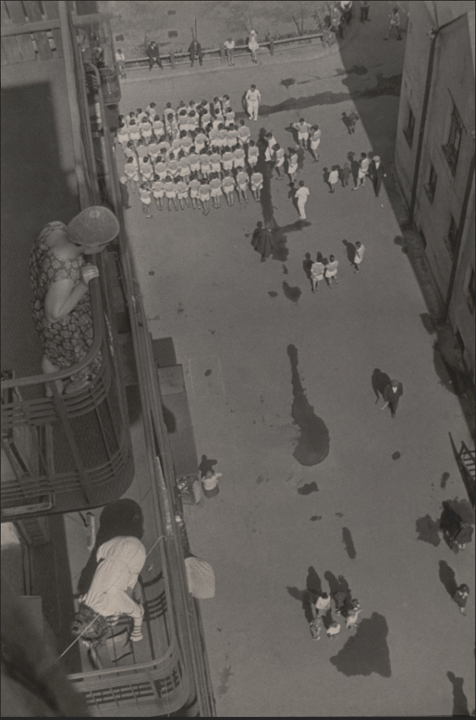
The reading really reminded me of a lot of aspects of photography. Many famous photographers, like Alexander Rodchenko, set up photographs to look as if they were taken spontaneously, when actually they took lots of planning and set up in order to get the perfect shot. Not to mention, the amount of editing that was done in post production. In particular, the photo below, by Rodchenko, was completely thought through and arranged in order for it to look as if he just walked outside and saw people in the streets, and snapped a photo, however everything was considerably planned and analyzed, from the stains on the concrete to the woman looking over her balcony

Alexander Rodchenko

Reading Connection

Most filmmakers and photographers go through considerable planning stages in order to create something that looks spontaneous. Most to the point where you can’t tell what is actually real anymore and what is staged. Even though Rodchenko took such beautiful and what seem like spontaneous photos, the fact that most of his photos are staged can kind of take away from the beauty of it. Maybe this is why most people choose to believe that photos and documentaries are realistic and true to the real world, because knowing otherwise that everything is staged can make you question, what in life is actually real, and what is just staged in order to make us believe certain truths.

“What is realism, really?” Blogpost

READING SUMMARY

Overall, realism is seen as messy and not pretty, though this is just an assumption. The forms of realism depend on apparent spontaneity. Reality and life are unplanned in general, so films use three kinds of apparent spontaneity to add realism: visual, verbal, and narrative. Visual spontaneity consists of imperfect camerawork, like being sloppy on purpose, and spontaneous interactions (such as the president interacting with real people, unscripted). Verbal spontaneity includes actors thinking of personal experiences to add emotion and improvising lines to sound more natural and, therefore, realistic. Narrative spontaneity is slightly different; it means that boring life events are left out most of the time, and only things that are ‘narratively significant’ are included. However, ‘real life’ digressions make film more realistic. Films, photographs, and television are already seen as more realistic than other arts, since we trust that they catch true and real actions, even though they often do not. The realisticness of films also has to exist in the audience’s mind, since it relies on people’s basic understanding of how filmmaking works. For video games, realism depends on the density of picture information, meaning that software is used to make the digital world look more detailed and real. Films, though, should not break the “general sense of how the world works,” as that makes it unrealistic (29). Even if they do break this general sense, films should have dramatic realism, which assumes that the world is a consistent place (follows the rules of the made-up or fictional universe). Keeping films realistic is difficult though; they will never truly be realistic, as they typically ignore the cameras and the audience watches as an invisible observer. However, acknowledging these things destroys the realistic picture of the film. Overall, realism depends on the audience’s knowledge and the media’s technique, like spontaneity. The audience must believe that films are somewhat realistic to work.

OUTSIDE EXAMPLE

I watch a lot of television shows rather than movies, and one of my all-time favorite shows is the Office. I prefer more realistic shows instead of sci-fi or fantasy, and I always saw the Office as pretty realistic (to a point). It’s set in a typical office building in Scranton, Pennsylvania with characters who face normal workplace dilemmas, such as an incompetent boss (although these things turn into larger, funnier issues by the end of each episode). The characters are also seen as ‘real’ people, as the show is a fake documentary, so we see the characters facing realistic and emotional struggles. The Office, by using film techniques to create realism, is a funny yet overall realistic television show.

READING CONNECTION

The Office is one of my all-time favorite shows, and although it is a fake documentary (fictional), it appears to be decently realistic. It both breaks and uses these techniques of realism in film. For example, in times of chaos on the show, the camerawork is purposely sloppy, though planned, of course (visual spontaneity). Sometimes filming is clearly being done in secret and from a distance. However, the cameras are acknowledged every so often, and although this would break the realism of most films and television shows, it adds realism here. The characters are then seen as real people who, like most of us, don’t want to be filmed all the time. Narrative spontaneity is also used, as some of the boring events of everyday life are included in the show, though then turned into interesting events. Most typical boring office work, though, is left out. The Office is unique, as it appears to be more realistic than other shows yet still acknowledges the audience and cameras.

Design a site like this with WordPress.com
Get started