Blog Post #2

Reading Summary

Content analysis is a systematic procedure designed to study the content of recorded information across varying formats. Requirements of content analysis establishes that all research conducted must be systematic, objective, and quantitative. Content analysis is generally employed for five reasons. The first of which being the ability to describe communication content. Content analysis allows us to discover what exists out in the media world and study trends occurring over periods of time. Second, content analysis is a vessel for understanding the relationship between characteristics of the source format and the attributes of the actual content. This allows us to test hypotheses of message characteristics and similarities between format and content. Third, we can assess the image of particular groups in society. By using content analysis we can explore the media’s portrayal of minorities and assess media policy change towards these groups if need be. Content analysis can also serve as a fact checker for statistics in media texts. We can assess statements made and discover if they are indeed in congruence with reality. Finally, content analysis can serve as a starting point for studying the effects of media on its audience.

Outside Example

This reading reminded me of a specific episode of Mad Men where Harold recruits Joan to analyze television scripts surrounding their advertisements. This content analysis is employed to make sure their ads in the media are being portrayed as positive as possible. The content surrounding such ads can affect the representation of the ad agency’s clients. For example, if a kid is pushing his food away during a television program, content analysis is utilized in this episode to ensure the food doesn’t belong to a future ad that will be shown during the program.

Reading Connection

This reading states that content analysis can be employed for studying the effects of media on its audiences. This is exactly what Joan and Harold were doing in this episode. The content surrounding their ads had to be analyzed in order to promote the best image of their product to the audience. The reading also establishes that content analysis is time consuming and expensive. This relates to this Mad Men episode because this characteristic of content analysis is made clear and is the reason why Harold employs Joan to do the job.
“Quantitative vs. qualitative research”

Summary: This article discusses the differences between research of quantitative data versus qualitative data. They talk about the significance of numbers in being more reliable, however, discuss how “qualitative research is not objective data to be quantified, but meaningful relations to be interpreted”. They talk about socially constructed realities as a key part of qualitative research and how symbols make up those realities for us to interpret (the denotative and connotative meanings). It then discusses the history of research methodologies in the communication field going from quantitative to qualitative. They discuss the different perspectives between the transmission view and ritual view of communication and how they serve as metaphors to the differences in quantitative and qualitative research. As it starts the discussion of textual analysis they define “text” as things we make meaning from and give the developmental history behind the idea of text analysis. It talks about content analysis from quantitative research and how qualitative research would attempt to make connections from the text to larger issues in society. To end the article, they discuss the role of semiotics in both quantitative and qualitative research as the producer of signs. The signifier portrays the physical assets of something (for example the letters in a word) whereas the signified is the idea characterized (for example fragrant flower with thorns). These signs are evaluated by codes that are constructed from agreed upon understandings from culture to understand how we make meaning in our lives.

Personal Example: When the article was talking about how qualitative research was all about interpreting texts, it made me think of popular songs that were misinterpreted. In particular “Imagine” by John Lennon. “Imagine” was produced in 1971 (Vietnam War period) and the positive rhythm made people think that it was about solving world peace and having unity. In an interview, he reveals that it was actually more of a communist manifesto. There is even a line in the lyrics saying, “Imagine no possessions/I wonder if you can/No need for greed or hunger/A brotherhood of man”.  

Reading Connection: On page 15 the article says, “qualitative textual analysis would look at the news coverage in its entirety and would attempt to make connections between Black Friday and larger issues in contemporary American society”. This made me think how “Imagine” connected to world peace and communism and how from the qualitative research perspective how the historical context made America interpret this song the wrong way. People did not like communism and the U.S. role in the war so maybe these negative feelings mixed with the positive feelings of the rhythm and popularity of John Lennon made people ignore a possible meaning behind the lyrics and interpret it the way they wanted it to seem.

Content Analysis

Summary

    This chapter discusses the process of content analysis and its importance in mass media research.  It is defined as “a method of studying and analyzing communication in a systematic, objective, and quantitative manner for the purpose of measuring variables” (163-164).  This research technique requires objective sampling and accurate data to produce reliable and valid results for future studies. One cannot solely make claims based on the analysis of media content.  In order to be valid, one must also analyze the audience consuming this media content to make reliable claims about the content and its effect on society. Content analysis involves forming a hypothesis, testing it through comparison of media content with the real word, and establishing a starting point for studies of media effects.  This chapter also highlights the increasing importance of computers for analysis and data collection.

Example

    This chapter reminded me of my mother.  She loves to watch the Investigation Discovery Channel while she works or cooks at home.  Since she watches so many television shows about murder and crime, she is a very paranoid and cautious person.  She always thinks the worst case scenario is the most likely to occur in many situations. For my nineteenth birthday, she gave me pepper spray and an alarm for my dorm that sounds like a dog barking, in the hopes that this would scare off any intruders.  The chapter mentions that one use of content analysis is cultivation analysis. A study of cultivation analysis led to the conclusion that those who heavily watched television may be more fearful in their everyday lives. Considering the amount of murder television shows my mother listens to, I think this conclusion could explain my mother’s attitude in her daily life. 

Connection   

In this chapter, the discussion of the uses of content analysis led to the example of cultivation analysis.  Cultivation analysis is where “the dominant message and themes in media content are documented by systematic procedures and a separate study of the audience is conducted to see whether these messages are fostering similar attitudes among heavy media users” (166).  This analysis led to the study concluding that people who watch a lot of television often are the most fearful of the world they live in. My mother’s fearful and cautious attitude supports this claim since I believe her attitude is caused by the heavy amount of crime television she watches daily.

Content Analysis

Reading Summary

This chapter served as an introduction to the tool and process of content analysis, providing history of its usage and outlining the steps and shortcomings of the method itself. The process is defined by Kerlinger as “a method of studying and analyzing communication in a systematic, objective, and quantitative manner for the purpose of measuring variables.” Modern content analysis was first used during the Second World War and became more popular and recognized when newspapers were analyzed in the 1950’s. Since then the process has grown to make use of a number of media sources including television programming, advertisements and even music videos and is used for one of five purposes, including describing communication content, comparing media content to the “real world,” and assessing the image of particular groups in society. The article goes on to discuss some of the limits of content analysis which include how time consuming and expensive the process can be, an occasional lack of messages relevant to the research, and how findings of one study can be limited by the framework and definitions used by that specific analysis. The chapter also lists and describes in detail the ten steps that are involved in the process of content analysis. 

Outside Connection

As an avid basketball fan, I couldn’t help but think about one of the most prevalent questions asked today as I read this chapter. Who’s better? Michael Jordan or LeBron James? It’s a discussion in which debaters make use of several different numbers, statistics, and arguments to convince the other side that their opinion is fact. They cite points, rebounds, assists, steals, blocks and even more statistics as well as listing accolades such as MVPs, Finals MVPs, rings and so on, all in hopes of supporting their personal greatest player of all time. Things go beyond the numbers within the argument, however, as fans also cite teammates, career details, and playing styles of the eras that the players were members of, making the question of who is the greatest player of all time one of the hardest to answer in all of sports. 

Reading Connection

To me, the conversation surrounding who the best basketball player of all time is is very similar to content analysis because the conversation makes use of many of the steps highlighted in the reading that are involved in what is described as a very scientific process. The discussion poses a research question (Who is the greatest of all time?) and either side forms their own hypothesis (MJ or Lebron). The population of the study is clearly defined (MJ and LeBron) and with that, appropriate samples (both careers) can be used to select already defined units of analysis (points, rebrounds, assists, steals, blocks, etc.) within pre-existing categories (offense and defense). From there, a conclusion can be reached as to who the best player of all time truly is, based on the data that has been collected and analyzed. Based on the definition in the chapter provided by Kerlinger, this study could easily be defined as systematic and quantitative, making use of medium variable, concepts that only apply to the sport of basketball. However, things are made difficult when each side of the argument moves away from objectiveness and begins asking or making subjective statements, statements that to me, are necessary to answer the question correctly. 

Qualitative vs. Quantitative Research

Reading Summary

Quantitative research tries to isolate elements and use numbers to measure the relationships between variables. It is often considered to be more authentic and scientific because it deals with numbers. Qualitative research, on the other hand, is more theoretical and interpretive. The rise of qualitative research methods emerged to challenge the status quo, as some thought that attempts to understand human emotion and behavior should be measured differently than if one is studying the natural sciences. Cultural theorist James Carey refers to the two different understandings of communication as the transmission view and the ritual views of communication. The transmission view focuses on sending messages over distances in order to distribute common knowledge and ideas. On the contrary, the ritual view associates the communication process with the ancient notion of communication. According to this perspective, people share customs, beliefs, ideas, and experiences, which reinforces a common culture. Textual analysis is all about language, what it represents and how we use it to make sense of our lives. In qualitative research, we use the term text to describe cultural artifacts or material documentary evidence. Texts are things that we use to make meaning from. Books, magazines, websites, and music are examples of the types of texts that qualitative researchers interpret in an effort to understand the relationships between media, culture, and society. Qualitative researchers look at the social practices and representations about our lives that are revealed in texts. The development of textual analysis is linked to a publication by Siegfried Kraucer, a sociologist and critical theorist who questioned the use of quantitative content analysis by disputing the reliability and objectivity of a method that broke things down into separate pieces and parts and they counted them. Semiotics is the study of signs that exist in our social lives. Semiotics can be seen as a type of textual analysis that helps us to interpret codes and signs in order to understand how aspects of a text work with our own cultural knowledge to make meaning in our lives.

Outside Example

Mardi Gras revolves around tradition, and one of the ways that it has been able to stay alive is through media, most notably music. When reading about the ritual view of communication, I instantly thought of how Mardi Gras music in New Orleans helps to keep the culture and traditions of Mardi Gras alive even throughout different generations. Every year at Mardi Gras, my family listens to the same songs that my parents listened to when they went to Mardi Gras parades as kids. Additionally, a group called the Mardi Gras Indians, a group that has paraded for over 100 years, play the same songs and parade along the same routes. The music helps to keep the same traditions alive despite changing times.

Connection to Reading

The ritual view of communication has the perspective that people share customs through media texts, which reinforces a common culture. This is especially true of Mardi Gras as it reinforces a common culture through the same music being played from generation to generation. The ritual view of communication is important in qualitative research and understanding the traditions, contexts, usages and meanings of words, concepts, and ideas.

Qualitative Research Methods for Media Studies

Reading Summary

Because quantitative research aims to find correlation between variables and organize the results in a systematic, organized way utilizing numbers and specific data, it seems much more reliable to use than qualitative research. Qualitative research focuses on using interpretive data that is more focused on the meaning of relationships that can actually provide much more info than quantitative research can give. When conducting qualitative research it is important for a researcher that “based on the questions they wish to ask, the specific historical context that relates to their research questions as well as the theoretical framework they plan to use for their research” (Brennan 4). In a media sense, unlike quantitative researchers, qualitative researchers aim to find and comprehend the relationships between media and society instead of just focusing on cause and effects. Because qualitative research can be ambiguous confusion can occur when displaying data, so Brennan places much importance to use appropriate words to maintain clarity.

Outside Example

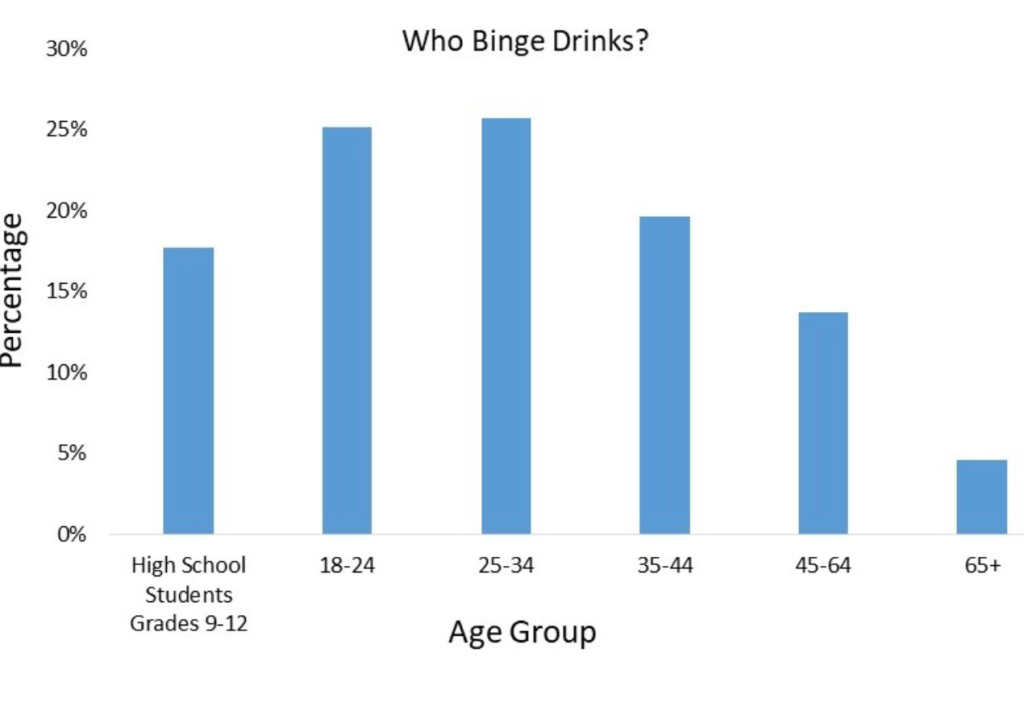
One outside example that came to my mind is binge drinking. According to cdc.gov, “One in six US adults binge drinks about four times a month, consuming about seven drinks per binge. This results in 17 billion total binge drinks consumed by adults annually, or 467 binge drinks per binge drinker”. In addition to this, “Binge drinking is most common among younger adults aged 18–34 years”.

https://www.cdc.gov/alcohol/fact-sheets/binge-drinking.htm

Reading Connection

From a quantitative researcher’s point of view, they would find these statistics very interesting. They may use these results and compare them from results in previous years or decades to see if there is a pattern or an increasing/decreasing rate. In addition to this, they may choose to do more research to see which drinks are most commonly used in binge drinking and what that does for the alcohol market. However, because a qualitative researcher aims to explore the connection between media and society, they may ask and research questions such as, “Why do some people choose to binge drink?”, “Is there a connection between advertising or peer pressure to the rate or demographics of binge drinking?”, or maybe even “Why is binge drinking popular and what does that do to different societies and cultures?”.

Content Analysis (1/27/20)

Reading Summary

In the reading, Scientific Methods in Media Effects Research, Glenn Sparks asks the question, “How would one ever go about discovering the effects of media content?” (Sparks 24). Analyzing media is important because it allows us to have a deeper understanding of how it affects us personally and our world around us. Specifically, scientific research is very beneficial in proving the effects media has on our culture. Content analysis is “a method that allows the reader to describe messages in quantitative terms even though those messages are essentially verbal or non-quantitative in nature” (Sparks 25). While this analysis is valid, it is not always accurate to make implications solely based on content analysis. The use of manifest and latent content is a type of analysis that can be used as well. Manifest content refers to the literal meaning of something and requires very little coding. Latent content is content is harder to analyze because one must look “between the lines” in order to properly code. Sparks then discusses samples and unit of analysis which are done after a message has been coded. Samples are taken from a large or small amount of media resources needed to analyze. Unit of analysis then occurs but varies on how specific data is coded and analyzed. All these steps are important in analyzing media and how it can potentially impact our society.

Outside Example

People are affected by media very differently and it is evident to note that celebrities have one of the biggest influences on our society. The reality show, Keeping Up with the Kardashians, is a prime example of how television significantly affects our society. The show ultimately gives this idea that fame and wealth are vital things to have in life. People can analyze the show as a corrupted, misleading image of how our society and the people living in it should be. I have tried watching a couple of seasons but could never finish them because I would get so caught up in comparing my life to an unrealistic one. The show can definitely be toxic and affect audiences who are either too young or insecure to consume this type of media.  

Reading Connection

This article discusses how using scientific methods can prove how media affects consumers with specific steps and analysis. In my example, Keeping Up with the Kardashians has a big effect on their audiences because of a distorted image they portray to society. I think Sparks would agree that there should be some type of content analysis done on this reality show to measure how the samples (consumers) watch and consume the show. Then, unit of analysis could take the specific information and show how a reality television show can affect consumers. By using content analysis and the scientific methods discussed in Sparks’ article, I could prove my theory of how toxic reality shows negatively affect consumers by manipulating them.

“Content Analysis” Reading

Reading Summary

Content analysis is a popular research method used by mass media researchers. It has been defined as “a method of studying and analyzing communication in a systematic, objective, and quantitative manner for the purpose of measuring variables,” (164). In other words, content analysis is an unbiased and scientific approach to examining certain aspects of media that produces concrete (measurable) results which can be repeated to produce the same results through further analysis and testing.

Content analysis is used for several purposes. One is to describe the content within media, such as what (and how) subject matter is portrayed, and how this changes over time in society. Another is to test a hypothesis of the characteristics of media messages, such as a potential correlation between a news source and a specific portrayal of events. Content analysis is also used to compare media content to real life, assessing its accuracy. The ways in which groups are portrayed in media can be assessed through content analysis, and content analysis can also serve as a starting point for other research (165-167).

Content analysis has certain limitations; it cannot fully asses the effects of media content on its audience, analysis can be limited by categories and definitions chosen, and it is often time-consuming and expensive (167).

Content analysis involves several steps—namely, formulating a research question, defining the population, selecting a sample, selecting a unit of analysis and categories of content to be analyzed, establishing a quantification system, conducting a pilot study, collecting data and analyzing it, and drawing conclusions from that data (167-182).

Outside Connection

Citations Needed is a podcast covering “the intersection of media, PR, and power, and the history of bullshit,” hosted by Nima Shirazi and Adam Johnson. Each episode the hosts analyze certain messages put forth by corporate media outlets/PR firms and talk about specific trends in US news media. It has covered a variety of topics such as “How US Media Pits Labor and Climate Activists Against One Another,” “How Western Media’s False Binary Between ‘Science’ & Indigenous Rights Erases Native People,” and “The Militarization of US Media’s Drug Coverage,” to name a few.

Reading Connection

Although Citations Needed does not use such a structured and scientific procedure of analyzing the content of media laid out by the reading, the podcast appears to employ several elements of content analysis in it’s approach to dissecting certain narratives of US media. Each episode has a purpose similar to those of content analysis described in the reading, whether it be to describe the rhetoric used by Fox News to portray homeless people, or to assess the accuracy of forensics as it is portrayed in shows like Law and Order, and how this impacts the perception of crime.

Scientific Methods in Media Effects Research

Summary:

In Scientific Methods in Media Effects Research, the question is posed, “How would one ever go about discovering the effects of media content?” (pg. 24). It is important to understand how media is effecting the masses, whether negatively or positively. Understanding the effect of any form of media is the job of a social scientist. The three specific methods that social scientists use are content analysis, the survey, and the experiment. Content Analysis is a quantitative study of specific media mediums (ex: songs, video games) and the content that might be bringing about certain behaviors or attitudes. However, it is important to note that it is not accurate to make inferences based on the results of content analysis; other research methods are necessary. The information at hand must be coded into different categories, manifest content and latent content. Manifest content is surface level information that can be absorbed with little thought. Latent content is that which has to be interpreted (ex: sarcasm). First, a social scientist has to take a sample of the media they are trying to analyze. Then, the unit of analysis is determined. The unit of analysis could be a song, an episode, a scene, or a whole movie. The the unit of analysis is coded depending on specific categories, depending on what the research is aiming to discover. The research is repeated multiple times by different coders and they must have an agreement percentage of at least 70%. After this agreement, the findings of the content analysis can be turned into numeric data and then interpreted from there on.

Personal Example:

To me, it was interesting to see how easy it is to make an inference solely based on numeric values. This is why it is important to have a thorough process before coming to any final conclusions. When reading this article, I was thinking about the connection between social media and depression. In a way, social media (instagram, snapchat, facebook, twitter) makes us feel more connected to the world around us, but also it shuts us out. For me, the only true fulfilling relationships I have are in person, and social media is beginning to replace that. I remember reading a scientific article in my Principles of Psychology class that described the link between social media and depression. I did a quick search on google scholar and there are plenty of studies that have gone into researching this topic further. Here are two interesting studies that I found https://www.sciencedirect.com/science/article/pii/S0140197116300343 https://www.sciencedirect.com/science/article/pii/S2352250X15002535

Reading Connection:

Both of these two studies that I found through google scholar must have begun with content analysis. However, these studies must have gone on with surveys and experiments to be able to draw a definitive connection between social media and depression. The article Scientific Methods in Media Effects Research stated that “Essentially, content analysis is a method that allows the researcher to describe messages in quantitative terms even though those messages are essentially verbal or non-quantitative in nature” (pg. 25). Feelings of depression, low self-esteem, and envy are all non-quantitative qualities, so I would be very interested in learning more about the full process of how this study was performed qualitatively.

Media Effects Research – Monday

READING SUMMARY

Media and its content affect us greatly, today more than ever with technology. These questions about how media impacts us can be answered by social scientists. The three methods used by these scientists are content analysis, survey, and experiment. This reading focuses on the first method, content analysis. Content analysis lets the researcher describe the effects of the content of communication. It is the starting point for investigating the effects of media, as the content might be the cause of certain effects. However, inferences cannot be made about content effects based on the findings of a content analysis. Content analysis has multiple researchers that analyze the same content (objective), has a set of rules and procedures for coding (systemic), and concludes with data (quantitative). Coding, in the situation of content analysis, means examining content and sorting it into categories. Content analysis focuses on manifest content, which is content that actually appears and doesn’t need as much interpretation. A content analysis starts with a random sample and then a specific unit of analysis is coded, like the scenes of a television show. The content of a message is coded by categories, and the data is coded by multiple coders. All the coders must then agree on statistics, which is also called the coding agreement, and this results in coding reliability. After coding reliability is found, the data can be put into statistics. The results are then summarized and discussed, even though they, again, cannot conclude the effects of media.

OUTSIDE EXAMPLE

Media affects us in so many ways every day, and while I have not done a content analysis, I can see some of the effects that media has on us. The one that first comes to mind is how social media has decreased our attention spans, as we are immediately hooked by a post or short video, whether it’s due to the content of it or simply the short time span. We’ve lost the patience to watch slower, longer movies and read many books and articles, and it is suspected that this is due to social media. YouTube, Instagram, and other social media sites have short videos and posts whose content is engaging for just a short amount of time, and algorithms give us exactly the content we want to see, possibly connecting to this shorter attention span. For example, I haven’t read books in a few months, and over break I had a whole stack of books that I was determined to get through. However, I found that I could only read a few chapters at a time before feeling like I had to move or do something else. I only ended up getting though only one book over break, but in high school, I used to be able to read a whole book in just a week. Is it due to the mass amount of content in books that I don’t have the attention span for, or is the content of them not interesting anymore?

READING CONNECTION

A content analysis could be used to figure out how social media has affected our attention spans, though it would need to focus on something more specific. Media has definitely changed something among us as a society, where we hear news instantly and are always moving onto the next thing. There could also be a content analysis done on the connection between reading books and social media; this has really where I’ve seen my attention span decrease, and I believe it’s due to social media. The content of these things, especially social media, is not very much (time-wise, or size-wise), but it’s obviously very interesting to us for a short amount of time. A content analysis could occur to figure out if the actual content of media has an impact on attention spans, or if it’s just the amount of content.

Design a site like this with WordPress.com
Get started