Chapters 4-5

Reading Summary

These two chapters outline the things to avoid and the techniques to remember for great designs. Chapter 4 focuses on the former, calling them the “layout sins”. In short, the chapter focuses on simplicity and to-the-point design work. This includes: fitted and bordered photos, clean margins, simple backgrounds, and overall uncluttered work. Additional sins of note are not relying on heavy animation, cliche centering, corner images, cluttering, and inappropriate breaks in text and design. The cleaner and more concise the information and design is, the more effective it is in drawing a reader’s attention and creating a captivating piece.

Chapter 5 discusses the contrary in the seven elements of design as well as their seven principles of good design. The elements include: spaces, lines, shapes, sizes, patterns, textures, and values. The first six are rather self-explanatory, but value focuses on the tones of light and dark, particularly the use of grayscale to create simple but eye-catching pieces. The seven rules of good design are: a focal point, contrast, balance, movement, rhythm, perspective, and unity. In short, the goal of good design is to create a well-organized, natural-looking, and even-flowing piece of work.

Outside Example

The example I thought of was a poster for the movie, “Vice”. Unlike most movie posters, this one simple focuses on color schemes and was very eye-catching to me. I saw this poster a few times over winter break when walking outside of the movie theatres by my hometown as well as a couple times on social media before the movie was released. Even though I was already interested in the movie, the design of this poster made me more interested and drew the attention of those around me who were less interested in the movie before seeing the poster.

Image result for vice movie poster"

Reading Connection

For starters, this poster hit none of the thirteen design sins laid out in chapter 4. Nothing is clustered together without a purpose, the use of negative space is minimal but not pushed out, and the background is a simple yellow. Furthermore, there are no odd pictures and cheated borders and margins, bad bullet points, or excessive text. The only emphasis is on the title of the movie, which is a short four-letter word with no tacky emphasis on it. Additionally, many of the seven rules are met with excellence. Their is a clear focal point, which is the character of the vice president character. This image as well as the text (being black and white) provides a solid contrast to the yellow background. There is balance and unity, as the title and character silhouette take a majority of the screen, as they should, but the rest of the text is relevant and related. From this, the perspective is there, as the significantly more important parts are given emphasis, allowing our eyes to move with flow through the poster from the title, to its main actors, to a short synopsis. Finally, its design as a graphically designed movie poster is very different from the norm, making it even more eye-catching. Most movie posters show the main character(s) as well as an important scene from the movie. This poster leaves more intrigue with its unique graphic design nature, ultimately completing its job as a captivating movie poster in a more effective way.

What is Semiotics?

Summary of Reading:

A sign is “anything- a color, a gesture… that stands for something other than itself.” (4). Semiotics is the study of what a sign stands for, how it is presented and why it indicates something. The referent is the thing to which a sign refers, either concrete or abstract. A concrete referent is something that can be shown to exist (ie. by pointing at it) while an abstract referent does not present itself physically (ie.a “bright idea”). Using the word “dog” as an example, the image brought to mind on saying or hearing the word is called the concept. The superordinate concept is used in general classification (ie. canine) while the basic concept refers to a prototype of the concept (ie. wolf). The subordinate concept encodes a subtype, for example, a Labrador Retriever.

Outside Example:One example I thought of while reading the chapter was the Westminister Dog Show. The competition is held annually and features categories such as the “Toy Group” and “Working Group” in which different breeds compete for the title of “Best in Show”.

Connection to reading:

The organization of the dog show can be connected to the idea of concepts. As mentioned in the reading, a concept is the image brought to mind on hearing or saying a word (ie. dog). In the case of the dog show, the superordinate concept is canine while the prototype is one of the 7 competing groups such as the “Terrier Group”. Lastly, an example of a subordinate concept is a specific breed of dog such as the American Cocker Spaniel.

WSNYE 4-5

Reading Summary:
Chapter 4 details 13 layout sins to avoid when designing and ad. The first sin is blinking/looping visuals that don’t stop. They become an eyesore and are less likely to be effective. Sin 2 is about resizing photos. Instead of stretching a photo to fit the screen, keep in mind the proportions of a photo in order to keep it looking good. Sin 3 is about photos with no borders. You should add borders to photos that begin or end abruptly. Sin 4 is having borders that are too large or unsightly. There is a middle ground that you must strive for. Sin 5 is cheating margins. You need to make sure your text/image is in line with the margins and not the page itself. Otherwise it will look incorrect. Sin 6 is centering everything. Centered layouts make information hard to search for compared to right or left alignments that keep everything in a straight line. Sin 7 is cluttered corners. Keep your corners open to balance the ad and make it less cramped. Sin 8 is trapped negative space. You should avoid large areas of white space within the ad because it looks bad. 9- busy backgrounds. Keep your backgrounds simple. No unnecessary clutter, no blinking animations. 10- tacky type. Keep your text simple and easy to read. Effects may be used sometimes, but the more you use, the more confusing it is for the reader. 11- Bad bullets. Make sure you use the correct bullets for your type of ad and make sure that they are properly aligned. 12- Widows and orphans. Avoid isolated words and phrases as they can direct attention away from your main message. 13- Justified rivers. Don’t fully justify blocks of text because there might be large white spaces in between words. Increase the column size or reduce the font size to fix this.
Chapter 5 discusses the 7 elements of design and the 7 principles of good design. Element 1 is space. You must have adequate space to fill with your message. E2- Line. Lines are used to break up space and denote distinct areas of space. E3- Shape. Shapes have meaning and can influence our thoughts about an ad. E4- Size. Size is important because it can emphasize or draw attention away from different elements of an ad. E5- Pattern. Patterns create familiarity and order within an ad. E6-Texture. Texture refers to the tangibility of the ad and its layout and can elicit different feelings depending on the texture. E7- Value. Value is light and dark tones that compose an ad. Value is important because different values convey different emotions and tones. Principle 1- Focal point. Your ad should have a focal point that draws attention and shows what it is you’re advertising. P2- Contrast. Contrast helps to avoid visual boredom. P3- Balance. Balance can be either radial, symmetrical, or asymmetrical, and each carries their own weight and can be incorporated in many ways. P4- Movement. Being able to control the direction of attention through your ad shows a mastery of design. P5- Rhythm. Repeating visual and literary devices so as to familiarize your reader with the work. P6- Perspective. An ad can achieve perspective through the creative use of a horizon line, relative scale and size, linear perspective, and atmospheric perspective. P7- Unity. Unity means all parts are working together, and it should be your goal when making an ad.

Example:
I was immediately reminded of Gordon Ramsay’s How To videos on Youtube. They are videos of Gordon demonstrating basic and advanced cooking skills, typically filmed during shows like Master Chef or in his own home. Here, Gordon shows how to cook a perfect scrambled egg.
https://www.youtube.com/watch?v=eLkgILAkqVI

Reading Connection:
Cooking is similar to advertising because there are specific elements and sins that you must be aware of when you cook. In the video Gordon defines certain sins like overcooking the food and adding seasonings too early, but he also gives examples of what good cooking elements look like. Like advertising, there are certain steps you must follow if you want to make an appealing product for your audience.
These videos also serve as an advertisement themselves for Gordon’s brand. They depict him as an expert chef with abundant cooking knowledge. This makes him seem credible, which helps him to sell cookbooks and advertise his shows and restaurants.

Blog Post #2 Ch 4-5

Reading Summary

Chapter four of White Space Is Not Your Enemy by Hagen and Golombisky focuses on layout errors known to be made by amateurs. Some of the layout errors mentioned are centering everything, too many fonts,busy backgrounds, and stairstepping. The authors also use good and bad layout designs to explain to the reader what is wrong or correct in the example, thus making it easier for the reader to learn what to stay away from. Chapter five focuses on key concepts in art that are required to get the message across to the reader. First, the chapter covers the seven elements of design which are space, line, form, size, color, texture, and value. Second, the six principles of good design focal point, contrast, balance, movement, rhythm, and unity. Last of all, the chapter explains the four laws of Gestalt Theory proximity, similarity, continuity, and closure. Similarly to chapter four, the authors give examples of what each concept is and how they should be applied.

Outside Example

The first thing that came to mind while I read these chapters was the graphic design class I took back in high school. Despite having a horrible teacher for that course, the contents actually interested me and I liked doing the projects we had to do for the class. One project we did was to design a business card which i really liked making but the problem with the class was that the professor barely taught us how to use Photoshop and we could only use it during class. I also liked how that class was designed to be very hands on and we had to make many other projects in 3-D but sometimes it was a tedious task when making the final version.

Reading Connection

In the first few weeks of the graphic design course I took before, we covered the concepts and principles mentioned in chapter five such as space, line, color, size, focal point, etc. The class was required to apply many of these concepts in their projects and we were graded on our design skills. I also learned through trial and error many of the mistakes chapter four talks about while making these projects. I understood the importance of only using 1 or 2 fonts, not cluttering the page, not having busy backgrounds, and having good resolution images. I also think that the authors of this book made it easier to understand these concepts with the examples they used as compared to how my professor explained them in high school.

Ch. 4-5

In the reading for today, Rebecca Hagen and Kim Golombisky talk about different errors and mistakes that some designers and creators make. These errors can make the message you are attempting to convey unclear, or they can distract the intended audience you have. They give us 13 layout mistakes and some are bulky borders margins, too much centering, too much animation, a distracting background and others. Chapter five goes into helps the reader and teaches them how to make an effective visual communication that doesn’t have the flaws from earlier. There are seven design elements that one should focus on. These are space, line, shape, size, pattern, texture, and value. These are the bread and butter for a graphic designer, and putting them all together creates an effective visual. Then there are the principles of good design, which are a bit more difficult: focal point, contrast, balance movement, rhythm, perspective, unity.

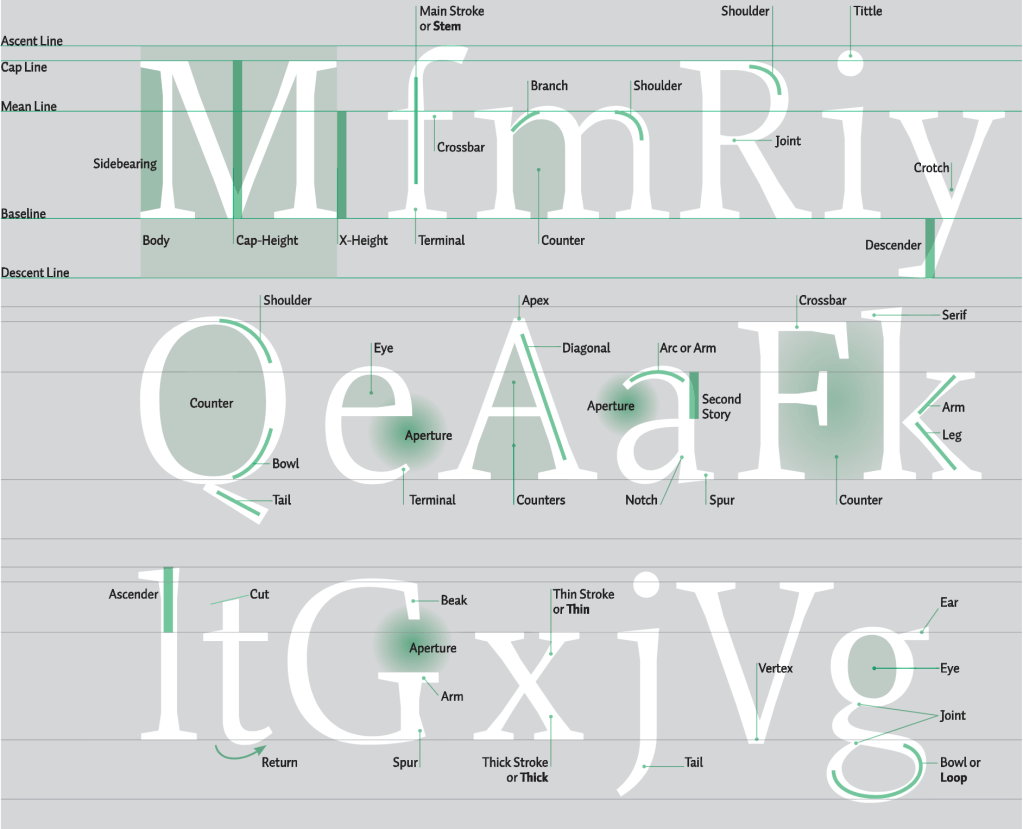
In my other class, Special Topics in Communication Media, we are learning about all this stuff. That class is all about graphic design, studying it and how to utilize effective communication The first thing we learned about it form and space, because that it what you do first when creating visual communication. The layout of the shapes and where you will place text is what your intended audience will notice first upon glancing at the communication you created. We get very in depth with these too, like studying how you can use varied contrasts of forms on your design to allow the shapes to pop out to audiences. Next, we studied color, which is all hue, temperature, saturation, and value. I had no idea that just choosing the tiniest difference in hue would completely change the color palette, change the temperature of the design, and leave a different opinion from the audience. Even colors have a vastly different meaning in different countries. Most recently, we’ve been learning about text, and all the different ways you can impact an audience based on text alone. Below, I attached a chart that shows all the elements of text that each font has different from another.

While reading these chapters, all I could think about was what we were learning in my Special Topics in Communication Media class. The elements that Rebecca Hagen and Kim Golombisky speak of may be a worded differently, are all elements that a designer should think about while choosing tiny little details, like a color that is more saturated than another. The ones in these chapters are generally more broad, while the ones in special topics are more in depth, but they go hand in hand.

Messages, Signs, and Meanings.

Reading Summary

This excerpt from Danesi gives the reader an introduction to what signs are and the complexity behind their interpretations. It begins with a short remark on what semiotics is and the scope of its influence. Next, the excerpt begins to tell the reader what signs are. It introduces such terms as superordinate concept, basic concept, and subordinate concept. After the section on signs is a section on about signification. Here, Danesi explains that the word meaning ironically has many meanings. And that when we try to define something we find ourselves using words that themselves need to be defined. This loop continues endlessly. Thus, we use the word signification because it has only one clearly defined meaning. The second part of the excerpt tells us that there are 66 different types of signs and three are commonly used today. They are icons, indexes, and symbols. The excerpt then has a section dedicated to each of the three symbols. In each section there is an explanation and various examples of what icons, indexes, and symbols are and they are represented in our lives.

Outside example

The ideas in this chapter reminded me of learning about unicode and hexidecimal in one of my current classes. In class it was explained to us that while we may see one thing on our screen, such as a taco emoji, how it is stored is looks completely different.

This taco emoji is can be represented in hexidecimal as 1F32E which is stored in our computers and phones as the binary number ‘00011111001100101110’. These things all look very different but can all represent a taco.

Reading Connection

In the first page of the excerpt from Danesi it is explained that “semiotics is the science that attempts to answer the following question: What does X mean?” That X can be anything. In my example, the taco emoji, the hexidecimal 1F32E, and the binary 00011111001100101110 are all an example of what can be considered X. While all three are different they all equal the same Y which is the idea of a taco.

Messages, Signs, and Meaning

Reading Summary

A sign is anything that stand for something other than itself. When analyzing a sign, you must ask three questions. What does it mean? How does it present this meaning? Why is it indicative of this meaning? There are two types of referents, the thing to which a sign refers. One being a concrete referent, which is something that can be shown to exist in the real world, and the other being an abstract referent, which “is imaginary and cannot be indicated by simply pointing to it.” Signs allow us to refer things and ideas that might not be physically present. Signification is what happens in our mind when we use or interpret a sign. The meanings of most concepts are subject to personal interpretation and subjective feelings, the range of variation is not simply a matter of randomness, but forms a socially based pattern. A symbol stands for its referent in a traditional and standard way. These symbols and meanings are all thought to arrive by social interpretations and historical tradition.

Outside Example

The movie “Snow White” is about a young princess whose step mother becomes very jealous of her beauty and orders the murder of her stepdaughter, but later discovers that Snow White is still alive and hiding in a cottage with seven dwarfs. Her stepmother then uses magic to transform herself into an old lady and visits snow white with a poison apple that snow white eats and then falls into a deep sleep only later to be awoken by a prince’s kiss. The apple in this case can have a lot of different meanings. Many people can connect the apple to the story of Adam and Eve and how eve was led into temptation just like Snow white was.

Reading Connection

An apple can have a lot of different meanings, from the simple of temptation to the symbol of being healthy. Like the saying goes, “an apple a day keeps the doctor away”. Depending on the context the apple is put in, it can be interpreted in different ways. According to the reading, this makes and apple a sign, as a sign is something that stands for something else. In this case the apple represents not only temptation but because snow white was raised to believe that no one would wish harm on her, she sees the apple as a symbol of health and generosity. Meanings of most concepts are subject to personal interpretation and because snow white was so sheltered and is seen as an innocent, naive, young girl, she gives into the temptation thinking nothing of it. Only someone who knows or has experienced unfavorable circumstances would question an old lady giving them an apple.

Monday, Jan. 3: Chapters 4-5

READING SUMMARY

Both chapters from the reading give us a bulleted list of different aspects of layouts for advertising and design. The lists are very concise. Layouts for advertisements in chapter 4, shows us 13 things not to do when making an ad: too much animation, warping photos, not hiding ambigous edges in photos, bulky borders and boxes, cheated margins, making everything too centered, cluttering images, negative space in the middle of a page, busy backgrounds, excessive emphasis, bad bulleting, random and awkward breaks in text, etc. All of these factors come together to teach you to do the opposite.

Chapter 5 teaches more about the design and art. We have firstly the elements of design: space, line, shape, size, pattern, texture, and value. Second, the author lists principles of good design: focal point, contrast, balance movement, rhythm, perspective, and unity. Using all of these different techniques and principles allows us to talk more openly about our own designs, as well as broaden our creative spectrum.

OUTSIDE EXAMPLE

When my dad was younger, around the age of 11 or 12, he started his very own lawn mowing business. It wasn’t much of a business, but it consisted of going around the neighborhood and passing out flyers that he had created himself, ytht had all the details of exactly what he could do for his customers and why they should choose him.

When I first saw the posters I noticed that they were extremely simple. It was just his handwriting, but everything was concise, straight to the point, and greatly highlighted his strengths against “other competitors” . He had drawn one simple picture of a tiny lawnmower in the bottom corner and that was it. He said he had people calling him immediately.

CONNECTION

As soon as I read the chapters, I thought of how well my dad did with his advertising as a child. The first chapter insists on not over complicating, or cluttering a page, being direct with your words and ideas, and that’s exactly what he did. When creating my own flyers for babysitting, I completely filled the page and over complicated the message. The reading this week shows how to best design an advertisement to reach your audience, and my dad did just that.

(If I’m able to, I’ll get my mom to send me a picture of the advertisement my dad made. Not gonna lie, it’s pretty sick.)

“White Space is Not Your Enemy” Chapters 6-8

Summary

Chapter 6 covers developing a layout for graphic designs. It is recommended that a grid be used as a framework to organize the various components of the design. A grid is made up of several elements, notably the format, margins, live area, trim/bleed, columns, alley, and gutter. Columns are the basic unit of a grid, with grids being primarily composed of a multitude of columns. It is recommended to establish a focal point, something that captures the viewer’s attention and directs them to the rest of the content. From there, it is recommended that the rest of the content (visuals, type, etc.) be arranged to control the flow of information and make it easily readable. One key strategy is to create visual hierarchy by positioning and sizing elements according to their relative importance.

Chapter 7 goes over type and how to choose fonts that establish tone and increase the readability, legibility, and visual hierarchy of your type. There are different font categories, namely old style/transitional, sans serif, script, decorative, slab serif, and modern, and each can serve a different purpose. It is best to use a font for body text that is readable, and a contrasting font for headlines. Each font has styling options, such as font size, bold & italic type, leading (space between lines), and kerning (space between two characters), tracking (space across all characters), all which can be used to increase readability. Lengthy text can be made more inviting by breaking it up using paragraph indicators, headings/subheadings, bulleted lists, and indentation. Newspapers are a good place to look to see how extensive text is made to be more readable. Rather than just conveying readable information, fonts can also be used to create visual interest. Using a font’s proper punctuation is important.

Chapter 8 covers color, and how to choose color in order to create visual impact, organize, and evoke emotion. The color wheel is presented as a useful tool to understand color relationships, such as primary, secondary, tertiary, and complementary colors. Choosing color can depend on a number of different factors. Different cultures often attach certain symbolic meaning to colors, and color styles vary across history. Nature is also a good guide for choosing colors. The chapter offers specific tips for designing with color such as choosing a main color and one or two accent colors, designing for visibility and readability, and using splashes of color for visual emphasis. Screen color often differs from print color, and so it is important to know the different color “languages” are and how they differ.

Outside Example

Reading these chapters reminded me of working on a website with my boyfriend (who is a graphic/web designer) for my father’s business. It was incredibly frustrating trying to accommodate everything my dad’s team wanted for the website, and they rarely allowed us to exercise creative freedom. Some of the suggestions they had for how they wanted the site to look often conflicted with what my boyfriend and I thought would actually look good and attract visitors. We often tried to explain to the team our reasoning for changing what they had requested, but it seemed like they weren’t willing to listen. They ended up being a very difficult client to work for, and the final result was, unfortunately, a website that neither of us felt proud enough to put our name on or showcase.

Reading Connection

A lot of the issues we had with the website and the client’s requests for us revolved around the site’s layout. Reading chapter 6 reminded me of how we tried to implement a sense of visual hierarchy and make the site’s content flow better, especially as it scaled across screen sizes. We also had issues with the fonts they had chosen to use, and reading chapter 7 reminded me of how we tried to tell the client that they had chosen too many fonts (there were 4 different fonts used on a single page) and that none of them really complemented each other.

Design a site like this with WordPress.com
Get started