How Subarus Came to Be Seen as Cars for Lesibians

Summary

    In the 1990s, the marketing department of Subaru discovered a niche group to advertise their cars to- lesbians.  They highlighted the car’s style to “fit [an] active, low-key lifestyle.” This was successful and encouraged other companies to consider advertising to the LGBT community as well.  This was a progressive decision, since the LGBT community was not widely accepted as it is today in pop culture. These advertisements were appearing across the media, and although the company received backlash, the ads survived and continued to succeed.  The company began to strategically place subtle hints that only members of the LGBT community would understand. This way, there was less backlash from conservatives while still marketing to this niche group. A new marketing term “gay vague” emerged as a result to describe this advertisement strategy.  Subaru did not hide its support of the LGBT community, and it is still considered one of the most “gay-friendly” brands.  

Example

    This article reminded me of the many strategies of large brands that are implemented in the hopes of being remembered or considered by consumers.  For example, I remember the hamster commercial for Kia Souls when I was younger, and it became very well-known since it was so comical. Later on, I happened to get a Kia Soul as my first car.  Everywhere I went, when people asked me what car I drove, I said that it was a Kia Soul. Once they saw the car, they always remembered it as the Hamster Car. I think this shows how well an advertisement can stick to a brand or product.  Just like Subaru has been deemed a gay-friendly car, my Kia Soul was deemed a hamster-friendly one.

Connection

    Just like Subaru, Kia wanted to appeal its product to a specific group of people.  It knew its brand was not a luxury vehicle, and that it was rather smaller in comparison to other cars on the road similar to it. The marketing department used this stereotype to create a fun, carefree ad that poked fun at itself, and it challenged consumers to embrace the “hamster car” stereotype. The statistics at the end also highlighted that despite its appearance, it is a safe and fuel efficient car that is valued at reasonable prices.  Most car commercials are sentimental or want you to feel cool in a certain car or car brand, but this commercial wants to appeal to the common person and have a little fun while doing it.
“Creating Visual Hierarchy with Type” and “Using the Gestalt Theory to Guide Layout”

Summary

In the first video, “Creating Visual Hierarchy with Type”, it explains the importance of visual hierarchy, and how it is vital when one is creating a sense of order on a graphic. By the use of typography and appropriate space, a designer can decide how to place the important information in the perfect position. For example, if someone wants to emphasize the name/title, making the font and text size bigger allows audiences to see what the main selling point is. Another tip from the video was to add space in between text so that the words don’t seem squished together which makes it harder to read. Similarly, the second video, “Using the Gestalt Theory to Guide Layout”, emphasizes the four Gestalt theories and how they are used in graphic design. The four theories are proximity, similarity, continuity, and closure. In this case, proximity is described when items that belong together should be placed/grouped together in order to have a balanced image. Similarity is defined when things certain objects look alike and should therefore be related in some way. Continuity involves flow, which means a line is typically pointing from one place to another according to how the graphic layout. Finally, closure is the tool that humans use to fill in the blanks for missing visuals and points. Our eyes tend to see both negative and positive space when we are observing an image.

Outside Example

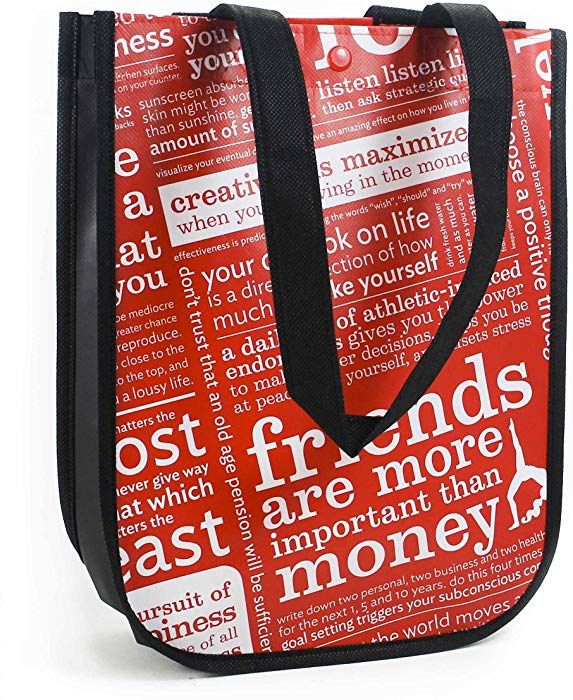
At first, I thought that all of this basic terminology about fonts and bolder texts made sense to me because it was so obvious in my perspective, but when I was thinking of my connection all I could think about was Lululemon’s logo. The company has vert unique style bags that they give out to customers when they purchase items and at first glance, it just looks like a bunch of words jumbled up together. However, this was part of their branding strategy. They compressed a bunch of words like yoga, friends, love, creativity, choice, etc. to show what their company is built on. You can see in the image bellow that some words are bigger than others which indicates the importance of that word or phrase. I think this was a clever way to have creative style as well as the graphic strategies to make this company more and more successful.

Connection

The Lululemon bag follows the rules of the first video, in that it emphasizes bold fonts and large size texts to show importance in a graphic. The Lulu bag consists of very small fonts and really large ones as well which was designed to make the audience see the main ideas. The small, condensed texts, however, goes against the theory of proximity and similarity. The layout of this bag does not follow the rule of proximity because the worlds are very close together and the images and phrases are randomly placed on the bag. The similarity law is also broken because not all images/phrases on this bag are related in a specific way; they are all crunched up. While this graphic goes against some of Gestalt’s theories, the bags are still creative and catches the eye of consumers as shown through the success the Lululemon company itself.

WSINYE Videos

Video Summary

The first video explains the importance as well as how to apply a visual hierarchy in graphic design. This is important because it creates order, gives clear organization, and establishes different levels of importance (hierarchical) to the information being presented. The video uses a menu to demonstrate the effects of different typography techniques. For example, the headings and important, broad information is given larger text size with a decorative front. This is followed by the next category in the hierarchy given a heavier font type, but still within the same family of fonts in order to create a non-competitive and cohesive space. Additionally, “like is grouped with like” in order to show similarity, but space is also needed between these “likes” in order to show difference, as is done i the menu. The emphasis is that styles are duplicated in order to create consistency, but separation and a hierarchy are essential in order to shown differences and varying importance.

The second video further emphasizes the importance of creating order within a graphic design space because the human brain does this naturally, thus allowing information to be outlined easier. These are outlined through four Gesalt theories. The first is proximity, which means that when things are close together, the brain associates them as belonging together. By separating information through white space, this gives clear association and difference by putting similar information together and separating others using white space. Second is similarity, things that are similar are also associated as belonging together,. This is illustrated through using different background colors, fonts, styles, and shapes to show different groupings of information to be distinct from other groups but also similar within their own group. Thirdly, continuity states that visual lines of sight can create movement and a sense of direction, either directly or indirectly. Indirectly, aligning sections through an invisible line or using a movement of colors can guide a reader through, or a direct approach of literal lines, numbers, and movements are also effective. Finally, closure illustrates that when the brain is presented with a part of something, it desires to fill in the rest, especially when it involves a common shape. The video stresses the need to only present part of an object or shape in order to create simplicity because the brain has the ability to assume the full image that is wanting to be presented.

Outside Example

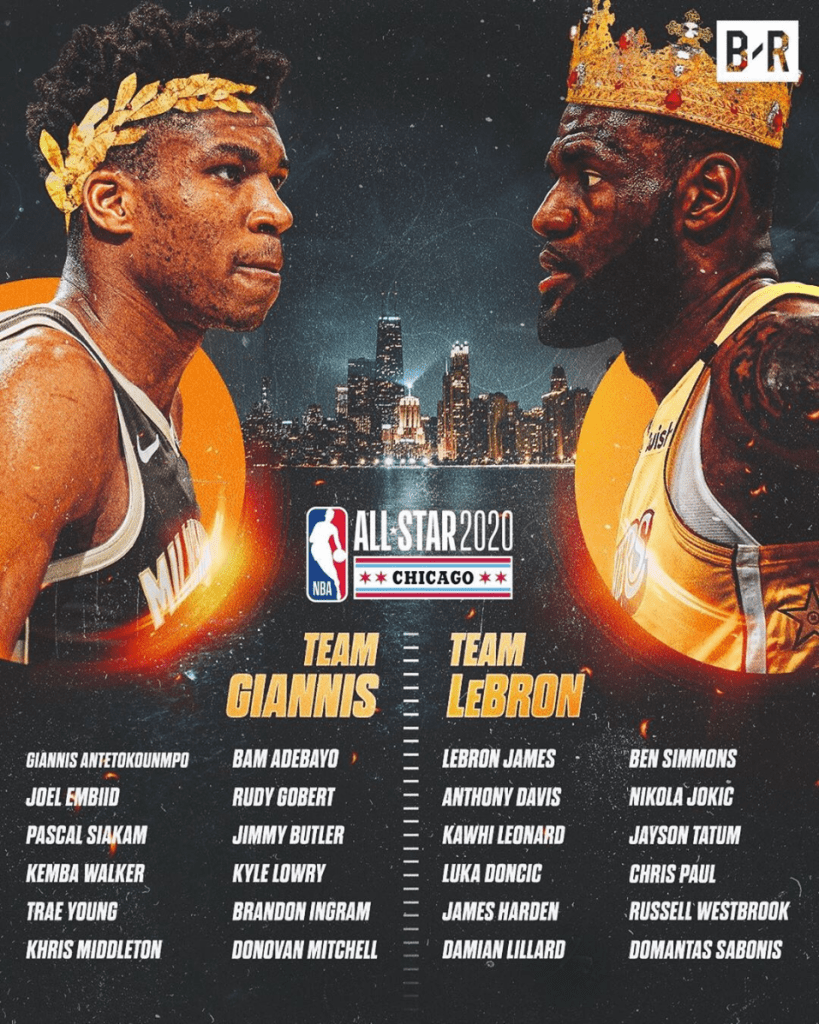
For my outside example, I thought of Bleacher Report’s graphic design for the 2020 NBA All Star Game teams. This was released Thursday evening after the two captains selected their teams from the All Star Game.

Reading Connection

I believe this example is applicable because it touches on many of the design tools of the videos. For starters, there is visual hierarchy. The two main players are composed on competing end with the all star game logo centered between them as the first piece of text. This clearly shows the context and main event that is occurring. Secondly, the two team names, Team Giannis and Team LeBron, are placed underneath in a different color text and a large size. This is underneath the logo, so clearly they are the two teams in the all star game, and they are above the white text below, showing different components of the teams. Finally there are the different players names that are in white and written smaller, showing that they are apart of the respective team to which side of the graphic they are on.

Additionally, the four theories are also in play here. The graphic is divided in two clear sides, as the images and text in proximity with their respective left or right side are grouped together and are in opposition to the opposing side. There is similarity as well, as the captains, Giannis and LeBron, are given large gold text while their supporting players are given general white text. One issue I believe the graphic doesn’t resolve is identifying which players are starters and which are reserves, which could be indicated by an asterisk or different color. There is continuity as well, as your eyes are guided down one side of the page before the dividing lines in the center direct you to the top of the right page, where your eyes work down from there. Finally closure is evident with the skyline being covered by the two players, as you can piece together an important city is behind them and likely where the event is taking place (Chicago). Additionally, only the players top thirds of their bodies are shown, but you can clearly tell they are human basketball players through the jerseys and context.

“How Subarus came to be seen as cars for Lesbians”

Reading Summary

Subarus becoming the official car for lesbians isn’t just the result of a stereotype, but it is the outcome of a highly progressive marketing campaign beginning in the 1990s. The birth of this project began when Subaru conducted a survey to identify the demographics of those who were willing to purchase their premium all-wheel drive. The core groups discovered were: medical officials, teachers and educators, IT professionals, outdoorsy types, and lesbians. Subarus fit the low-key life styles of many lesbians at the time. Rather than fighting larger car companies over the same demographic, Subaru decided to target unconquered territory: the gay market. From this point forward, Subaru marketing became leaders in social progress. Considering this market campaign received backlash from conservative viewers, Subaru decided to base their advertisements on subtle hints and allow the audiences to decode what was happening. This left the anti-gays to be dumbfounded and the supporters to enjoy the playful coding incorporated into the ad.

Outside Example

The reading states how some of the first marketing techniques did not go well because many of their tactics read as ingenue to gay audiences. Lesbian audiences seemed to not enjoy their sexuality being the sole point of such ads. This target audience seemed to favor subtle shoutouts. When reading this, I was reminded of the last few moments of a recent political ad I scrolled upon. This ad is for Rich Madaleno’s campaign. He states in this video that his sexuality is the number one thing about him that allows him to take a stance against republicans. As suggested in the reading, this tactic may not read well at all. https://youtu.be/cc9ovvth3sY

Reading Connection

This ad correlates to the reading because it is reminiscent of the first few ads Subaru put out. Gay audiences seemed to enjoy “playful decoding” rather than no subtle hints and in your face marketing techniques. In this political ad, Rich Madaleno seems to use his sexuality as a spite towards Donald trump. Instead of voicing that he was for gay rights he voiced that he was against Donald trump and did so by filming what looks to be a very ingenue kiss. As the reading suggests, this ad may read better with gay audiences was merely hinted at rather than being “the number one way he pisses of trump and republicans.”

How Subarus Came to be Seen as Cars for Lesbians

Summary: Executives working for Subaru during the 1990’s attempted to reinvigorate their sales by marketing their cars to more niche groups as opposed to the common demographic of white individuals ranging from 18-35. They realized their top customers were teachers, educators, healthcare professionals, IT professionals, outdoorsy types and lesbians. This article discussed how the car appealed to lesbians, which consisted of its ability to manage outdoor trips and carry large items without being a huge SUV. Subaru concentrated on these groups, openly marketing towards the lesbian crowds. Although it was a bold move, the company decided those boycotting the company had never bought a subaru anyways. Subaru reaps many benefits from their bold move even today. Their compassion and efforts made their campaign more ‘progressive’ and less ‘cynical’.

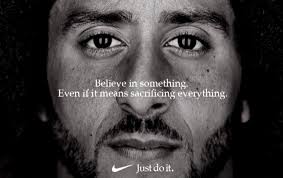
Outside Example: An outside example is the Colin Kaepernick from Nike. Nike made a bold move to reach a specific audience, specifically those who believe in standing up for equality. THis reading reminded me of this Nike campaign because it turned off some consumers while simultaneously reaching a new group of people. In addition, I realized while reading how little different sexual orientations were discussed at the time of Subaru’s ad. This realization reminded me of how the kneeling within NFL games also began to spark conversations that were often pushed to the side or silenced on larger platforms. 

Image result for colin kaepernick nike

Connection: Similar to the Subaru article, Nike also understood they would receive some backlash for running this campaign. However, they made the executive decision to run the campaign fully. Subaru, as discussed in the article, is now known as progressive for their marketing choices in the exact way that the Colin Kaepernick campaign made Nike as a brand follow the ‘progressive’ trend. As discussed in the article, both Nike and Subaru attacked social problems with their ads that were barley being discussed in the public sphere and for that reason both companies took a leap in their marketing strategies, however the ‘progressive’ reputations of both companies has been a positive aspect of their companies.

How Subarus Came to be Seen as Cars for Lesbians

Reading Summary

In this article out of The Atlantic, Alex Mayyasi addresses a specific ad campaign that left Subarus being seen as cars for lesbians. In the 1990s, Subaru executives made the attempt to “reinvigorate sales,” and in doing so they identified five core groups that accounted for over 50% of the makers’ sales: teachers and educators, health care professionals, IT professionals, the outdoorsy type, and last but certainly not least: lesbians. The article continued to address how the company handled the advertising and targeting of the LGBT community, and how rather than being exploitative, the company’s tactics resulted in additional support.

Outside Connection

After reading this article and reflecting on it, it reminded me somewhat of Nike’s ad featuring Colin Kaepernick, “Believe in Something,” and Gillette’s ad “The Best Men Can Be.” Each of these advertisements faced backlash in the media for support of controversial movements, but despite the critical evaluation of each of the ads, the media surrounding them typically did not hurt either of the company’s sales as the phrase “any publicity is good publicity” proved to be true.

https://globalnews.ca/video/rd/1313477187677/?jwsource=cl

Reading Connection

I connected the readings and these Nike and Gillette ads because of the section of the article that talks about Subaru facing backlash and receiving letters from a grassroots group that threatened to never buy a Subaru again. All that Subaru learned from this was that these people who were boycotting the company were individuals who were not supporting them by purchasing their vehicles in the first place. Through this backlash Subaru learned that “the people opposing . . . were not as imposing as they seemed. The same goes for the Nike and Gillette ads, that despite critical media surrounding them, “any publicity is good publicity” proves to be true.

“Creating Visual Hierarchy with Type” and “Using the Gestalt Theory to Guide Layout”

READING SUMMARY

The “Creating Visual Hierarchy with Type” video tutorial explains how visual hierarchy is important in creating a sense of order. It leads viewers to where they should start, move text, and end, as well as lets them know what the most and least important visual information is. Headlines can pop out with larger text size and a bolder font. Adding space between text helps group similar things together and makes them more readable. The “Using Gestalt Theory to Guide Layout” video tutorial discusses the four Gestalt theories and how they are used. The theories are based on the fact that the brain automatically seeks to organize visual information. The four Gestalt theories are proximity, similarity, continuity, and closure. Proximity means that items that belong together should be placed or grouped together, and similarity states that things that look alike must be related somehow. Continuity involves flow, meaning a line always seems to be pointing from one place to another. Closure is that we as humans fill in blanks for missing visuals; we see negative space as positive sometimes, and vice versa.

OUTSIDE EXAMPLE

While writing this blogpost, I had the book White Space Is Not Your Enemy next to me. I looked at the cover and noticed the design work actually put into it (which, funnily enough, it explains how to do). First, you look at the big colored letters W, S, I, N, Y,  and E. Then, you read the smaller (but still large and bold font) right beneath it, reading “White Space Is Not Your Enemy:” and next, the small font below that explaining what the book is in a few words. Lower down on the cover are the names of the authors, with the same font and size as the book’s explanation. It’s a visually pleasing cover, but I just happened to actually look at it today.

READING CONNECTION

The cover of White Space Is Not Your Enemy uses both visual hierarchy and the Gestalt theories. As viewers, we first look at the big, bold, colorful letters, and then look below it to figure out what they mean with the bold, large-font title of “White Space Is Not Your Enemy”, with the larger colorful letters being its acronym. We then automatically look below that to the smaller font explaining what the book is, then lower down the cover to the authors’ names. The cover was purposely designed so that we would look at the title and its colorful acronym first, then to the explanation and names. This is visual hierarchy. The letters, title, and short explanation are all placed together in the middle/top of the cover (proximity), and all the letters that make up the acronym look similar (although they are different colors) and are therefore related (similarity). Our eyes also follow a line, though not an actual line, when we look at the cover, moving down as the text gets smaller and less bold. The title lines up below the letters, and the explanation is off to the side a bit but lined up with the authors’ names further below (continuity). Overall, I noticed how the Gestalt laws and visual hierarchy are used in real life on simple things like book covers.

Blog Post #4 for Monday’s reading on February 10, 2019

Reading Summary

In the video titled “Creating visual hierarchy with type”, the main principal that is taught is visual hierarchy. By using typography and appropriate amounts of space, a designer can share what is most to least important visually on a page. Typesetting is a way to establish where to begin, where to go next, and where to end when looking at a design. In the video titled “Using gestalt theory to guide layout”, the concepts of proximity, similarity, continuity, and closure are the main focus of what designs should focus on inorder to make the design easier to understand. 

Source:  Rebecca Hagen and Kim Golombisky (2013) “Using gestalt theory to guide layout” and “Creating visual hierarchy with type” 

Outside Example 

The first thing that came to mind while watching the videos was a menu from a place I ate at in tennessee. The menu was very simple and it was easy to understand. The name of the dish and the price were right next to each other and the description of the dish was right below it. The reason this menu in particular came to mind was because despite that I had never eaten there, I was able to read it and know what I wanted to eat in less than a minute. It also helped that the food was very good.  

Reading Connection

The menu from The Local Goat follows all of what was taught in the videos. It shows you what isn’t important from what section you are looking at, then to the dish names and the price, then to the dishes descriptions. The video used different font types, font sizes, and spacing to achieve this, but the menu from Local Goat mainly uses font boldness, font sizes, and spacing to achieve this. It’s continuity and proximity are what really make it work. Using similar fonts also makes it look better in my opinion. 

Debbie Does Salad

Reading Summary:

Barbara Nitke noticed that porn films and Food Network shows shared similar characteristics. The color and texture of the way many food is portrayed on the Food Network resembled that of porn. When couples will feed each other food, Nitke said they stretch the moment out. In both cases, you also can’t have too much storyline, because it distracts from the porn or the food. Rachel Ray even has popular photos of her in underwear licking chocolate syrup from a spoon.

Outside Example:

It was really hard to find an example for this, because I feel like this article was very unique. When I was younger, The Wizards of Waverly Place was my favorite show. On Disney Channel, they showed a behind the scenes of how they filmed the magic carpet scene. At the time, I was really upset because I didn’t think it was that cool and didn’t want to think about how the scene was filmed, because it took away the aspect of magic.

Connection to Reading:

The reading talks about how most people don’t really think about what happens behind the scenes. For example, the article said that in porn, the same shot is often shown repeatedly, but it’s because viewers want more. Similarly, this same tactic is also used with filming food. Knowing this would probably make it less interesting to watch, because it reinforces the idea that it’s not real and makes it less interesting knowing that you’ve already seen the same shot. Similarly, knowing how the magic carpet scene was filmed made it less interesting for me to watch and took away some of the “magic.”

*Makeup – Didn’t Have Textbook: WSINYE ch. 4 + 5

Reading Summary:

In “White Space Is Not Your Enemy,” Rebecca Hagen and Kim Golombisky discuss the dos and don’ts of design. In chapter 4, the specific things to avoid also known as “layout sins” are outlined. These flaws range from cluttered designs to “centering everything” in the work. By laying the foundation of what not to do in design, the authors then transition into describing tips on creating good designs. In chapter 5, these creative techniques are examined in detail. It begins with explaining the basic elements of good design, but then transitions into certain “principles.” Overall, chapters 4 and 5 provide great advice for people new to the world of design. 

Outside Example:

One movie series I have always really enjoyed is The Dark Knight Trilogy. I specifically remember being a young kid and walking through the movie theatre and seeing the poster for The Dark Knight. The background is a gloomy world and building with Batman at the forefront. At this time, I wasn’t old enough to watch the movie in theaters. However, I specifically remember waiting until it was released and getting the movie at Blockbuster. Luckily for me, my parents were pretty cool about me watching violent content at a younger age. I loved the batman series, but I can accredit my initial drawing towards the movie to the first time I saw the movie cover.

Image result for dark knkght

Connection:

I found The Dark Knight movie cover to align with a lot of what was talked about throughout the chapters. For starters, the cover is very simple and spreads the message of it being a chaotic scene without making the movie cover cluttered. In terms of colors, everything is in darker colors except for the bat symbol on the building. This symbol is in a bright orange shade and serves to contrast the gloomy colors of the background. By contrasting these colors, a focal point is placed on the bat symbol. As I have learned in class, violent, action movies often use this orange color to highlight the fact that there will be weapons and explosions throughout the movie. Furthermore, there is a lot of balance throughout the piece as batman is right in the middle with each half of the building directly on his sides. Overall, I think this movie cover is so intriguing due to the fact that it follows the rules of good design and maintains a simple arrangement.

Design a site like this with WordPress.com
Get started