Monday 3/23: Film, Space, and Mise-en-Scène

SUMMARY

In this week’s reading, we start by learning about shots: stills, stationary images of particular moments in a film, or publicity photos intended primarily to promote a movie. It’s also simply what is recorded by a single operation of the camera. There are different types of shots: close-up, close shot, extreme close-up, long shot, full shot, extreme long shot, medium shot, medium close-up, establishing shot, etc. All shots have a different purpose and intended focus.

Close-ups is intended to emphasize a subject, long shots do the same, but focus more on a specific event instead of a person or thing. Shooting from high/low angles, from different perspectives, all create different emphasis on certain subjects in the film. A variety in different shots allows for a story to be told. The director can dictate how an audience feels or understands a character simply by using camera angles/shots alone.

OUTSIDE EXAMPLE

In Damian Chazelle’s musical film, La La Land (2016), we see many different shots and sequences being displayed. One of the most memorable is the end of the movie: a musical montage of the love story of the two main characters that shows what their story could have been if small details would’ve changed.

Obviously this scene should take up an extremely long time if you are to try to go back and rewrite the entire plot, but Chazelle uses a montage to show this.

CONNECTION

So why a montage and why does it work? A montage can show an enormous amount of time within minutes. The story of Sebastian and Mia takes place over the course of years, but here takes 9 minutes to summarize. Chazelle does this by focusing on major turning points that the audience can recall vividly, therefore retelling the story quickly, but with accuracy. The shots are put in this specific order to tell a tragic, yet beautiful love story that the audience can take part in. Try not to cry while watching the clip.
Chapter 6 “Role Models and Stereotypes”

Summary: The chapter starts with discussion of approaches to analyzing stereotypes in media and how this relates to the idea of “othering”. It talks about the words us, you, and we to show how media aims messages for us to be a part of through interpellation. This can be seen through words and images that not only aim to make you belong in that group but also show the flip side of being excluded, for example, the commercial showing teens having fun. It shows this positive/negative relationship through the example of Native Americans, how the positive is “them” being connected to nature not like “us”, but also the violent side of that connection. It discusses the magnetism of othering and how our experiences make us more susceptible to stereotyping where an instance that confirms the belief, we tend to stick to. When talking about media makers about these negative portrayals it discusses how they create villains based on society representations to tell the story. It then discusses the comic other and how they create that separation because they are less normal than the others, while still making us sympathize for the character to connect us on a deeper level. It then talks about the difficulties of making a positive image because it forces the whole group to one image, which would be impossible to truly embody the whole group. To fix this media makers use strategies to portray the aspects of the character as positive/negative, instead of the character as a whole. They do this by making the other the problem, setting story in past, stacking the deck, making them a power fantasy or token, and exnomination. It ends the chapter discussing the importance of the other and their representation. It talks about drawing boundaries of identification and how popular culture “recycle variations on a theme”. For the future, the author wants to broaden the range of representations and in the process of repetition to “overcome the magnetism of stereotypes”.

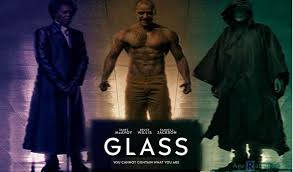
Personal Example: When reading about how film makers develop a villain through stereotypes, it made me think of an instance with the opposite. In the film “Glass”, we follow one of the main characters trying to stop another called the Beast. In the beginning of the film we are made aware that he goes after villains for justice. What differs from the hero in this movie is that he is portrayed as a villain usually would be. He wears a dark hood and is seen battling in dark gloomy places. It tricks the viewer into thinking he is the bad guy even though we know that he is going after the bad people.

Reading Connection: While this difference of dark colors and mysteriousness of a hero are present, the article points out that “the hero bears a strong resemblance to the antagonist”, and is shown from the hood, because like most heroes, they try to keep their identity hidden. On page 98, the author gives the anecdote of Lego blocks and good guy/bad guy. His son chose the darker Lego as the bad guy based on his experiences, but in this movie just by looking at how he is dressed and presented with a deep voice, you would think he was the villain, when in fact he was stopping the bad guys. It states that media makers don’t try to reflect the real world, they’re just trying to tell the story. In this story, while he is trying to stop bad guys, he is also dealing with a conflict within himself over his powers. The black hood could show the aspects of inner conflict while the aspect of hidden identity could show his similarities to a hero and his ultimate goal to stop villains. In this way they take aspects of the typical villain/hero character to show us the character’s full story and how he doesn’t fit into just one stereotype because while he is stopping villains, he is also violent.

Image result for glass movie

Genre Shmenre

Reading Summary

In this chapter from What Media Classes Really Want to Discuss, Greg M. Smith addresses the concept of genres, what exactly they are, and the purpose they serve. Smith identifies genres as a way to help sort media works, as well as a critical tool that provides insight into the structures of broad commonsense categories. Genres are made up of components such as themes, styles, settings, narrative situations, characters, and so on. However, in the reading, Smith acknowledges that the different arrangements and relationships between these components are what account for different genres.

Outside Connection

When reading this chapter, my mind jumped to the movie No Country for Old Men, and the different genres that are explored in the movie. The movie easily can be categorized as a number of different genres including western, drama, and thriller, but its uniqueness is shown by how it breaks the mold of these classical genres in order to form something new.

Reading Connection

I thought of No Country for Old Men specifically when Smith said “A classical genre gives both media makers and audiences a set of internally consistent expectations to share.” The film has been labeled as a neo-western, but first came to mind because it so clearly seems to follow the rules and components of a more contemporary country-western film, but suddenly and without any warning at all, the events of the movie take a dramatic turn, and the result is a disregard for the so called “rules” of the genre. This shift leaves the audience unsure what to expect next, when otherwise, a movie in the genre would have a predictable, classically scripted ending.

Genre Shmenre 3/25

Reading Summary

In chapter 4 of What Media Classes Really want to Discuss, Smith explores the different classification schemes of media products and how our perspective of such media products alter when we use one term versus another. The most common of these terms is genre. Genre provides both media-makers and audiences a set of internally consistent expectations that serve as codes to provide guidelines for interpreting media products. Genre implies a sort of repeatable familiarity within a film that can either be confirmed or tweaked by media-makers. Therefore genre is a blueprint for media-makers, but it serves as tool for media critics. A critic’s definition of a genre provides insight into the structures of our broad categories. However there are alternative labels to media products other than genre. Some examples are production trend, address, movement, and mode. However genre tends to be more consistent in nature compared to these other terms.

Outside Example

When reading this chapter, I was reminded of the film American Beauty. This film is a mixing pot of genres including: drama, comedy, and suspense. However, American Beauty doesn’t fit the standard norms for these genre categories. In addition to its genre, American Beauty shows strong ties to the classic film, Lolita.

Reading Connection

American Beauty relates to the reading because it is a distinct example of media-makers attempting to break film industry conventions and therefore going against the audiences’ expectations. The film starts off with the promise of a father’s murder by the hands of his daughter, somewhere in-between we are introduced to the father’s lust for his daughter’s 16 yr old friend, during all of this we are still provided comic relief, and it ends with the murder actually being done by an abusive neighbor who has violently repressed his sexuality. This is what Smith means when he explains “many modern media treat genre as a painter treats colors on a pallet, mixing elements to create a distinctive whole.” Meanwhile if we analyzed American Beauty apart from its genre (analyzing its themes and modes) we may interpret the film at a wildly different angle. This is why Smith states “different classification schemes make us see the media differently.” If we looked at American Beauty‘s themes we may see repression of sexuality by white males, lust and desire, ache for revenge, toxicity of suburban neighborhoods, etc. All of these being alternative to the stated genre which is more of an umbrella term (drama/suspense/comedy).

Ch. 4 Genre 3/25

Summary

Genre is a concept used by consumers to help them choose which movie or television show to watch before purchasing it.  Genres categorize movies based on its similar plotlines or characteristics. For example, a horror movie is extremely different from a rom-com movie, and hearing both genres gives the audience a distinct image of what they can expect to view.  Genres contain components that the audience sees as a signal of the specific genre and gives them more context of the film. Each genre has a classic time, theme, style, place, character that most films in that genre pivot around. This chapter highlights the meaning of genre “as a blueprint for mediamakers.”  Genre can also be used as a critical tool. Critics use genre to broaden our understanding or perception of a genre that the audience may not have noticed before. The chapter also discusses “‘production trends’” that indicate genres that become popular and replicated in the media, but do not remain a genre for a long period of time.  The example in the chapter was a genre centered on characters switching bodies, like in Freaky Friday or Big.  These contain a unique characteristic that is different from the classic genres, like comedy and horror, but as it rises in popularity, it also declines and can even disappear completely.  

Example

When reading this chapter about genres, it reminded me of how many popular or successful movies and television shows are the ones that do not fall into one singular category.  They do not apply to the basic formula that a genre can present. For example, when you see a trailer for a romance movie, you assume the couple will fall in love, followed by a big fight or revelation to drive them apart before they reunite and live happily ever after in the end.  When reading this I thought of Game of Thrones because it balanced many characteristics of different genres- fantasy, action, and suspense- without following a formula we had ever seen before.  In most television shows you expect the main characters to survive and prevail against their enemies, but this show is notorious for killing off its main characters at any given moment.  This shows how some of the most renown movies and television shows often surpass genres and stereotypical plotlines to blindside audiences into shock and awe.

Connection

When reading the chapter, I considered how genre played a role in the success of a television show like Game of Thrones.  The chapter talks about how the length of time a category of film or television stays around determines whether it is a genre or a production trend.  This show does not fit into a production trend because many of its plotlines are unique to itself, but it can not be fully categorized into a singular genre.  It is not a dramatic fantasy or a suspenseful thriller, but it incorporates elements of each genre into each of its many characters and plotlines, appealing to many consumers.  So while I read this chapter, I thought of Game of Thrones more in the sense of how it defies the normal rules of genre and television we are accustomed to rather than how the rules apply specifically to the show. I believe that is the characteristic key to its success- its inability to be classically defined.

Keep or Kill: Story Structure

This reading explains the art of telling stories on radio, through an animated comic strip. It features examples of good storytellers in the media and goes through each individual process of creating the best story. The comic starts with Cathrine Burns who reveals her strategy for telling stories with anecdotes, then Joe Richmond who uses scene based stories in his radio show, and Rob Rosenthal who talks through the most effective ways to transition scenes. There are also the examples of producer Soren Wheeler who explains the difference between active voice and descriptive voice, and Alex Blumburg who discusses the advantage of conversational storytelling. The comic ends by describing the struggles of the creative process storytellers face, and how to become comfortable going through creative slumps and triumphs.

While I’m not a huge fan of listening to radio shows, I found that most of my favorite people to listen to on podcasts, or Ted talks are really talented story tellers. A good example of a speaker that used storytelling as a way to captivate her audience was Cecelia McGough, in her Ted talk on Schizophrenia. In this Ted talk, McGough discussed in detail her experience of living with the mental illness, and how she dealt with hallucinations as a student. Not only did McGough’s storytelling leave a lasting impact on me, but it made me realize the impact of storytelling. Through good storytelling people can offer a new perspective and relay information that leaves an impact. https://www.youtube.com/watch?v=xbagFzcyNiM

Although this Ted talk was very different from a radio show and McGough could use visuals and body language to engage her audience, this speaker used many of the same story telling strategies mentioned in the article. This speaker was able to use language and powerful stories to show the audience what life was like though her eyes. McGough included scene-like imagery, which Joe Richman mentions is, “the essential building blocks of radio stories.” While it can be hard to invest in audience in a mental illness they don’t have, McGough does a good job of presenting just enough information to keep the audience engaged, and letting them create the picture in their heads. This same strategy is discussed by David Kestenbaum who says, “The scenery people create in their heads is much more vivid than anything you could take a photo of.”

Blog Post 3/23/20: Film, Space, and Image.

Reading Summary

This article explores the idea of how movies and television shows are filmed and the decisions made by filmmakers on how the audience views each shot. The article starts by describing what a shot is which is an excerpt of a film or something recorded by camera operations. The director ultimately chooses what shots are used in specific scenes throughout the development of a film. There are many different types of shots used in films like close-up shots, medium shots, two-shots, high and low-angle shots, objective and subjective shots, horizontal and swish pans, and finally zoom and freeze frames. When directors combine these shots it is called a sequence, and a sequence contains many types of scenes like linear, elliptical linear, associative, and montage. The way these scenes are put together is by using cuts like straight, contrast, parallel, jump, form, match, final, and rough cuts. Transitions also combine scenes together with fade-ins and outs, dissolves, wipes, and irising-ins and outs. Ultimately, all these types of decisions are made by directors to make their films creative and enjoyable to audiences around the world.

Outside Example

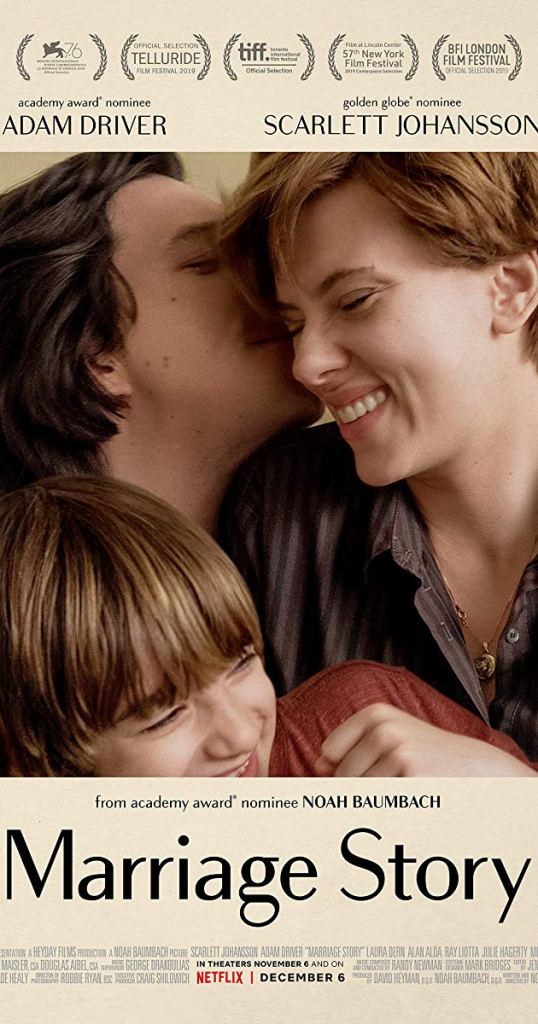
The article reminded me of the popular Netflix movie, Marriage Story, and how filmmakers focused on creating scenes about divorce in the eyes of the two individuals but also through the eyes of the audience watching the film. The show portrays a couple named Charlie and Nicole who are caught up in the middle of a bad divorce. The movie first shows the side of Nicole and the struggles she faces with expecting herself in her job and her happiness with living a life she wishes could be better. The movie then transitions into showing the side of Charlie and how he is struggling just as much as Nicole. Audiences then get a look at how the two interact with one another and the emotional and mental pain that the couple has endured throughout the movie.

Reading Connection

Audiences view both Nicole and Charlie’s side of the story which is what the filmmakers originally wanted as the purposefully showed Nicole’s story first before Charlie’s to make us sympathize with the mother side but also the father’s side which can sometimes be overlooked in reality. Filmmakers used these specific shots and transitions to dive deeper into the private, separate lives of this couple. Filmmakers also stated that the audience plays the part of the friends in the movie as they take sides but those opinions seem to change as they transition into more shots about the other individual. There were a ton of decisions that directors had to make about this movie by giving audiences different shots, frames, scenes, transitions, etc. necessary to make it the genius work that it is.

Plans for the rest of the semester

This is just a draft. I will keep updating more information as we get closer to class time next week.

What I know so far is that we will still have class on zoom during class time at 12:30 on Monday. I will post and email out the link to our meeting before then. Keep checking our wordpress blog for any last minute updates. If tlearn or zoom crash, wordpress will still probably be up.

Your blog posts will be due the same as always, Sunday by midnight. There is a blog post due this Sunday 3/22. Mark the blog posts on your calendar if you haven’t already.

I have made changes to the syllabus already, check TLearn for details. I cancelled our computer lab week already and moved some other dates around. We have no class on Good Friday, April 10th.

The agenda for Monday’s class is tentativly to cover the reading, have blog presentations via zoom, and then an activity. For the first few classes all activities will probably be COVID-19 related. Start bookmarking funny videos of penguins going down the stairs or similar posts to share during activity time.

I will still have office hours via zoom right after class. I will stick around our zoom meeting right after class if anyone has any questions. If you can’t make that time, email me and we can setup a time for phone/zoom. Also if you have any questions about anything else Trinity/stress/class/not class related just email me and I’ll help.

Stay safe and wash your hands.

Blog post #7 for Monday’s reading on March 16, 2020

Reading Summary

Every movie is made based on decisions. Shots are one of these decision. The director chose what type of shot is used for a scene which creates a meaning and reasoning of its own. Contrasting shots can mean contrasting things. An example is a high angle shows less power of the character it is showing while a low angle shows a character poses more power. The shots are called sloe-up, close shot, long shot, full shot, extreme long shot, medium shot, medium close up, establishing shot, two-shot, shot/reverse shot, and over-the-shoulder shot. These shots when put together create sequences, also referred to as scenes. The different scenes are called linear, associative, or montage. The way these scenes are put together from shot to shot is by using cuts. A transition is the way that a cut is executed. 

Source: Dick, B. (2002). “Film, space, and image.” Excerpt from Anatomy of film., 29 pages.

Outside Example 

(Spoiler Alert for Blade Runner 2049)

Blade Runner 2049 is one of my favorite movies because of how it was made. From the visual look of it, to the plot and how it was shown as a film. The film is a sequel to the original Blade Runner movie and follows K (Ryan Gosling) as he attempts to uncover the truth of not only his existence, but also the truth about the people behind the creation of replicants. To get the answers he is looking for he must track down Rick Deckard (Harrison Ford), who was the main character in the original movie. Deckard has been missing for 30 years, but K tracks him down at a resort in Las Vegas. The assistant to the replicant company, Luv, tracks down K and steals Deckard. Luv takes Deckard to headquarters in an attempt to get him to reveal the information that K is after. He doesn’t. Luv then takes him in transport to go get tortured, but K intercepts them and ends up fighting Luv in order to free Deckard. That scene is a pivotal scene and the way it is made is what makes it so good. 

Video source: https://youtu.be/1E6pT2P4_Lw

Reading Connection

It is a linear sequence. This scene first uses close shots and over the shoulder shots to make you feel closer to the action. The over the shoulder shots let you see the action of the person your behind and the reaction of the person you are looking at. In this case it is K’s action and Luv’s reaction to his fighting move and vise versa. It uses a combination of parallel cuts at first in the scene, then to straight cuts as they go into hand to hand combat. There is an establishing shot before the fighting to show Deckard is strapped in the slowly sinking car. There also is an establishing shot to show the distance between where Luv and K are fighting compared to where the sinking car is. As the action picks up the shots get closer and closer until it is a true close up shot of the two fighting in the sinking car.

Monday – Film, Space, and Mise-en-Scene

READING SUMMARY

This reading discusses the filmmaker’s choices with how movies and television shows are filmed, meaning what images we as the audience see and how we see them. A shot is an excerpt of a film, or what is recorded by one camera operation. There are many different types of shots, like close-up or medium shots, two-shots, high- and low-angle shots, objective and subjective shots, horizontal and swish pans, and zoom and freeze frames. Combining these shots is called a sequence, and there are multiple types of sequences as well: linear, elliptical linear, associative, and montage. Cuts join two separate shots; there are straight, contrast, parallel, jump, form, match, and final and rough cuts. Transitions bridge scenes together with fade-ins and -outs, dissolves, wipes, and irising-in and -out. All of these things are choices made by the filmmaker for how we see the film.

OUTSIDE EXAMPLE

Over spring break, I watched Notting Hill again. This was shortly after I did the reading, and I immediately connected it to the scene when William walks through the market heartbroken as the weather/seasons and time changes around him. Months go by, showing changes from spring to fall to winter, and a pregnant woman is later shown with a baby. William goes months, possibly a year, without Anna, but acts the same way as he continues to walk through the market alone. However, this scene only has the screen duration of about a minute and a half.

READING CONNECTION

The Notting Hill scene with the seasons is fairly famous and well-done. It is a long shot of William, showing his full body from a distance with background. The sequence of scenes (as it is more than one, taking place over many months and different seasons) is a montage, meaning it is a series of shots arranged in a certain order for a certain purpose. It could also classify as somewhat of an American montage, which is time collapsed together as shots are blended, like calendar pages blowing away month after month to show changes in time. However, instead of calendar pages, William walks through many seasons in the market with the same ‘walk,’ and we see changes in friends and people (like the pregnant woman with a baby at the end of the minute-and-a-half scene) to show that many months have gone by. Overall, this scene involved many choices made by the filmmaker to produce, and used multiple of these ‘choices’ covered in the reading, like long shot and montage. This Notting Hill scene is very well-filmed and does a great job of using these techniques to show time duration and William’s state of heartbrokenness as he gets through it over the course of many months.

Design a site like this with WordPress.com
Get started