I am at home in New Orleans with my parents, sister, brothers, and dog. I am using zoom on my laptop. In general, I guess I am worried about how it might be hard to hear people or if my internet will hold up. I think that this class will help us to adapt to a different learning environment and and learn to be more flexible about our environment and learning style. (I am posting this again, because it kept deleting as a comment.)
activity 3/23
I am currently in Dallas Texas with my family. My zoom setup is on my laptop in my bed. I am worried about my internet connection since it is being shared by my entire family at the same time. I am also worried about the distractions and new challenges that come with being back with my family. I think if we are all patient then problems will not arise.
Activity 3/23
I am back home in the Rio Grande Valley, sharing a room with my brother since he is also back home from Baylor. I have a fairly nice computer with a webcam and two monitors, however my room is a mess and our WiFi bandwidth may not be able to handle everyone on the internet now that we are all back. I am most worried about the long-term effects the virus will have in our world, since our and many other economies have taken a serious hit and whether they will be able to recover anytime soon is unlikely. This class opens up a creative outlet for a lot of people and is a good way for us to step back from all the problems going on in our world.
Activity 3/23
Where have you relocated to?
I am back home in Austin, Texas. I am with both my mom and my dad. We have two foster dogs and my emotional support cat, so it is a full house. My dad just started working from home so we are all in the house 24/7. I’m kind of going crazy not being able to see anyone or really go anywhere, but I know it is for the best.
•What is your current technology setup for zoom?
I am using zoom on my laptop and I have a pretty good wifi connection, so I shouldn’t have any problems. I’m isolating myself upstairs in a closed bedroom so hopefully I won’t get distracted.
•What are you most worried about in general?
I am most worried about getting distracted because I have ADHD. I don’t do well with listening to audio and retaining the information so I need to take a more active roll to understand what is going on. I often zone out a lot so being in a physical space really helps me, but it is ok because everyone will have their own challenges with this new situation.
•How can this class in particular help?
I definitely appreciate the class participation aspect. I guess I would like more visual aspects like videos and presentations and things of that sort to keep me engaged and alert.
Film, space, and image
This chapter is all about film and the choices that directors make to film their movies. These film techniques shape the way that an audience perceives the movie. Directors often pride themselves on the choices that they make to film their movies. In relation to the camera, there is a lot of different ways to have shoot film. You can have close ups, extreme close ups, high angle shots, low angle shots, long takes and a lot more. The next directorial choice is sequences in the shots and how they are pieced together. There are montages, elliptical linear and linear sequences and associative sequences. Next there are cuts of shots and transitions on these cuts. Each of these allow directors to have their own personal flair and creativity in their craft and every director makes different choices in relation to this.
For my example I thought about the movie Creed. No one would really think that this movie features directing genius but there are many shots that have a lot of creativity in them. This is the final fight in the movie Creed, featuring the now dead Apollo Creed’s son, Adonis Creed.
https://www.youtube.com/watch?v=R4OqB35WpHo
When watching this scene there are a few big angles that are important to the way that this movie is shot. When the two boxers are trading blows, the camera is over the shoulder of the boxers and then switches to the view from the audience to make the people watching feel more engaged. Then there is a sequence with lots of quick cuts and closeups on the boxing equipment allowing the boxers to keep going even after they are bloody and beat up and closeups on the blood to show how gruesome this sport is. And whenever someone gets knocked down or they’re being talked to by their coach, there is a closeup on their face to show the emotion or confusion. Also many of these scenes are quick cuts because the choreography is hard to map out. All of these directorial choices are very important to the emotion and finale of this movie.
Agenda 3-23
Jacob Sanchez is inviting you to a scheduled Zoom meeting.
Topic: Jacob Sanchez’s Zoom Meeting
Time: Mar 23, 2020 12:15 PM Central Time (US and Canada)
Join Zoom Meeting
https://zoom.us/j/2622686644
Meeting ID: 262 268 6644
Plan for today, Lecture, Blog posts, Activity.
Your activity will be due as a comment to this post on WordPress. Make sure you are logged in with your wordpress account.
•Write 1 long paragraph answering these questions.
•Where have you relocated to?
•What is your current technology setup for zoom?
•What are you most worried about in general?
•How can this class in particular help?
Role models and stereotypes: An introduction to the ‘Other’
Reading Summary
In Chapter 6 of What Media Classes Really Want to Discuss, Smith discusses the ideas surrounding “Us” and “Them” and introduces the “Other”. The idea of Us and Them starts at a very young age. Either with high school clique or with political groups. The words, ‘we’, ‘us’, and ‘you’, have a lot of rhetorical power. If you consider yourself t be part of us then you are automatically not part of them. Words like “us” have a lot of power because of the use of Ethos. The use of the word can make a person feel like they are a part of something and are not alone. Even though the use of the word may be inclusive, it is also exclusive in nature. Using “Us” immediately creates a “Them” who are technically supposed to be against you. This divide creates the “Other”, who is anyone who is not “people like us”. It is often too easy to blame the media and Hollywood movies for perpetuating stereotypes and using insensitive images for money, but of course, this is also a generalization. The media makers’ job is to maximize the story’s impact on the audience, and so they will use everything in their power to emphasize the little details and really make you think that an actor is a villain or whoever they are playing. The point of this chapter was not to create divides between the Us’s and Them’s but to recognize the way popular images create a forum for us to talk about the real lives of Othered people.
Outside Example
Mean Girls is a movie about a new student who moves from Africa to go to high school for the first time. She is introduced to the clique at the school of popular girls. These girls take her under their wing and make her into a new mean girl. She battles with the decision of wanting to be popular but also not wanting to lose the close friends she’s made at this new school.
Reading Connection
Mean Girls shows how stereotypes really get used in films and media, but also shows the creation of the “Other” and the divide between “us” and “them”. The head girl, Regina George, is the epitome of a rich high school mean girl. She has blonde hair, a pretty face, a good body, and talks down to everyone. Her close group of friends are pretty much the same body type but have dumber personalities. These are shown not only by what they wear but how they talk and address people. These stereotypes have helped to show the audience how they should think about Regina George and her friends. This movie creates the “other” by showing that everyone apparently wants to be “it” and wants to be a part of the most popular group in high school, but of course for there to be a popular high school group, there have to be the unpopular kids who get pushed around but still follow the popular kids. These are also very big stereotypes mentioned in the movie. The “Them” or the unpopular kids are dressed very casually and look kind of nerdy, in order to further push the idea that they are less than and create a thick divide between the “us” and the “them”.
What media classes really want to discuss
Summary
This chapter focuses on the human desire to have consistency within the media. As consumers of different types of media, we create our own pattern of likes and dislikes to make future decisions. In the chapter the author uses the example of a person enjoying romantic comedies to rely on the same genre to create the same emotions. According to the chapter, we do not just do this with genres, but we also do it with “brands.” In this case, brands are not ‘Disney Pixar’ or ‘Warner Bros’ or other big companies, rather it is the directors, actors and the people who partake in the media produced. The chapter indicates that this branding is a way to code for certain genres. For example, having certain characters or actors creates a sense of familiarity that may help further the storyline of the media being produced. However, the chapter also mentions that branding and genre can always change depending on the social standing of society at the time. Today, there are still a numerous production of media with already established genres. Yet, the number of productions with combined or new genres has increased. The chapter describes how combining genres or creating new ones is a way to play with different emotions with the purpose of grasping the viewer again with something new.
Outside Example
While reading this chapter, I thought of a very-recent moment in which I realized that actors do not determine a genre or a set-storyline. To begin with, one of my favorite shows is Gossip Girl, which I’ve re-watched from beginning to end many many times on Netflix. Gossip Girl is a teen drama series about the lives of privileged teenagers on the upper east side in New York City. As a result, Netflix has created a “Because you watched Gossip Girl” section with similar TV shows which I watch because of the similar genre. In short, I have been watching teen dramas for a long time already because of my love for the genre. Despite watching other related shows, I have never stopped re-watching Gossip Girl. To my surprise, one day, I saw an ad for a show called “Single Parents” which showed Leighton Meester, one of the main characters of Gossip Girl, along with some other actors. In that moment, I became intrigued to watch this new show because I thought that Leighton Meester was going to have the same “privileged and devious” character that she had in Gossip Girl. Unfortunately for me, it was the total opposite. In “Single Parents,” Meester portrays a mom who was left by her husband before her child was born and now works as a paralegal struggling to make enough time and money for her kid. When I saw Meester playing this role, I was shocked because I could never imagine her as something other than a privileged girl who did not need to work and faced zero struggles. Although I continue to watch “Single Parents” because it’s a genuinely funny show, I expected a totally different plot especially for the character played by Leighton Meester.
Reading Connection
From watching Gossip Girl, I unconsciously developed this unrealistic “formula” that if Leighton Meester was to appear anywhere, it had to be a teen drama. This idea was created because of my constant viewing of teen dramas but more importantly, the repetition of Gossip Girl. The chapter explains it perfectly that because the image of Meester as queen bee, Bair Waldorf, my brain uses the actress as some sort of code for any future roles she may have even if they are unrelated to the original show. Looking back to my decision to watch “Single Parents,” it was obvious by the title that I was not going to experience the same emotions that I did by watching “Gossip Girl.” I always knew that the title did not match my expectations but because I saw Meester in the ad, I remained hopeful that I would see a similar performance which I did not get. After reading this chapter, I realized that actors are not necessarily what defines a show because they are just playing a part which may or may not be who they really are in real life. In the case of Meester, she is not the person she portrayed in Gossip Girl and is not the reason why Gossip Girl was labeled a teen drama. The genre of ‘teen drama’ was made because of the storyline. Yet, it was still very surprising to see Meester playing a different role than what I was used to. Surprisingly, this whole situation was also very refreshing and it got me to start watching more comedies instead of teen dramas.
Film, Space, and Mise-en-Scene
Reading Summary
This chapter deals with the various shots, sequences, cuts, and transitions of film. These terms describe film techniques that impact how a film is interpreted. Different techniques can elicit different emotions, so each choice is important.
Shots refer to single operations of the camera. These include close ups, close shots, extreme close ups, long shots, full shots, extreme long shots, medium shots, medium close ups, high and low angle shots, and establishing shots. With all these options, a director can pick and choose how best to represent a scene. The second technique is sequences, or how shots are put together with each other. These include linear and elliptical linear sequences, associative sequences, and montage sequences. From there, we move on to cuts, or how shots transition between one another. Whereas a sequence refers to single shots, a cut is for changing between shots shots. The six basic cuts are straight, contrast, parallel, jump, form, and match cuts. The final technique is transitions, which function like cuts, but are different because there is no jump between them. The shot is simply replaced with another. Each choice impacts the direction and feel of a movie, so a director can have much creative liberty with how they piece the film together. Through these techniques, the film can be given more meaning.
Outside Example
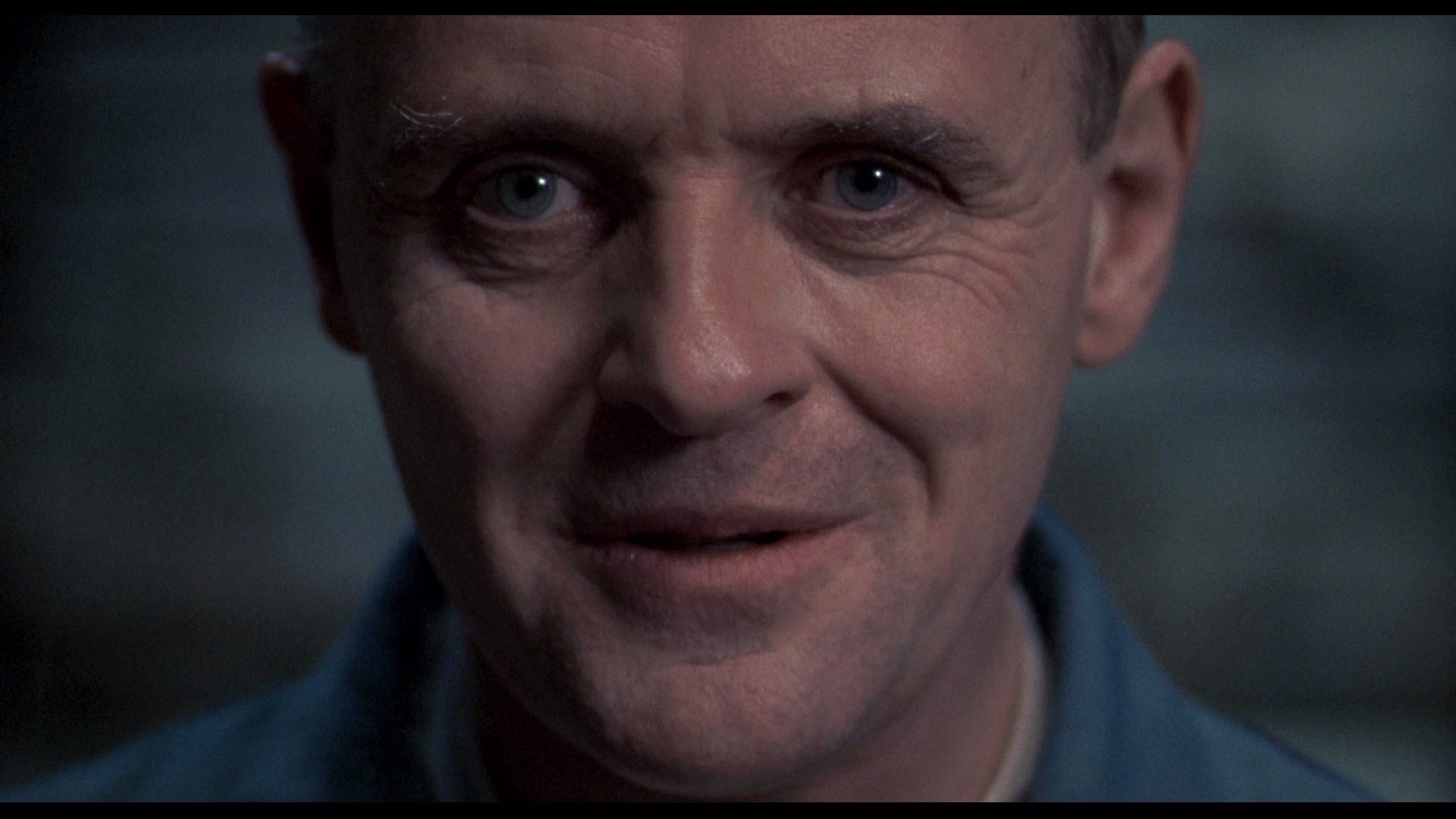
An example of a great shot or series of similar shots comes from The Silence of the Lambs. When we first meet Hannibal Lecter, we get an eerie, unending closeup of his face, which introduces him as a dangerous and unsettling character. This shot is repeated several times throughout the film, and it never ceases to unnerve us.
Reading Connection
The director of The Silence of the Lambs used a shot technique called a closeup in order to convey meaning about the character Hannibal Lecter. The director chose this shot because it can convey intense emotion in a scene. For a character like Hannibal whose motives and nature are largely unknown, this shot works very well, and the film gains additional meaning because of its inclusion.
What media classes really want to discuss.
Reading Summary:
Genre greatly impacts our decision making. In film brands are replaced by actors and or genres, because the simple names of production studios will guarantee that a view will necessarily like a product or not. Instead the genre components are often used to choose preference. Components of a genre include: internally consistent expectations to share, in other words a code mediamakers use when they create work and viewers utilize when they watch. These codes become familiar languages to those familiar. Within genres exist variations to maintain interest. Codes often seen as conventional formulas, guide media makers towards making beneficial changes. Genre codes just help individuals picking content differentiate. They include common images, which the book explains with the example of tumbleweed in western movies. Beyond common images exists places or spaces. For example interrogation rooms and police stations are often associated with the genre of crime. Light usage as well as music choice contribute to the last component, stylistic pattern. Genres allow the content creators and viewers to connect. Although critics do not always agree on genres, the blueprint they provide is more than useful in mediamakers success.
Outside example:
While reading this I made a direct connection to Netflix and their display of content. Netflix has to divide their content into an easy and readable format that makes it easy for customers to pick content according to their preference in an effective manner while being as accurate as possible and therefore dividing by both mainstream and netflix specific genres.

Reading connection:
When connecting netflix to the reading I looked specifically at how the components of the content lead Netflix to categorize them under a specific genre. In addition, it was effective for understanding how variations exist within certain genres. For example, Gossip girl is dramatic but in a very upbeat setting, but with a complex character plot. In the same way, so is riverdale, but riverdale takes place in more dark toned settings. Nevertheless after analyzing all genre components, they both still fall under the same genre. This is a direct example of how genres connect content makers and viewers, as stated in the reading.
 Comm 2302 Spring 20