Summary:
This week’s reading centers on how advertisers create effective and persuasive commercial texts. Textuality is the specific mode of making advertisements on the basis of specific signification systems built into the products marketed. The signification systems are constructed based on a signifier’s connotations, creating connotative chains from which a mythic subtext can be gleaned. One example of creating textuality is mythologizing a product. Mythologizing a product involves embedding a specific mythic code into the make-up of the text.
Outside Example:
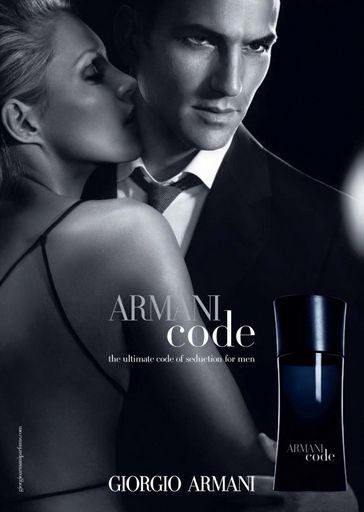
One example I thought of while reading the chapter is Giorgio Armani’s ad for the new perfume “Code”. The producers of the ad have labelled it the “ultimate code of seduction for men”, placing the slogan against a predominantly black and white image of a handsome man and attractive woman embracing.
Connection to Reading:
This ad is a clear example of mythologization – embedding a specific code into the product perhaps with the intention of appealing to a particular audience. In this case, the said audience is young professional men earning at the higher end of the pay scale (Armani is not cheap). Given his good looks and crisp suit coupled with his well-lit and central placement, the model pictured above is connoted as an ideal of male beauty and male professionals . The scantily-clad and attractive woman pictured wrapping her arms around him connotes seduction and irresistibility. The contrast in the color-scheme (black and white) creates an intensity furthered by the sharpness features and powerful gaze of the man, suggesting confidence and dominance. Based on these connotations, a mythic code is created: Wearing Giorgio Armani’s new “Code” perfume makes you more attractive, confident and irresistible to women.
 Comm 2302 Spring 20
check plus
LikeLike