Reading Summary
Chapter 3 discussed the question of “How do we identify with characters?” Smith explained that there are many different techniques such as camera angles and characters that make the spectator feel as if they shared the same experiences or as if they were the characters onscreen. For example, the chapter discussed spatial attachment which is the camera technique of recording really close to or always following a specific character. This technique allows the spectator to constantly see the life of this character. At this point, the plot does not matter that much because the eyes of the spectator are solely on the one character creating a relationship between the two. Another impressive way that the chapter mentioned that media uses for identification is casting. The chapter goes on to explain other methods that media makers use to provide such experience to their viewers such as alignment, point of view and more. The chapter also emphasizes on the idea that identification also has some limitations as it can not be predicted. Some people will not feel any sort of connection to the characters no matter what techniques are used therefore one can only describe how a film/show makes its appeal.
Outside Example
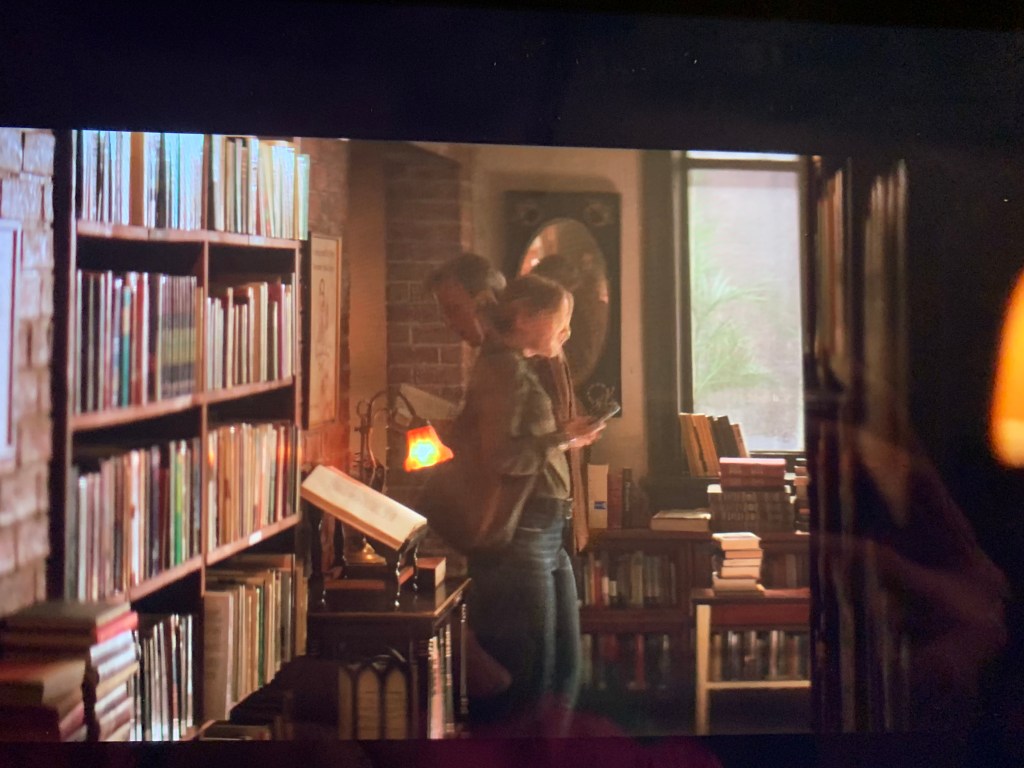
For this chapter, it felt most appropriate to use the relatively new TV show, “You” about the life of serial-killer Joe Goldberg. Yet, I have never heard any of my “spectator” friends describe him as a serial-killer. Why? Well, the media-makers of the show worked magnificently to create a relationship between the spectator and the character of Joe. When we are first introduced to Joe, it is at a normal setting, a bookstore, with a normal situation, him seeing a girl walk in and being attracted to him. This seems normal, doesn’t it? There is not a single bit of serial-killer characteristic that Joe reflects. In fact, we feel an instant connection to him because he is a normal male that seems to want to get the girl so we may or may not assume that this show may be about a love story which it is but it turns out to be way more complicated than how we are first introduced to it. After making this connection, the media maker or director starts showing the true colors of Joe but the connection between the spectator and the character has already been made. Hence, throughout Joe’s journey of killing many people, we never question him or are incredibly upset at him because we have already been connected to him since the start.
Reading Connection
I chose the television series, “You” because it has uses camera angles, point of view and characters to create an unexpected connection between the character and the spectator. It’s an unexpected connection between a serial killer and the viewer. How is this weird connection made? Well, as described in my previous section, the show starts as if it were a normal love story between a man who works at a bookstore and a woman shopping for a new book. The first minute of their first encounter makes Joe seem like a nice guy who is admiring her beauty the moment she comes into the store. This perspective of Joe is made through the use of point-of-view. Like chapter three described, putting the spectator literally in the shoes of the character forces the identification with him/her. Throughout this first minute of Joe admiring this woman, we do not see the actual actor who plays him because he is simply checking this woman and we are doing so with him. To be more descriptive, there isn’t just staring, Joe Goldberg’s thoughts are being shared with the spectator and we only hear beautiful compliments towards this woman. Never would we have imagined that Joe was going to begin to stalk her in the next 10 minutes and murder her by the end of the show. Throughout the show, the techniques mentioned in the book are constant. We are often put in what Joe sees and more importantly, how he sees it which what the book says is the absolute way to make the character identifiable.
Assignment was turned in late because I just got into the class and gained access to the wordpress.
 Comm 2302 Spring 20
check plus, thanks for the note at the end
LikeLike