In this chapter, Smith identifies the ways in which stereotypes are created and perpetuated in the media through “othering” and through images. Even words such as “you” and “them” create exclusion, language that is effective in advertising and makes consumers feel as if they are apart of something. On the other hand, the people identified as “them” are the ones experiencing this othering in the media. Smith uses the example of Native American Indians and the contrast of “other” values to “our” values such as savagery vs civilization or tradition vs progress. He explains that, “It is hard to separate the actual behavior of real people from the images that circulate concerning their group” (Smith, pg 96). The othering is also perpetuated through storytelling and the identification of a good/bad guy based on physical characteristics.
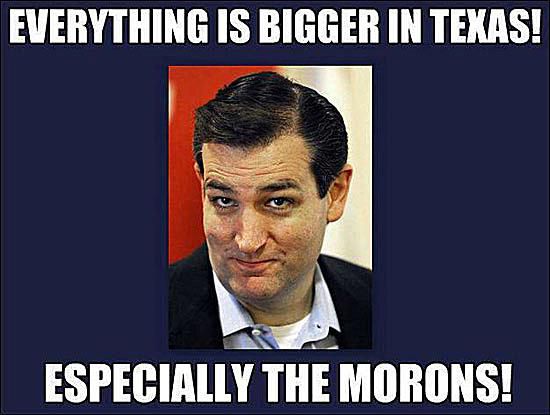
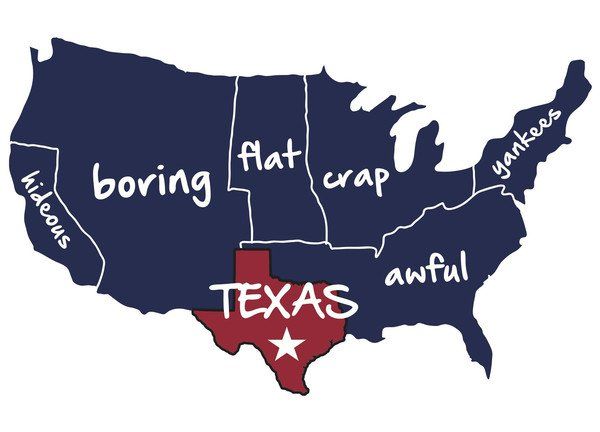
This article reminds me of memes and stereotypes made about Texans. Now I think a lot of people would say ” they hate us cuz they ain’t us,” but there are definitely “them” and “us” scenarios created on both sides of the equation. For example, I have seen a few memes based on the idea that everything is bigger in Texas, including the people, also forms of media that use the words “redneck” or “white trash” in a derogatory way. At the same time I also see Texans perpetuating this kind of media through state pride memes that definitely are offensive to other states and take the “othering” to a whole new level. Similar to the Indians vs Settlers, this same better than attitude is being shown in the first meme, where other states are referred to as “boring” and “yankees,” Texas is depicted as the opposite.
Both of these images generalize groups of people and create an “us” vs “them” dynamic. When speaking on comedy, Smith points out that, “This comic Othering cuts both ways. On one hand, the biggest Other is the biggest butt of jokes, and thus participates in a long line of denigrating humor (one of the clearest ways to see how Othering works across groups is the interchangeability of many ethnic jokes)” (Smith, pg 100). These two memes show the interchangeability of the offenses, where the othering is occurring both ways. On one hand this “joke” can be seen as state pride, while it could also be seen as offensive, and this all depends on if you are on the “us” or “them” side of the joke.
 Comm 2302 Spring 20
check plus
LikeLike