Reading Summary
This chapter deals with the various shots, sequences, cuts, and transitions of film. These terms describe film techniques that impact how a film is interpreted. Different techniques can elicit different emotions, so each choice is important.
Shots refer to single operations of the camera. These include close ups, close shots, extreme close ups, long shots, full shots, extreme long shots, medium shots, medium close ups, high and low angle shots, and establishing shots. With all these options, a director can pick and choose how best to represent a scene. The second technique is sequences, or how shots are put together with each other. These include linear and elliptical linear sequences, associative sequences, and montage sequences. From there, we move on to cuts, or how shots transition between one another. Whereas a sequence refers to single shots, a cut is for changing between shots shots. The six basic cuts are straight, contrast, parallel, jump, form, and match cuts. The final technique is transitions, which function like cuts, but are different because there is no jump between them. The shot is simply replaced with another. Each choice impacts the direction and feel of a movie, so a director can have much creative liberty with how they piece the film together. Through these techniques, the film can be given more meaning.
Outside Example
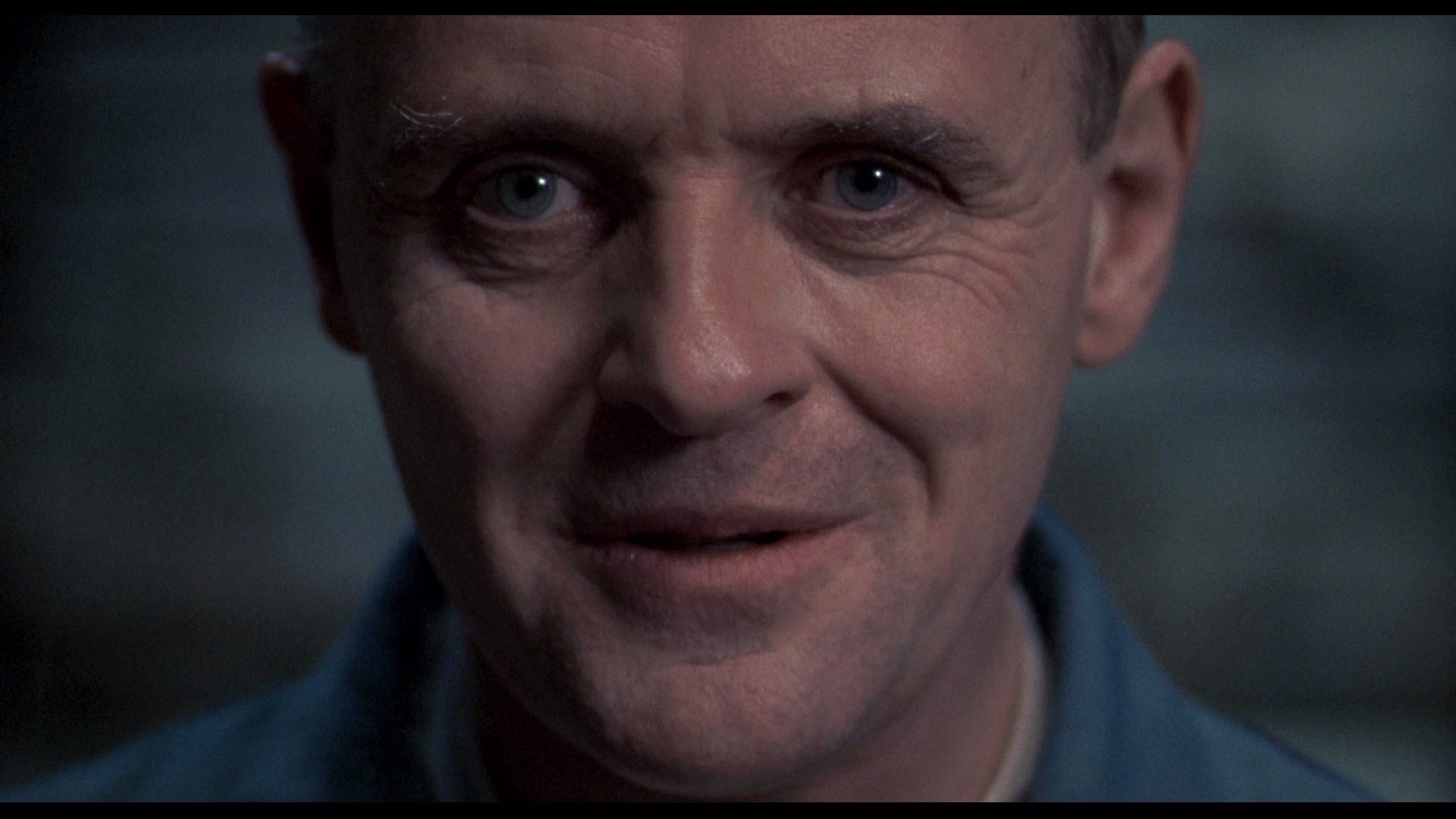
An example of a great shot or series of similar shots comes from The Silence of the Lambs. When we first meet Hannibal Lecter, we get an eerie, unending closeup of his face, which introduces him as a dangerous and unsettling character. This shot is repeated several times throughout the film, and it never ceases to unnerve us.
Reading Connection
The director of The Silence of the Lambs used a shot technique called a closeup in order to convey meaning about the character Hannibal Lecter. The director chose this shot because it can convey intense emotion in a scene. For a character like Hannibal whose motives and nature are largely unknown, this shot works very well, and the film gains additional meaning because of its inclusion.
 Comm 2302 Spring 20
check plus
LikeLike