Reading Summary
There is no disputing that sex plays a crucial role in marketing and advertising. Motivational analysts seek to discover the potency of sex symbols in the market and what drives the need for exploitation of one’s body to sell goods. The presence of sex symbols in the market have followed certain trends throughout history. A prevalent theme when marketing towards females in the 1950’s was the “get-your-man” promises. This was popular with perfume companies, for they promised one spritz of their perfume and you could get any man you desire. However, this trend died off due to the modern woman’s ability to no longer becoming bewitched by empty promises. Consumers became smarter and more opinionated so the market had to shift with them as so. Marketers began focusing on deeper sexual yearnings that products may symbolize. Analysts identified the need for sexual reassurance in consumers. Such as women need to be assured of their femininity and men of their masculinity in the products they purchase. Marketers began focusing on the indirect meanings of their products in order to identify their target audience.
Outside Example
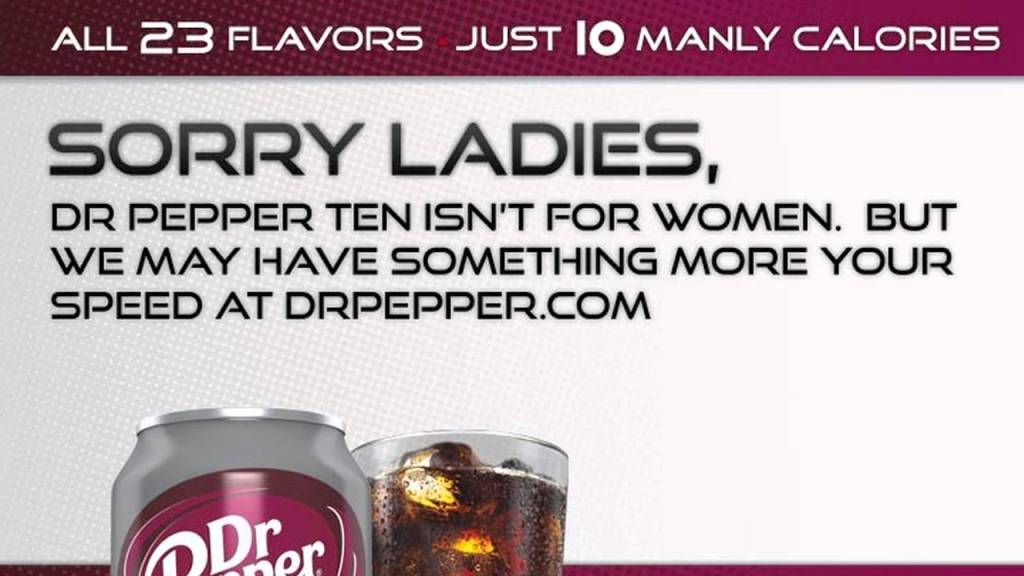
This reading reminded me of Dr. Pepper’s “Not for Women” campaign. Around 2011, Dr. Pepper targeted an audience of men who wanted a lighter soda but didn’t want to infringe on their masculinity. What was created was a 10 calorie soda that had the label “Sorry ladies, Dr. Pepper 10 isn’t for women.” The product was even packaged as a masculine symbol with gunmetal grey and a bullet looking shape. However, this ad’s exclusion of another gender could be deemed sexist. Many complaints were raised that you can target the male audience without being offensive women.
Reading Connection
This reading states that male consumers desire sexual reassurance. Dr. Pepper played on this aspect of their consumer behavior by producing a diet soda that didn’t infringe on the male’s masculinity. Dr. Pepper male consumers could seek lighter calories in their drink without feeling the slightest bit feminine. This ad campaign is a great example of how marketers can identify the indirect meanings of products. Diet usually equates to feminine, so a diet soda marked “not for women” does well in soothing the masculine ego.
 Comm 2302 Spring 20
check plus
LikeLike